Hot water runs out fast in Jackson, MS

Hand it off

You turn the shower on, and the hot water is gone before you're done rinsing off. Maybe it's been that way for a few days, maybe it's been like that since the weekend. Either way, a water heater that can't keep up isn't something that fixes itself, and in a Jackson house running on electric, that's worth getting looked at. You could start calling around, asking neighbors who they used last time, reading through reviews, waiting for callbacks that don't come. Or you could send this one form and let that part be someone else's job. No more comparing quotes or repeating the same story to three different companies. Tell us what's going on once, and a licensed contractor who works on water heaters in Hinds County takes it from there.

Hot water running out fast usually means the tank can't heat new water as quickly as you're using it, or it isn't holding a full tank's worth of hot water anymore. Most homes in the Jackson area run electric water heaters, and electric tanks rely on two heating elements. When the lower element fails, the tank still produces some hot water, but only a fraction of what it used to, so a shower that ran twenty minutes now runs five. Sediment settling at the bottom of the tank does something similar, taking up space where hot water should be and insulating the lower element from the water it's supposed to heat. A bad thermostat can also tell the tank to stop heating before it's actually full. None of these clear up on their own, and the tank keeps losing capacity until a repair sorts out which part is actually failing.

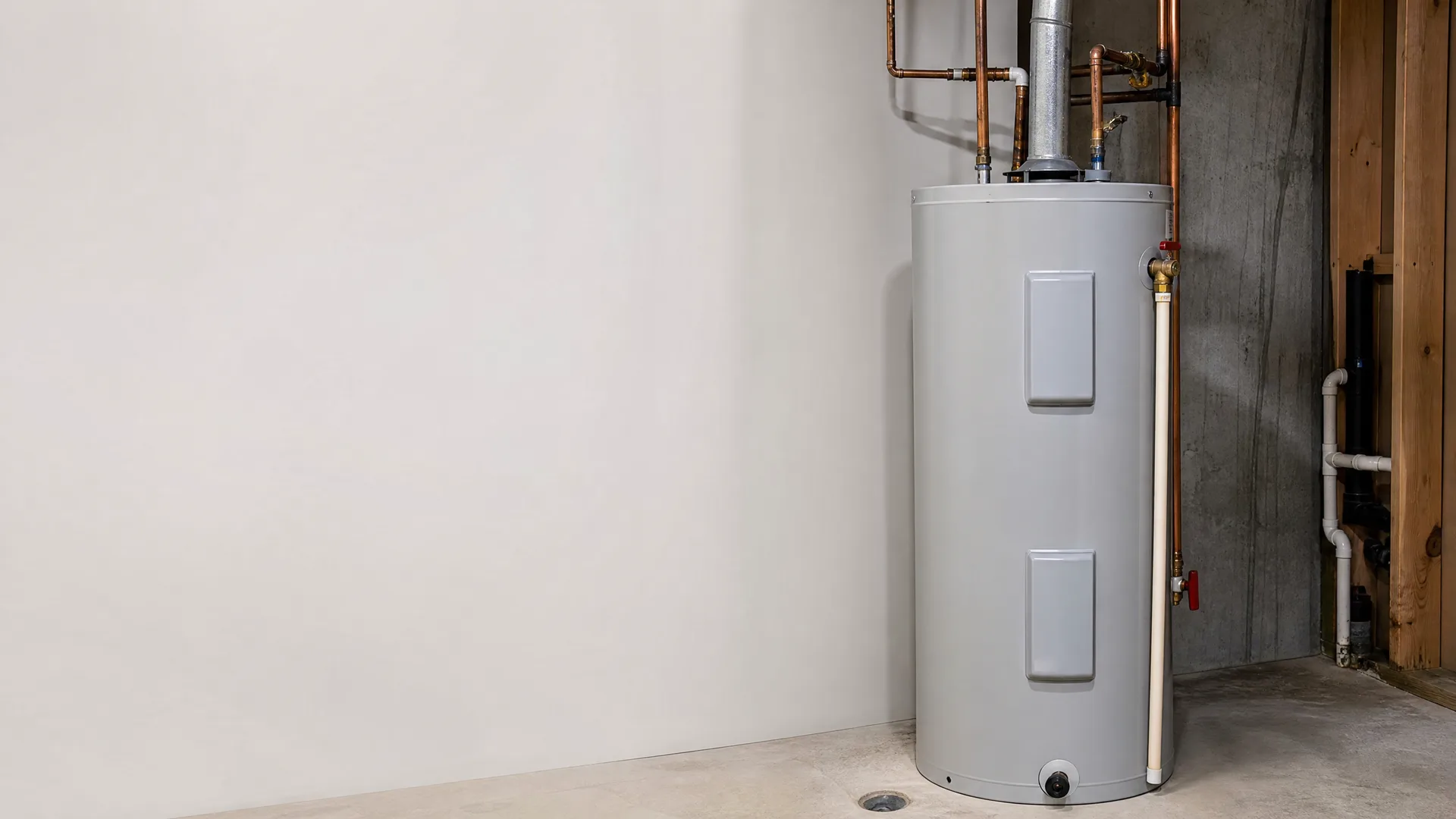
A gray cylindrical water heater with copper piping and a black vent pipe stands in the corner of a room with concrete and white walls.

One heating element can fail alone

An electric water heater has two elements, one near the top of the tank and one near the bottom. If the bottom element burns out, the top one still heats the water near it, so you get a few minutes of warm water before it turns cold. If the top element fails, the tank may not heat at all. A contractor can test each element separately rather than replacing both on a guess.

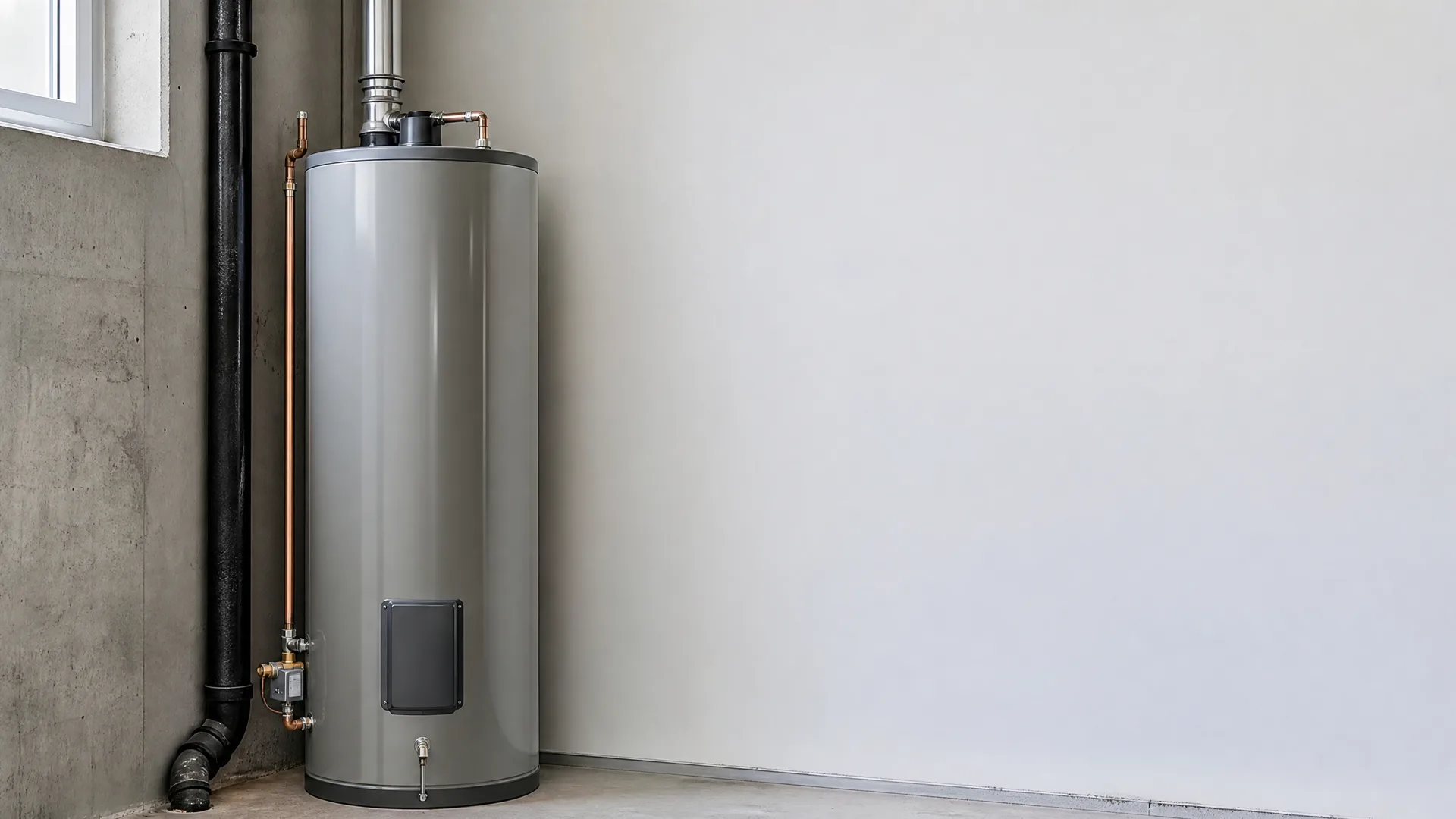
A gray cylindrical electric water heater stands in a basement corner against a white wall, with copper pipes and a vent duct above it and a concrete wall and PVC piping to the right.

Sediment takes up space in the tank

Hinds County water leaves mineral sediment behind as a tank heats water over and over. That sediment settles at the bottom and builds up over time. A 40 gallon tank with several inches of sediment packed in the bottom is no longer holding 40 gallons of hot water, even though the dial on top still says it is. Draining and flushing the tank is part of what a repair visit can check.

Why does my hot water only last a few minutes now?

A few minutes used to be plenty, and now it isn't. You notice it most in the shower, that point where the water turns cool right in the middle of washing up, and you're left wondering if something broke or if the tank is just old. It helps to know what's actually changing inside the tank when this happens, because the timing tells you something about which part is giving out.

A failing element or a buildup of sediment is cutting your hot water supply short

A tank that used to give you fifteen or twenty minutes and now gives you five is losing capacity somewhere. Sediment settling at the bottom of the tank takes up space that used to hold hot water, so there's simply less of it available before the cold water catches up. A heating element on its way out does something similar but for a different reason: it's still trying to heat the tank, just too slowly to keep pace with the shower. Either way, the tank isn't broken outright, it's working at a fraction of what it should. That's usually why the water stays hot at first and then gives out fast, instead of just never getting hot at all.

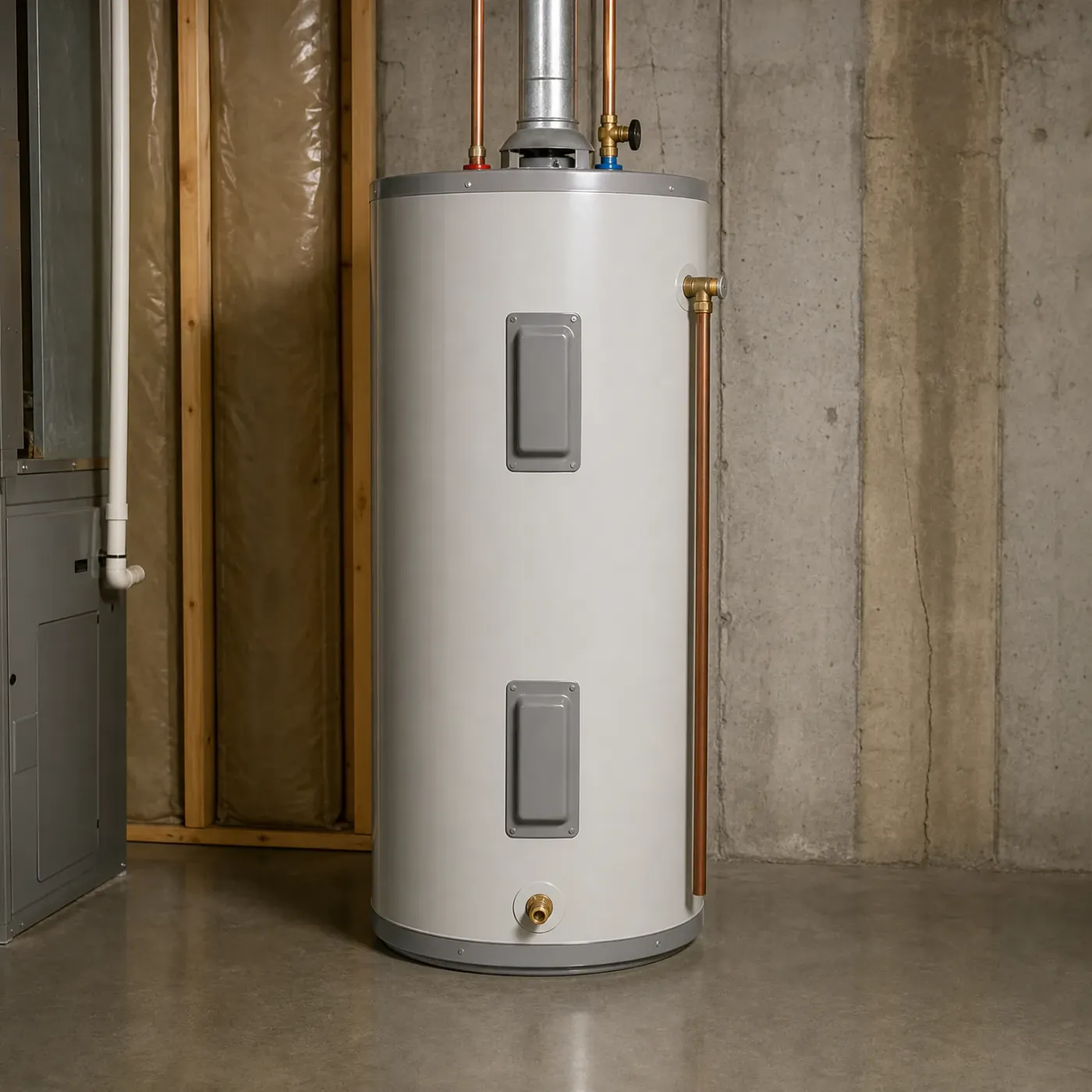
A white cylindrical water heater with two access panels, copper supply pipes and a metal flue, standing on a concrete floor against a concrete wall beside insulated wood framing and a gray electrical panel.

Tank working normally

Both elements heat on their own schedule, so the tank refills with hot water about as fast as you use it. The panels on front cover each thermostat, and the flue and supply lines show no rust or buildup. Hot water lasts as long as it used to.

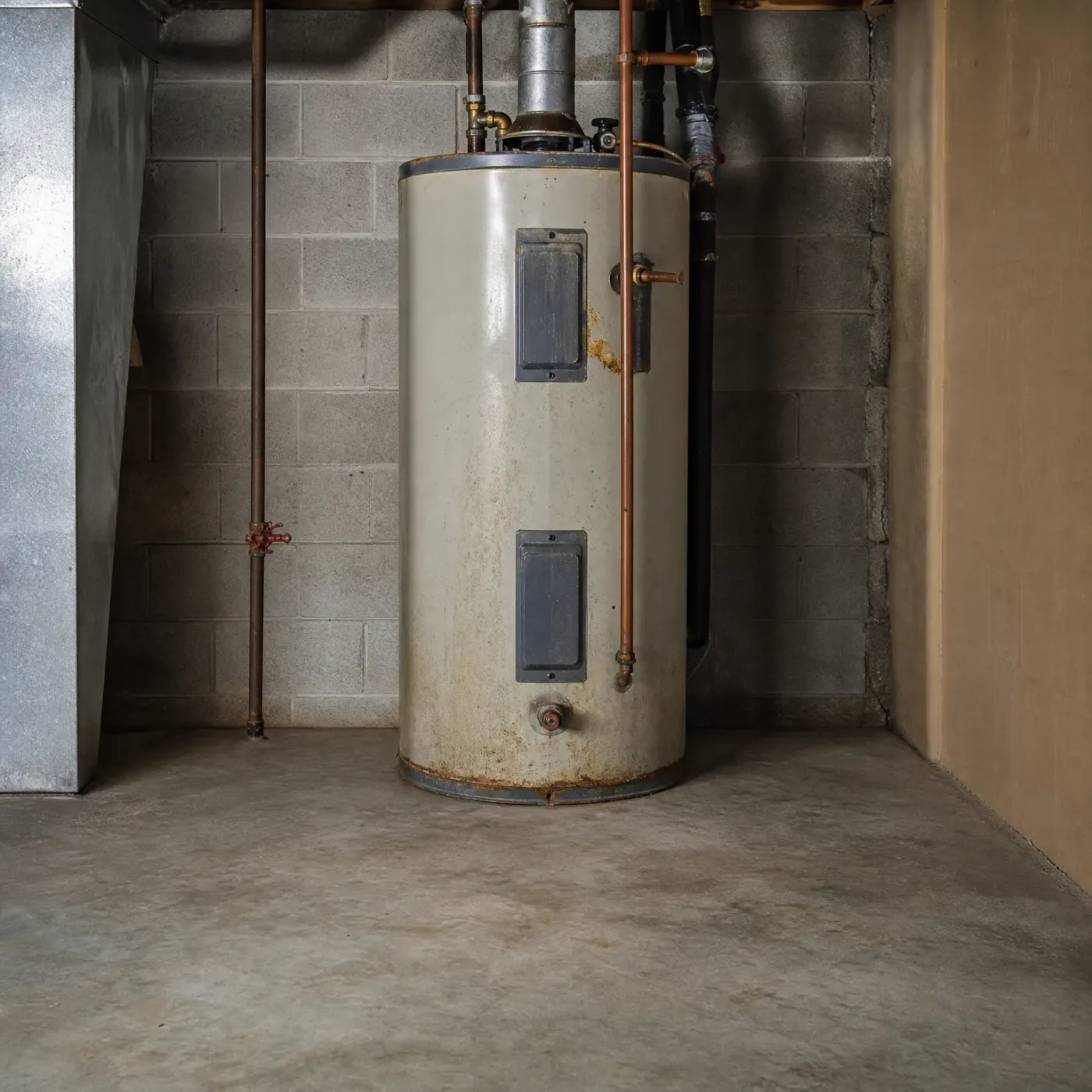
An aging cream-colored water heater with rust streaks and two access panels stands on a concrete floor against a concrete block basement wall, with copper and black pipes running up to the ceiling and a metal duct at left.

Tank in trouble

Rust spreading across the outside often means the same wear is happening inside the tank, around the elements and the lining. A tank in this shape may still run, but it's losing ground, heating less water and holding onto it for less time before you notice.

How much hot water does your house actually need?

  • 2.34 people per household on average

    Hinds County households average 2.34 people. A tank sized for one or two people falls short once more than that is drawing from it every morning.

  • Half the homes here were built by 1974

    Half the homes in Hinds County were built in 1974 or earlier, according to the Census Bureau. If yours is one of them, check whether the water heater is original or was swapped out somewhere along the way.

  • 51.5% of homes heat with electricity

    51.5% of homes here heat with electricity, more than any other fuel. An electric tank depends on two heating elements, and either one can fail on its own.

ACS 2020-2024

A dim bathroom corner with a glass-enclosed tiled shower containing a rain showerhead and wall niche, a gray towel on a rail beside a bright window, and a large plain wall in shadow at left.

It's a weekday morning, and you've got maybe six minutes before you need to be out the door. You step into the shower upstairs and the water's good for a while, warm enough that you don't think twice. Then partway through rinsing your hair, it turns. Not slow, just gone, like someone shut a valve somewhere. No steam left on the mirror. You finish fast, cold water running down your back, and grab the towel off the rail sooner than you planned. Downstairs, the kids haven't showered yet. You stand there a second, dripping, doing the math on whether anyone else is getting hot water this morning.
One request and it's handed off

You've already read enough here to know this isn't one thing. It could be a single burned-out element, a buildup of sediment crowding out the tank's capacity, or a thermostat that's lost track of what the water temperature actually is. Figuring out which one means someone looking at the tank, not another guess from a search result. Left alone, a failing element tends to take the other one down with it eventually, and a tank running on sediment works harder for less hot water every week. Finding a contractor on your own means calling around, explaining the same shower story more than once, and trying to judge quotes from people who haven't seen your tank. Send the request instead, and that part of it is done. One contractor gets your information, looks at what's actually going on with your water heater, and you stop guessing and start washing up without watching the clock.

What's Happening Inside the Tank

  • Sediment settles on the bottom of the tank and the lower element has to heat through it before the water itself warms.
  • A thermostat reads the water next to it, so once sediment separates it from the tank, it switches the element off too soon.
  • The dip tube feeds cold water to the bottom of the tank, and if it cracks, cold water mixes in near the top outlet instead.
  • A tank that rattles or pops when it's heating usually has enough sediment buildup to explain a shorter hot water supply.
  • The pressure relief valve can start to weep when a tank is struggling, which is worth checking before you assume it's just the elements.
  • Recovery time, how long the tank takes to reheat a full tank after it's drained, stretches out as sediment builds or an element weakens.

A water heater tank sits on a stand, and over time, sediment settles to the bottom of it. That layer sits between the lower heating element and the water, so the element has to heat through it before the water on top ever warms. The thermostat for that element is mounted against the tank wall, reading the temperature of whatever is next to it. Once sediment builds up thick enough to separate the thermostat from the actual water, the thermostat starts reading the sediment's temperature instead, and it can cut the element off before the water is really hot. There's also a dip tube running down the middle of the tank, carrying cold water to the bottom so the tank heats from the bottom up in the right order. If that tube cracks or splits, cold water dumps out partway down instead of at the bottom, and it mixes into water that's already supposed to be hot, so what comes out the top isn't as hot as it should be. A tank with a lot of sediment often makes noise while it's heating, a rattling or popping sound as water works its way through the buildup. It's worth a look at the pressure relief valve on the side of the tank too, since a tank under strain sometimes shows it there first, as a small weep of water. All of this shows up as recovery time stretching out, meaning the tank takes longer than it used to reheat a full tank after it's been drained down.

A smiling man in a dark green shirt over a white t-shirt sits at a kitchen counter with a dark mug, looking off to the side, with shelves, plants and a bright living area behind him.
A man in a gray long-sleeve waffle-knit shirt smiles and looks off to the side in a kitchen with open shelving, a refrigerator, a wooden sideboard with a potted plant, and a glass door to the right.
A man in a dark green ribbed sweater stands smiling and looking off to the side beside a stone kitchen counter with a ceramic mug, with a dining table, pendant lights, and large windows in the background.
A bearded man in a gray long-sleeve shirt stands smiling and looking off-camera beside a kitchen counter with a white mug, with a living room, fireplace and wall-mounted television behind him.

You call a plumber, explain what's happening, and hope they can fit you in before the week gets worse. If they can't, you start over with the next name on the list.

Send one form here and that search ends. A licensed contractor in the Jackson area takes it from there, and you're not the one tracking down who's free.

Power here costs 13.91 cents per kilowatt-hour

At 13.91 cents per kilowatt-hour, running an electric water heater harder than it should work costs you more with every cycle. A failing element or a tank full of sediment makes the heater pull power just to produce less hot water, so the problem shows up on your bill before it gets fixed.

EIA-861 2025

A smiling bearded man in a green t-shirt sits on a gray sofa, looking down toward a device at the bottom of the frame, with a bookshelf and a green plant blurred behind him.
A bearded man in a plaid flannel shirt stands indoors looking out a window at snow-covered conifers, with a ceramic mug on the wooden sill and wooden cabinets behind him.
A closed silver laptop and a white cup of coffee on a saucer sit on a wooden table in front of a wooden chair, a plain beige wall, a potted leafy plant and a window with greenery outside.

A tank that can't keep up won't fix itself

Hot water running out fast comes down to a handful of things: a burned-out element, sediment crowding the tank, a thermostat that's lost track of the water around it, or a tank that was never sized for what your house actually uses in the morning. None of those get better on their own, and the point of calling someone is finding out which one you've got.

Send one form and you skip the part where you're the one doing the legwork, calling around, explaining the same problem to three different people, trying to tell from a phone quote who actually knows what they're doing. A licensed contractor in the Jackson area takes it from here and tells you straight what's wrong and what it takes to fix it.

A speckled beige ceramic vase holding thin dried branches sits on a round wooden table near a window with sheer curtains, with a dark upholstered chair and draped blanket blurred in the background.
A single-story stone-clad house with low-voltage path lights along a gravel bed and lawn at dusk, with a tree line and orange sky on the horizon.

Water Heater Repair

Done looking for a water heater pro

Step 1 of 3: Equipment
  • A gray upholstered sofa arm with a cream knit fringed throw sits beside a wooden side table holding a stack of books, a shallow wooden bowl, and a ceramic vase of leafy branches, on a wood floor near a window.
    • A Hinds County pro who repairs water heaters gets your request.
    • Your request goes to a Hinds County pro who takes water heater jobs.
  • A living room corner with a cream upholstered sofa and cushion beside a wooden side table holding a ceramic vase of olive branches and a small dark bowl, with a framed landscape painting on the gray wall and a linen curtain at the window.
    • Get the water heater repair search off your mind today.
    • Once you send the form, finding a pro is off your list.
  • A wood-framed armchair with a beige cushion and knitted throw sits beside a round wooden side table holding a ceramic mug, with a potted green plant near a window in the corner and a framed picture on the wall.
    • One form replaces the calls you'd make to find a water heater pro.
    • Describe what your water heater is doing once, in one form.
  • Interior corner with beadboard wainscoting, a gray cabinet with wood countertop holding a vase of greenery below a window, and a potted leafy plant in a woven basket on a wood floor with a fringed jute rug.
    • A licensed pro who repairs water heaters in Hinds County gets your request.
    • The pro who gets in touch is licensed in Mississippi and works in Hinds County.