Get matched with someone who does this kind of work in Harrison County.
That rotten egg smell coming from your hot water tap means sulfur bacteria are living in your water heater tank, reacting with the anode rod inside it. It's a water heater problem, not a city water problem, and it almost always shows up in hot water only.
It's a common issue in homes on well water, but it happens on city water too, especially if the tank sits unused for a while, like after a trip. Either way, it's fixable, and it doesn't mean the tank is bad.
What it takes to fix depends on what's actually going on in your tank, and that's where a local contractor matters. Someone who services water heaters around Gulfport and Harrison County all year has likely run into this same smell in dozens of tanks nearby, often tied to the water heater brand and anode rod type that's common in this area. That's not guesswork from a stranger, it's a pattern they recognize.
When you request service through this page, you're not booked with a random name from a list. You're matched with one licensed local contractor suited to your situation, and they'll reach out to you directly. No juggling calls from three or four companies trying to win the job. Just the one contractor who knows this equipment and this area, getting in touch to look at your specific tank.
From there, they can tell you what's causing the smell in your water heater and what it takes to clear it out. That might mean flushing the tank, replacing the anode rod, or something else, but that's a conversation for them to have with you once they know what they're looking at.
Why does my hot water smell like rotten eggs?
If you've noticed this smell only when you run the hot water, and the cold water runs clean, you're probably already guessing it has something to do with the tank itself. You want to know why it happens before you decide what to do about it.
It's a reaction between the anode rod and bacteria in the tank
Every water heater tank has an anode rod inside it, usually made of magnesium. Its job is to corrode slowly so the steel tank doesn't. Bacteria that feed on sulfur can live in the water inside the tank, and when they react with that rod, they produce hydrogen sulfide gas. That's the rotten egg smell. It builds up fastest in a tank that sits unused for a while, which is part of why it can show up out of nowhere. The water itself isn't the problem and your home's plumbing isn't either. The reaction is happening inside the tank, between the rod and whatever bacteria have taken hold there.
You turn the shower on before work and go to find a towel while it warms up. When you step in, the smell hits before the steam does, that rotten egg stink rising up out of the water. Monday morning in Gulfport and you've got ten minutes before you need to be out the door. You stand there under the water anyway, trying not to breathe through your nose, telling yourself you'll deal with the tank tonight. The towel's still hanging on the rail, dry, waiting. You finish fast and leave the window cracked on your way out, the smell still sitting in the bathroom behind you.
Why does my water heater get this smell at all?
2.48 people per household on average
You've got 2.48 people pulling hot water from that tank on an average day here, and more draws means more water sitting and reacting with the anode rod between uses.
Half the homes here were built by 1994
Half the water heaters in Harrison County were put in during or before 1994, going by when the homes themselves were built, and an older anode rod has had more years to react with the water around it.
76.3% of homes heat with electricity
76.3% of homes here heat with electricity, and an electric water heater uses a different anode setup than a gas one, which changes how fast that rotten egg reaction gets going.
ACS 2020-2024
Fix It Yourself or Call a Plumber
Flush and treat it yourself
A hydrogen peroxide flush can knock back the sulfur bacteria for a while, but it doesn't remove what's feeding them inside the tank.
You're working around a drain valve and a tank full of hot water, and getting it wrong means a mess or a scald.
If the anode rod is the kind reacting with your water, the smell comes back in a matter of weeks no matter how well you flush.
Swapping the anode rod yourself means finding one that fits your tank and breaking loose a fitting that's often rusted in place.
You won't know if the smell is sulfur bacteria or something else wrong with the tank until you're already inside it.
Have a plumber look at it
A plumber who works on water heaters in Harrison County every week knows which anode rods react in this water and which ones don't.
They can swap the anode rod for a different type, usually aluminum or zinc, so the smell doesn't just come back in a month.
A proper flush gets the sediment and bacteria out of the bottom of the tank, not just diluted for a few days.
If the smell turns out to be something other than the anode rod, they can tell you before you've spent money guessing.
You get matched with one local contractor rather than several, so you're dealing with one call back, not a string of them.
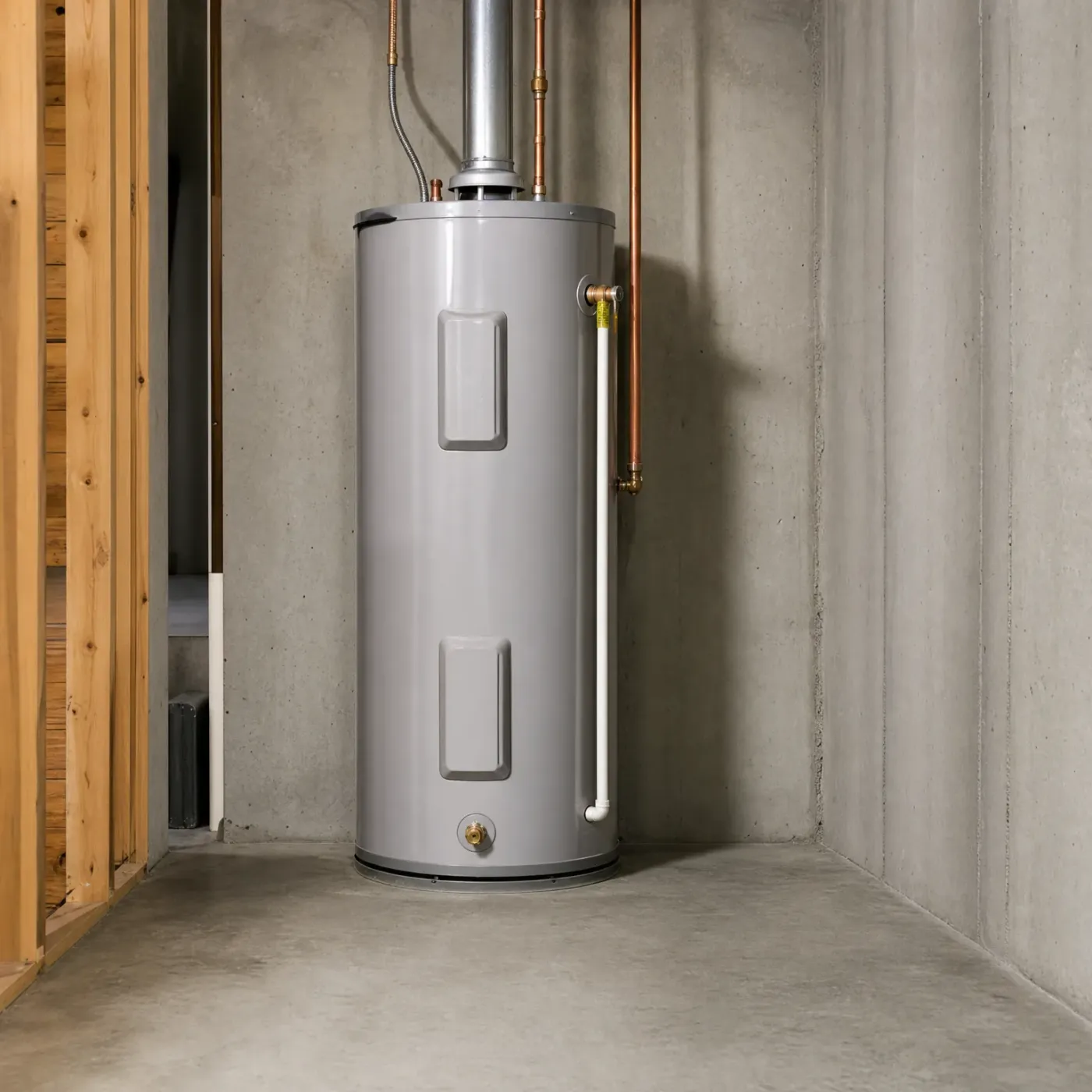
Tank working as it should
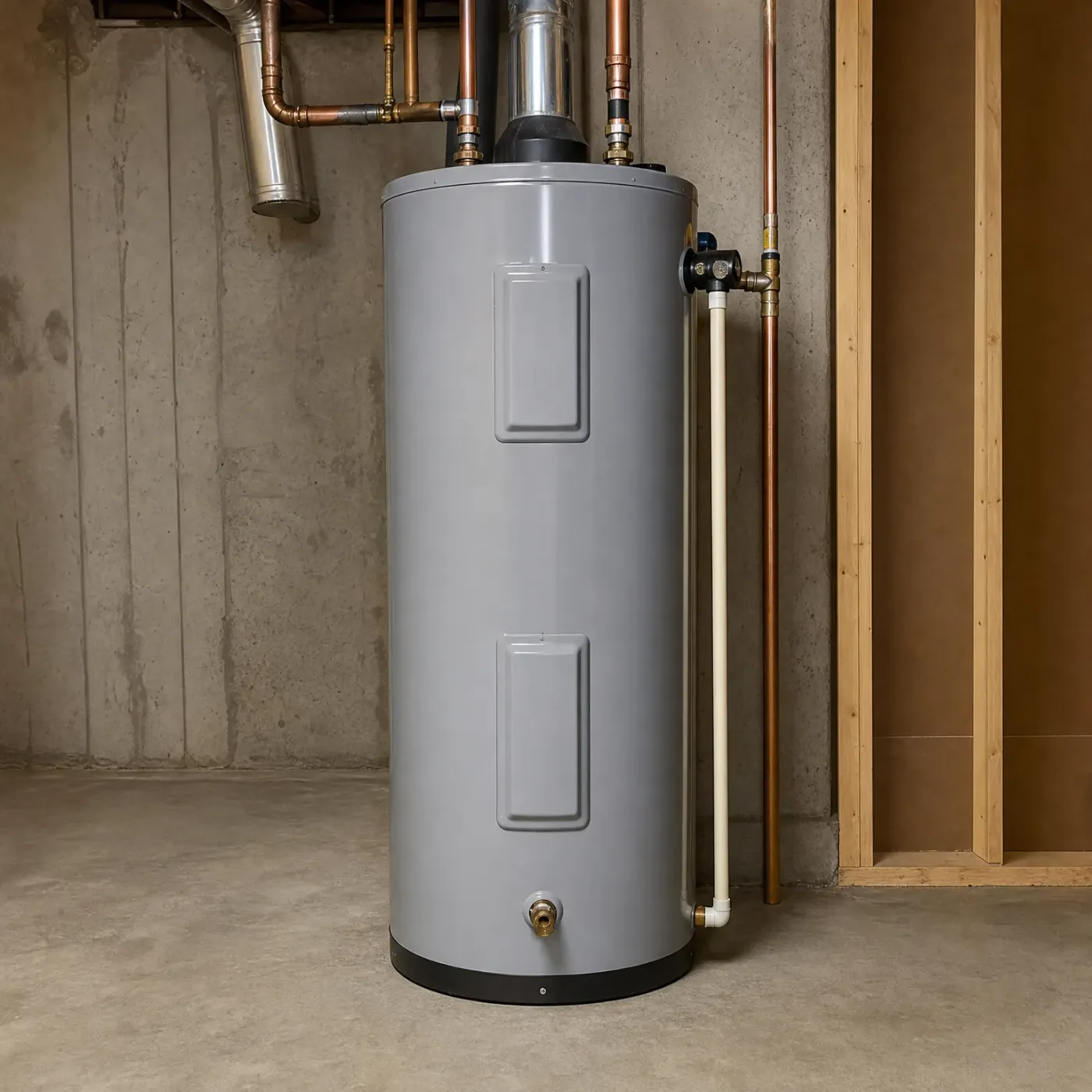
This is a water heater with no smell problem. The anode rod inside is doing its job, the tank is holding pressure fine, and the relief valve on the side is there for safety, not because anything is wrong. Hot water comes out clean.
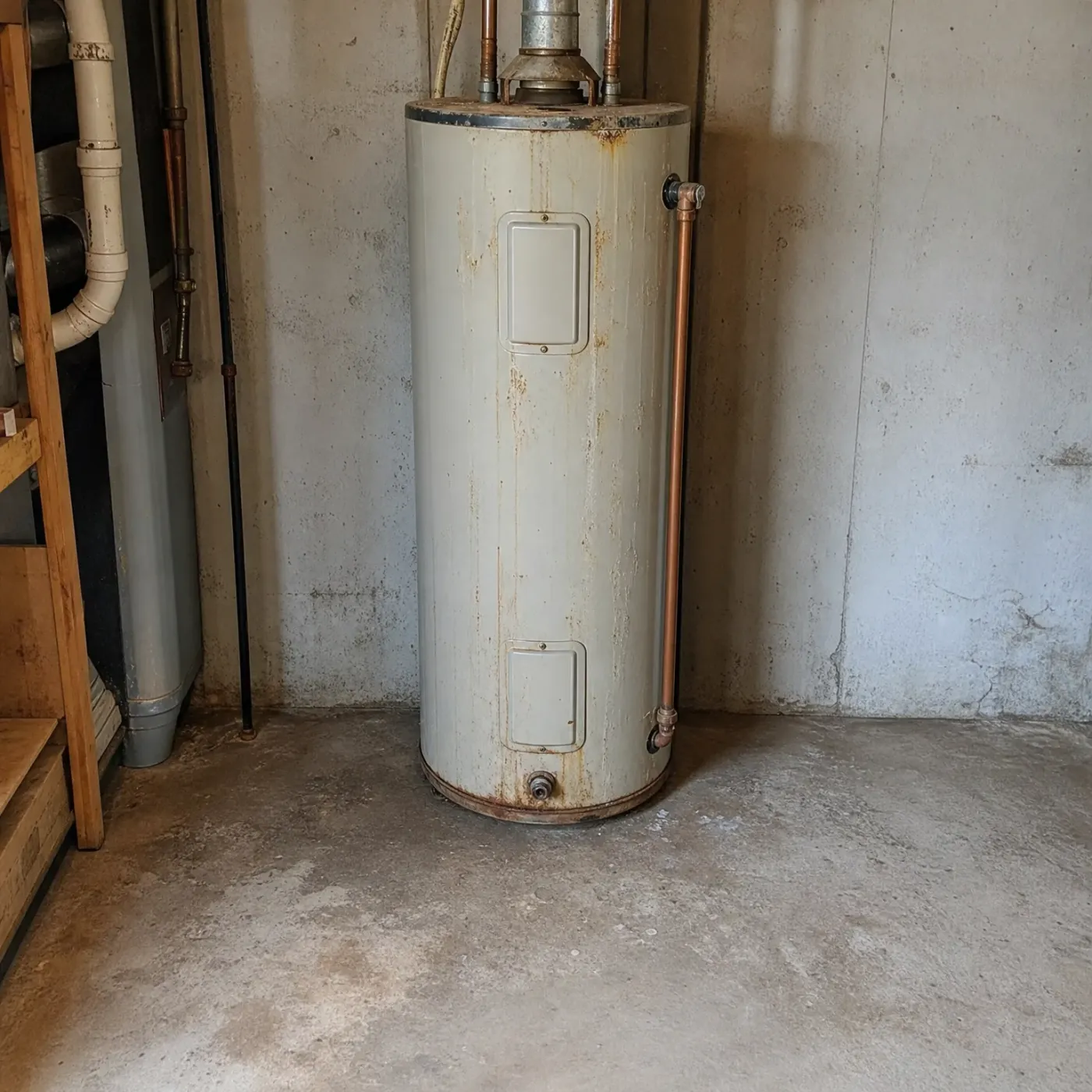
Tank in trouble
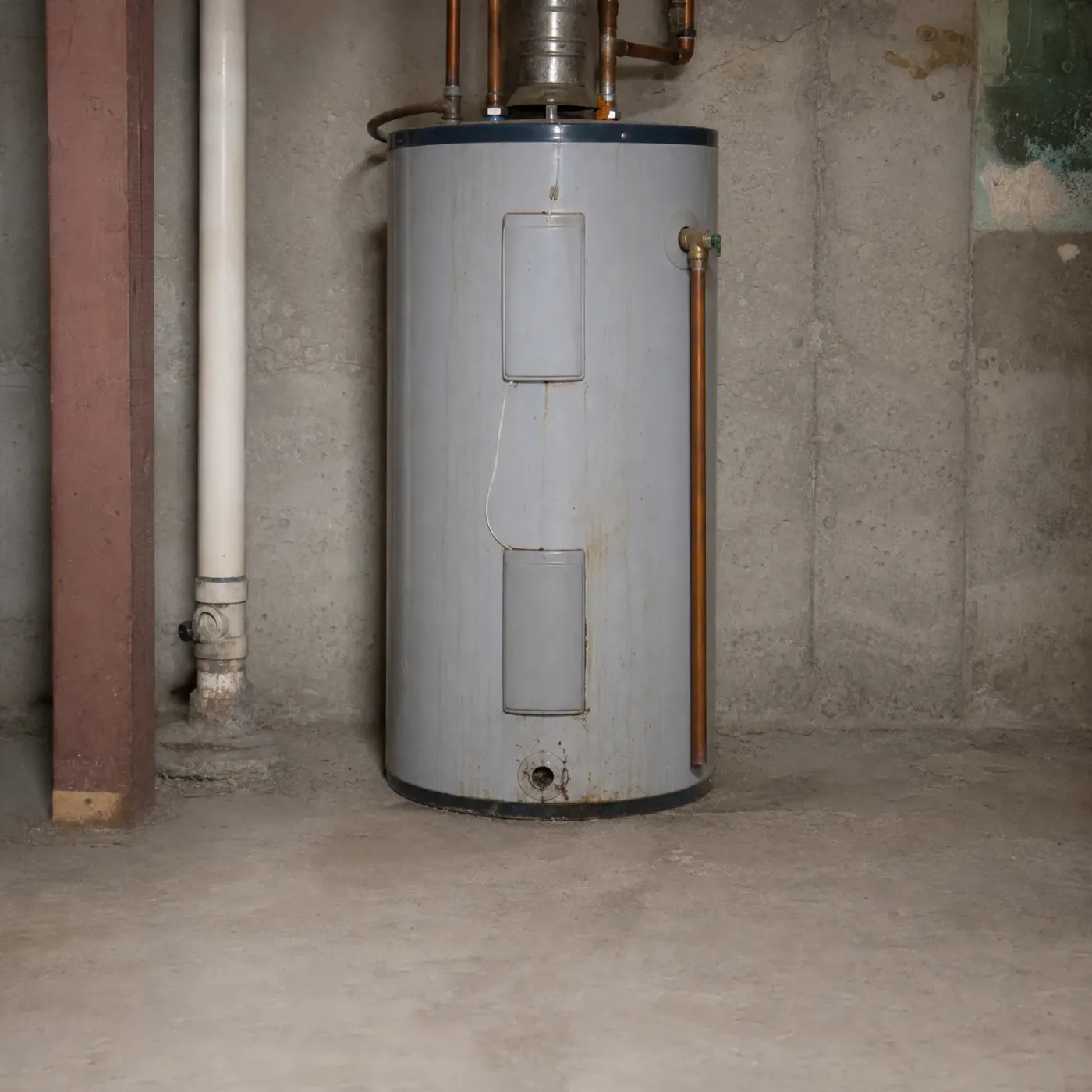
Rust near the base and an aging tank like this one often go along with a worn-out anode rod, and a worn rod is exactly what lets sulfur bacteria take hold. Once you see rust at the bottom, the smell usually isn't the only problem building inside.
A licensed pro who repairs water heaters in Harrison County gets your request.
It costs nothing to send, and you don't have to hire anyone.
The anode rod is the real cause
Every tank style water heater has a metal anode rod running down the middle of it. It's there on purpose, to corrode instead of the tank lining, and that's what lets a glass lined steel tank last as long as it does. Most are made of magnesium, and magnesium reacts with sulfate in the water to produce hydrogen sulfide gas, the same gas that makes the smell. Aluminum and zinc rods react less, which is why swapping the rod is often part of fixing this for good instead of just masking it for a few weeks.
Why it's worse in hot water only
Cold water sitting in your pipes never touches the anode rod, so it never picks up the smell. Hot water sits inside the tank between draws, right next to the rod, giving the bacteria time to react and the gas time to build up before it ever reaches your faucet. The longer water sits unused, the stronger the smell tends to be, which is why it's often worse first thing in the morning or after you've been out of town. A contractor checking this will look at the rod itself, not just flush the tank, since the rod is what keeps producing the gas.
Power here costs 14.63 cents per kilowatt-hour
Most houses in and around Gulfport heat their water with electricity, and power runs 14.63 cents per kilowatt-hour here. Swapping the anode rod for an aluminum or zinc one to stop the smell won't change what you pay to run the tank, since the rod itself doesn't draw power. A new heating element or thermostat is a different story, and worth asking about if yours is old.
EIA-861 2025
Swap the anode rod yourself
The rod threads into the top of the tank, and if you can get a breaker bar on the hex head, you can pull the old one and drop in an aluminum or zinc replacement. The trouble is clearance. A lot of tanks sit tight against a ceiling or a shelf, and there's no room to draw out a rod that can run four feet long without a flexible segmented one. You also need the tank drained enough to work safely, and the fitting can be seized on if it's been in there a few years. If it snaps off in the threads, you're looking at a tank you can't easily fix.
Have someone qualified do it
A plumber who handles water heaters knows which rod fits your tank, whether a segmented rod will clear the space above it, and how much to drain before breaking the fitting loose. They'll check the rod itself when it's out, since a rod eaten down to the core wire tells you something about how hard your water's working it, and a tank that's taking rods fast isn't always just a smell problem. Someone local who works on these year round in Gulfport has likely seen your exact setup before, tight clearance and all, and knows what usually goes wrong with it.
Before you get your water heater repairAfter you get your water heater repair
Tank in good shape
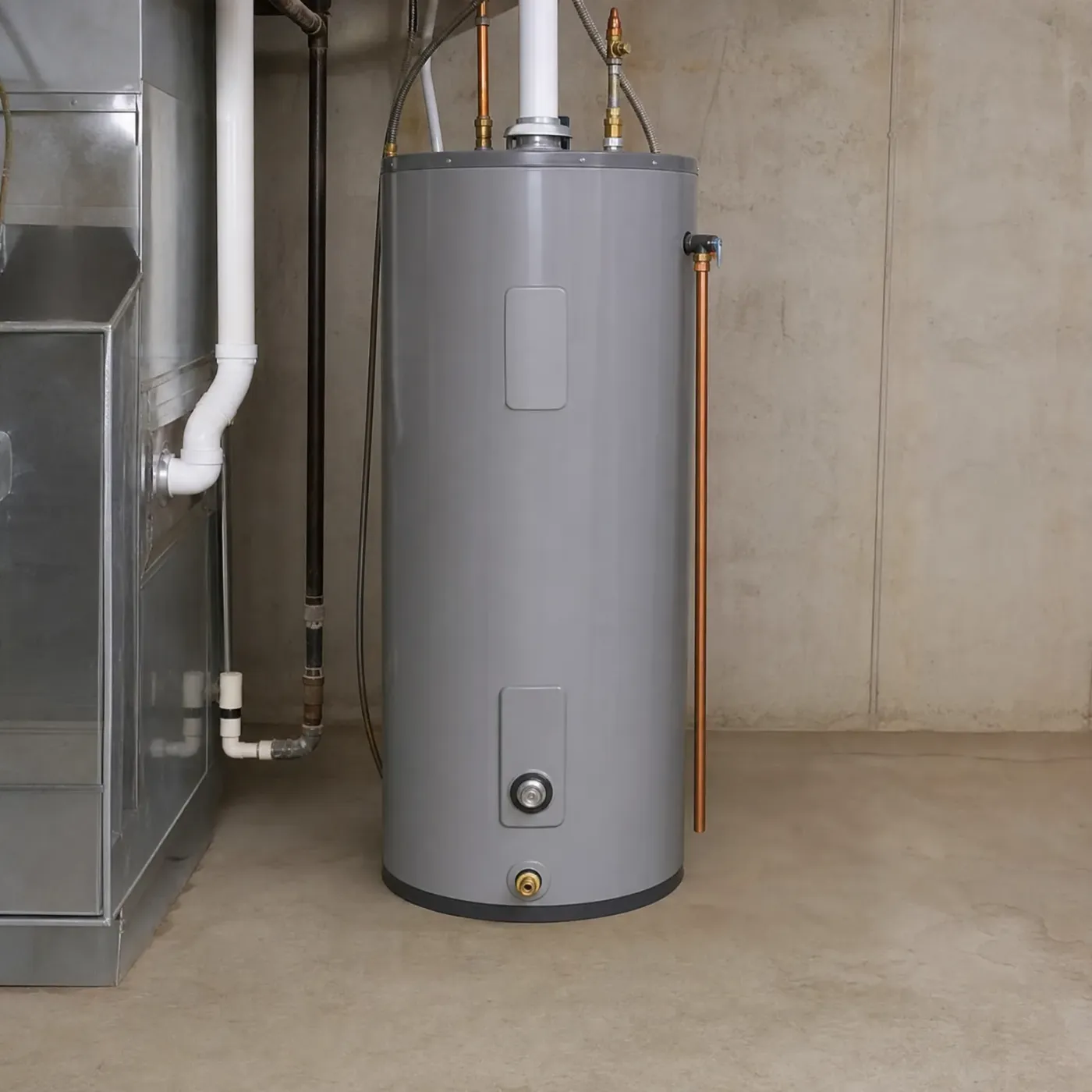
A tank like this has clean copper lines, a clear flue vent, and no rust creeping up the jacket. The anode rod inside is still sacrificing itself the way it should, so the steel underneath stays protected and the water stays odor free.
Tank showing its age
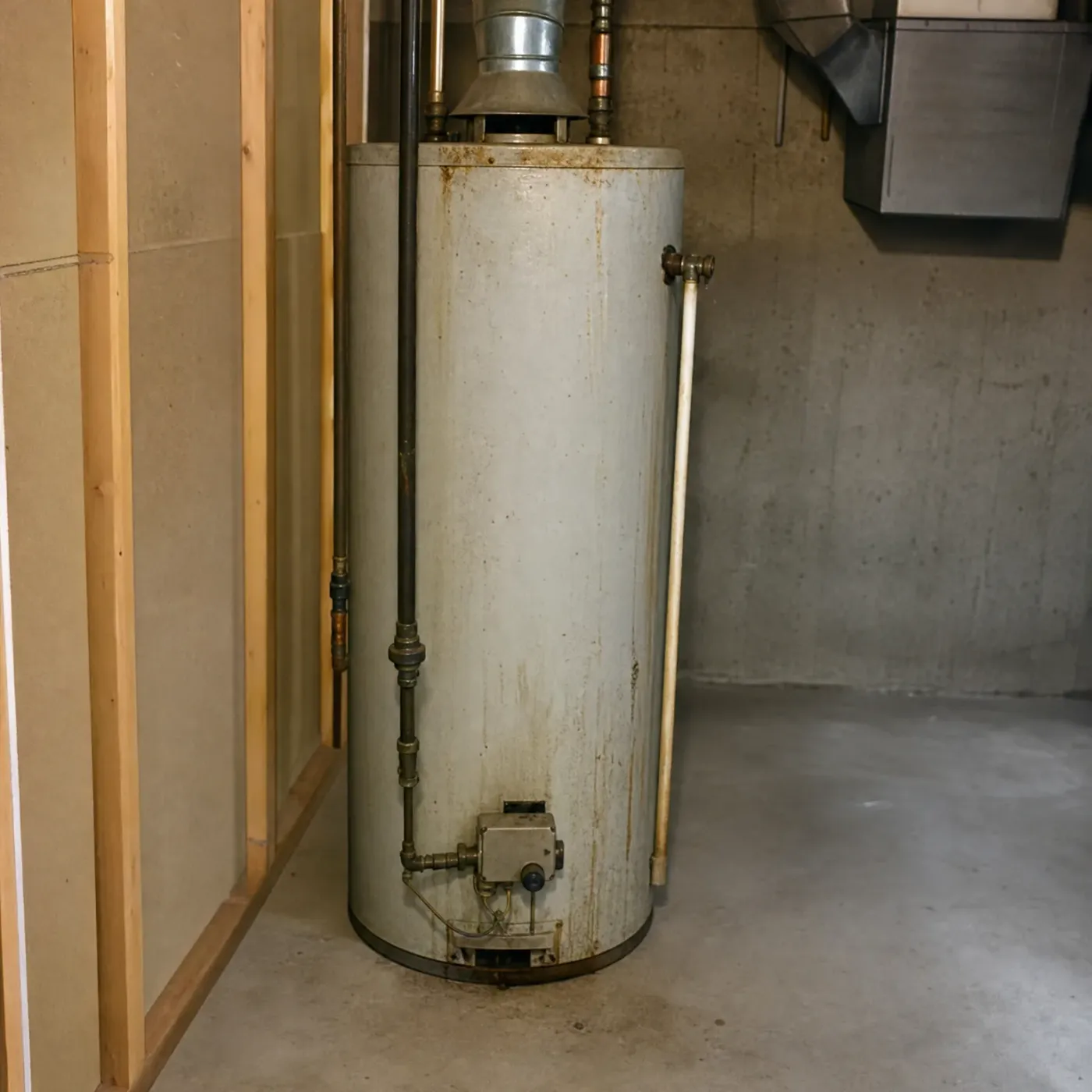
Rust and surface corrosion like this usually mean the glass lining has failed somewhere and the tank itself is rusting from the inside out. A new anode rod won't fix a tank already corroding. A licensed plumber can tell you whether this one is still worth repairing.
The smell means the anode rod in your tank is reacting with sulfur bacteria in the water, and swapping that rod for the right type is what stops it for good. That's a straightforward repair for someone who works on water heaters in Gulfport all year and knows which rod to use and how tight the clearance usually is in homes around here. You'll be matched with one licensed local contractor, not a handful of companies competing for your callback, so the person who reaches out is someone who actually services this equipment in Harrison County and has seen this exact smell plenty of times before. Your cold water was never the problem. The tank is, and once that rod is replaced with one that won't feed the same reaction, the smell doesn't come back.
Get matched with a water heater pro in Harrison County
The pro who gets in touch is licensed in Mississippi and works in Harrison County.