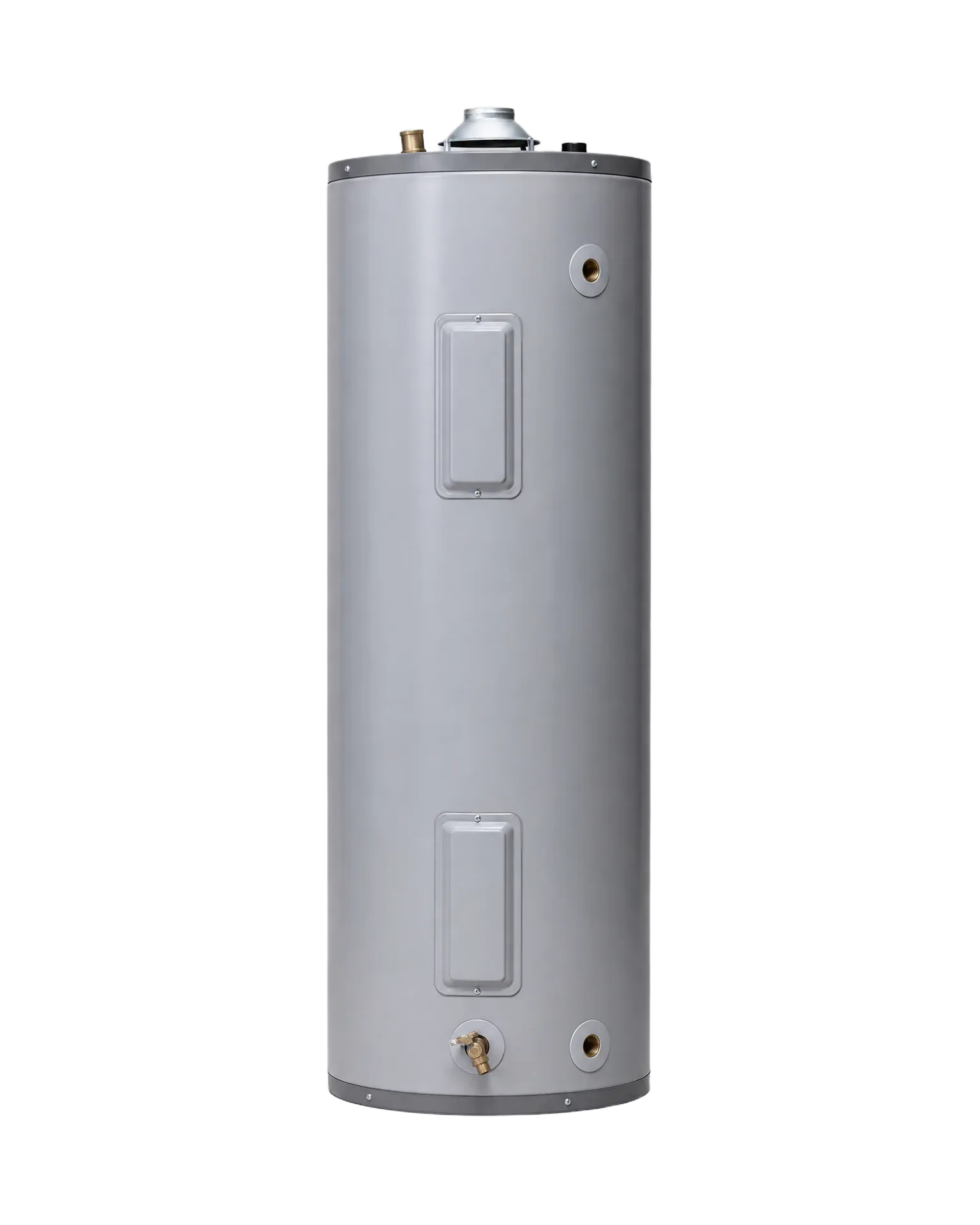
A water heater in Mississippi lasts about 8 to 12 years. Most homes here run on electric water heaters, and the tank itself is usually what fails first, not the heating element. Heat and humidity speed up the rust working inside the tank, and warm groundwater coming in means the unit runs a little harder year round than it would up north. Once it passes 10 years, a leak can show up with no warning, and you're looking at standing water instead of a repair you planned for. If yours came with the house, it's worth finding out how old it actually is. A water heater past that age is worth replacing on your own schedule, not after it fails on a Saturday morning.
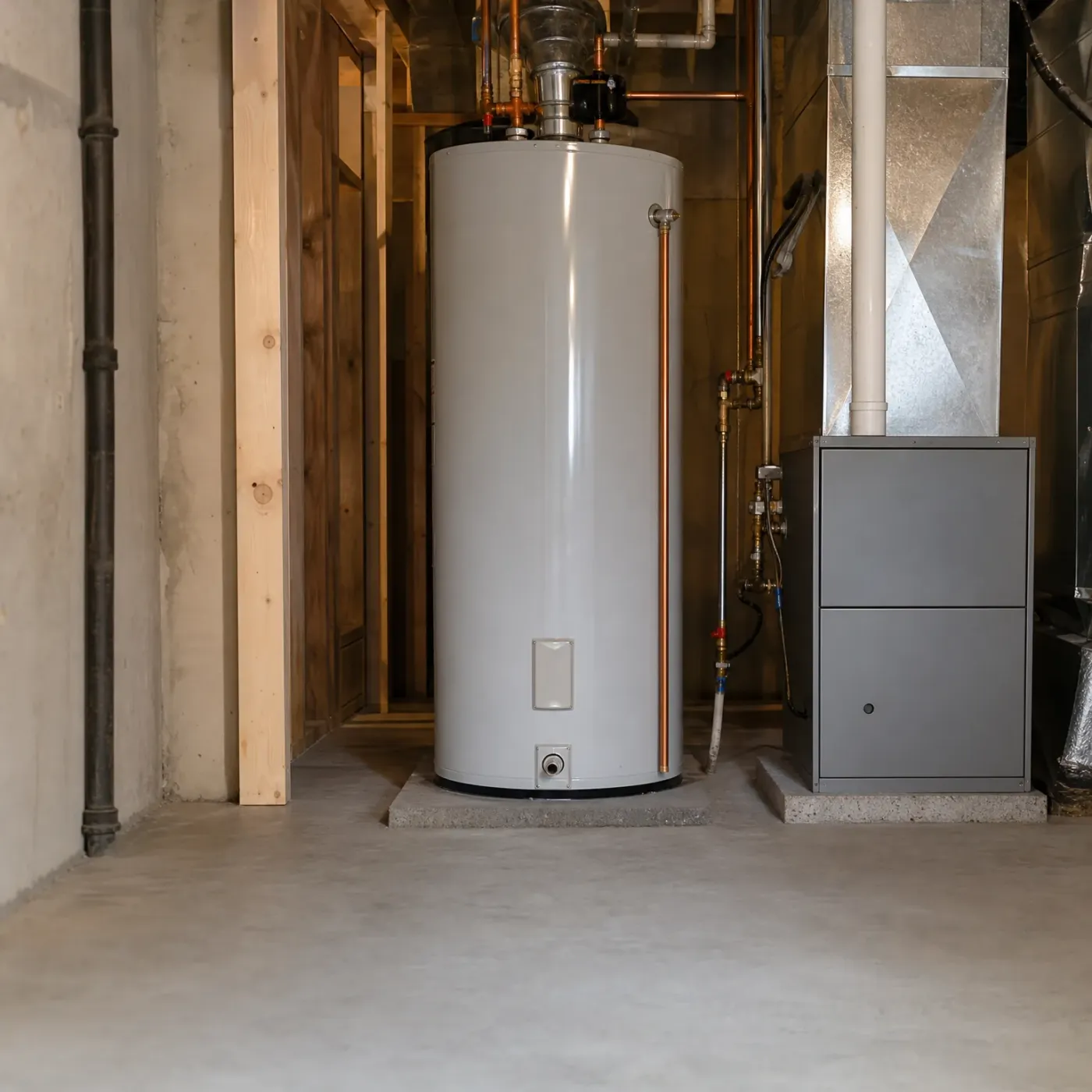
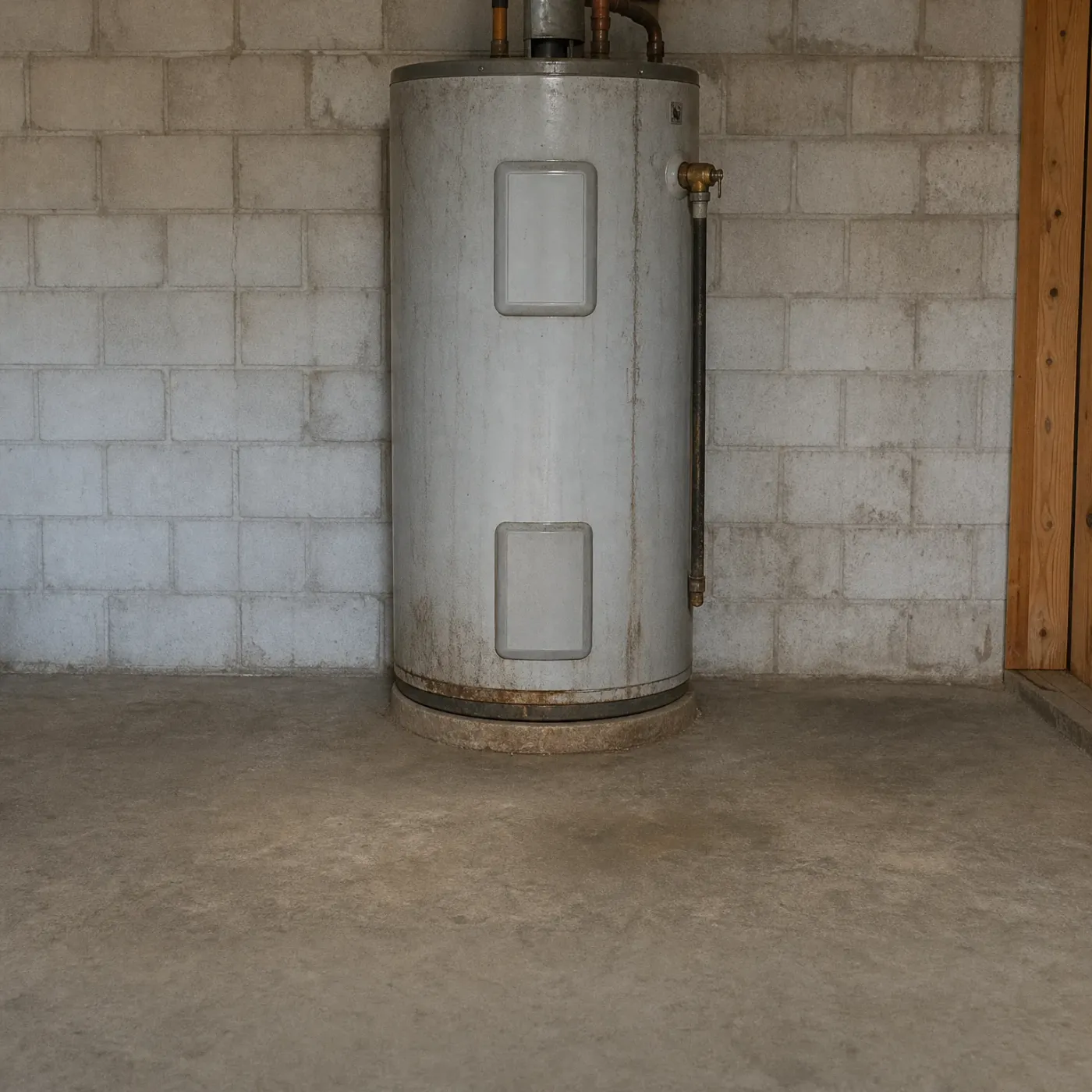
Inside an electric water heater, two elements do the heating, one near the top of the tank and one near the bottom, and they wear at different rates depending on how hard each one works. Protecting the steel around them is the anode rod, a piece of metal built to corrode before the tank does. Once it's spent, the tank itself starts taking the damage, and that clock doesn't wait for the 8 to 12 year mark to start running. Meanwhile sediment drifts down and settles on the bottom, and the warmer, harder the water coming in, the faster it piles up. That layer sits between the lower element and the water it's supposed to heat, which is why the element starts working harder for the same result. A tank doing this often lets you know with a popping or rumbling sound as it runs. When a tank finally does give out, it's rarely a slow drip from the top. It shows up at the bottom of the tank or around a fitting, and by then it's a replacement, not a repair.
What's Actually Happening Inside the Tank
- An electric water heater has two heating elements, an upper and a lower, and either one can fail years before the tank itself gives out.
- The anode rod inside the tank is meant to corrode first, protecting the steel tank, and once it's used up the tank starts rusting from the inside.
- A tank left unchecked loses its anode rod protection years before the 8 to 12 year mark, which is why a unit can fail early even without a leak yet.
- Sediment settles at the bottom of the tank over time, and in areas with harder groundwater this buildup makes the lower element work harder to heat the same amount of water.
- A popping or rumbling sound from the tank usually means sediment has built up enough to insulate the water from the lower element.
- When the tank wall finally rusts through, the leak shows up at the bottom or around a fitting, not as a slow drip from the top.




Finding a pro stops being your job
If your water heater is past 12 years, or it's leaking, rusted at the base, or struggling to keep up, you're not choosing whether to deal with it, just when. Mississippi summers already push humidity into every closet and utility room, and a tank that's failing adds a leak to worry about on top of it. Once you know your unit is near the end, there's not much reason to keep watching it for signs. The request goes to one licensed contractor working near you, someone who installs water heaters in this area all year and knows which tanks in homes like yours tend to go first. You send the details once, and from there it's off your plate. No sorting through several companies, no repeating yourself to each one. Just a straightforward handoff to someone who already knows the equipment and the climate it has to run in.

Why the tank fails first
The steel tank holds a glass liner, and that liner cracks in spots over years of heating and cooling. Once it cracks, bare steel sits against water all day. The anode rod is there to corrode instead of the tank, but it wears down and eventually stops doing that job. After that, rust has nothing left to eat but the tank itself, and a pinhole leak is usually how homeowners find out.
What groundwater adds to it
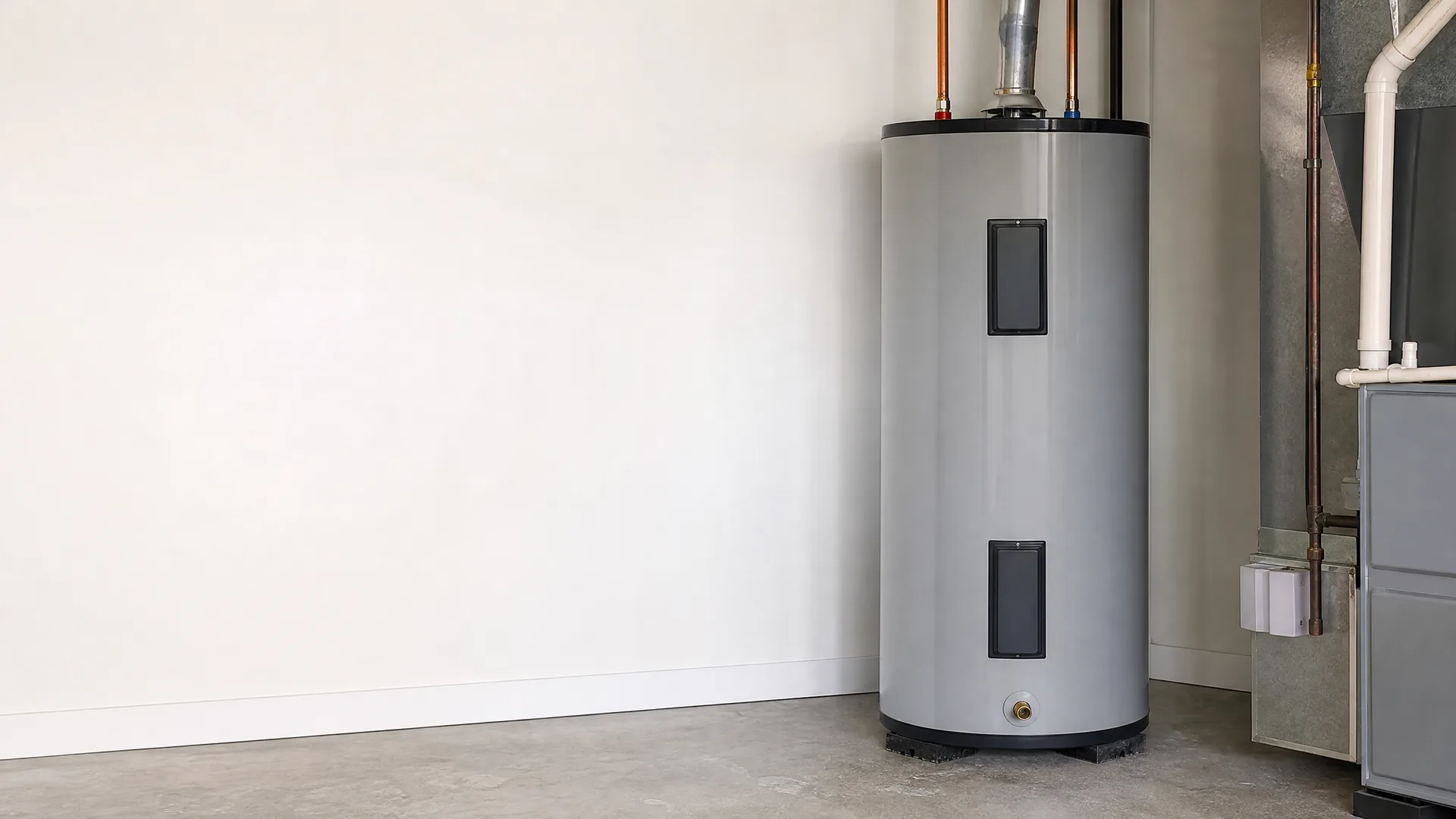
Water coming into a Mississippi home is often warmer than water coming into a house further north, since groundwater temperature tracks local climate. A water heater doesn't have to work as hard to bring it up to temperature, but the warmer water also moves the rust process along faster inside the tank. That's part of why a unit here can show its age sooner than the same model would somewhere with cold groundwater year-round.
58.9% of homes statewide heat with electricity
Most homes in Mississippi heat water with an electric unit rather than gas, so when yours fails it's almost certainly the tank itself or one of the two heating elements, not a gas valve or burner. That's a simpler repair to diagnose, but it doesn't buy the tank more years.
ACS 2020-2024 5-year B25040
What a Water Heater's Age Tells You
- A water heater in Mississippi lasts 8 to 12 years before the tank itself starts to fail.
- Past that age, rust has likely worked through the tank wall, and leaking is a matter of when, not if.
- An electric unit can fail early if an upper or lower heating element goes, separate from the tank's age.
- The anode rod protects the tank only until it wears down, and once it's gone, the tank starts rusting from the inside.
- Most homes here run electric water heaters, so a failure is almost always the tank or an element rather than a gas part.
- A unit already past 12 years, leaking, or rusted at the base needs a decision now, not a wait and see.
Eight to twelve years is the window that matters. Inside that window, a water heater is doing what it's built to do, holding up against the heat and humidity that settle into a utility closet every Mississippi summer. Past it, the question isn't whether the tank will fail, it's when, because rust doesn't stop once it starts working through the steel. The anode rod is the one part standing in its way, and that rod has a limited life of its own. Once it's spent, the tank is exposed, and corrosion moves faster from the inside than anyone can see from outside the unit. Age isn't the only way a water heater fails, though. An electric unit, which is what most homes here run, can lose an upper or lower heating element years before the tank itself gives out, and that failure has nothing to do with how old the tank is. That's actually the simpler problem to have, since an element is a contained repair rather than a sign the whole tank is going. The harder cases are the ones with age and symptoms together: a unit past 12 years that's also leaking, rusted at the base, or struggling to keep hot water running through the house. At that point the tank is telling you plainly where it stands, and the only real choice left is how soon to deal with it.


Water Heater Installation
Let someone else find the pro
Your request goes to one pro, not a list of companies.
