






Is a tankless water heater worth it in Southaven, MS

Get matched with a pro who works on water heaters in DeSoto County.

Get a water heater pro

For most homes in and around Southaven, a tankless water heater is worth the switch, but the payoff depends on what you're replacing and how your house uses hot water. A tank cycles on and off all day keeping forty or more gallons hot whether you need it or not. A tankless unit heats water only as it passes through, so it stops paying to keep water warm when nobody's running a shower or the dishwasher. In DeSoto County, where most homes already run on gas, a gas tankless unit can keep up with a shower running while the washer fills, something a struggling old tank can't always do. It also takes up a fraction of the space and tends to last longer than a tank does. Where it's less worth it is a small household with light hot water use and a tank still working fine. The honest answer depends on your household and your current setup, not just the technology.

Does a tankless water heater make sense for your house?

  • 2.68 people per household on average

    With 2.68 people in the average DeSoto County household, most homes here run showers, laundry and dishes back to back, which is exactly when a tank runs out and a tankless unit keeps up.

  • Half the homes here were built by 1999

    Half the homes in DeSoto County were built in 1999 or earlier, so if yours is one of them, check how old the water heater itself is before you decide what to replace it with.

  • 55.3% of homes heat with gas

    Gas heats 55.3% of homes in DeSoto County, more than any other fuel, and gas is what makes a tankless unit's higher flow rate possible in the first place.

ACS 2020-2024

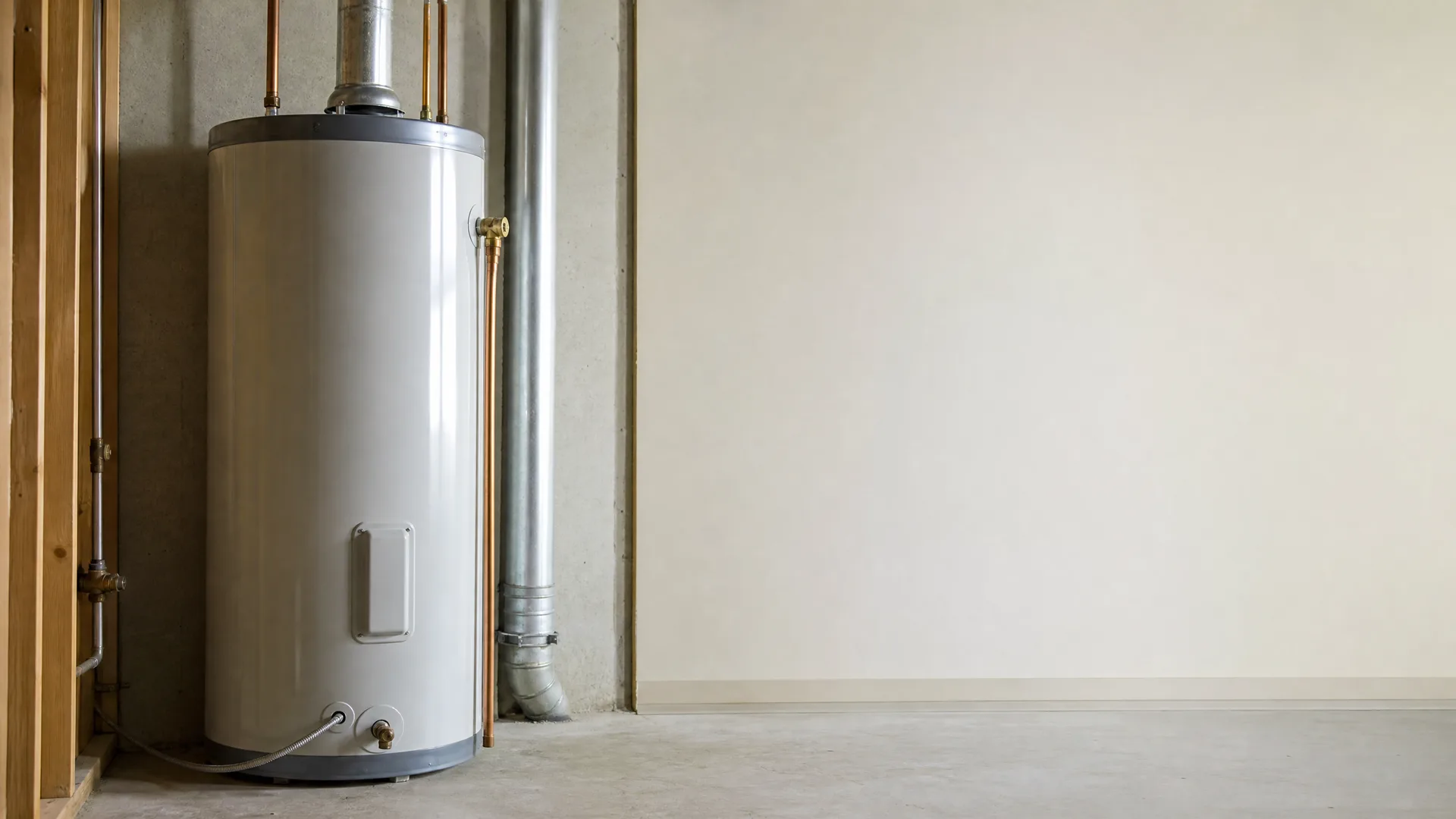
A white cylindrical water heater with copper pipes and a metal flue stands in the corner of an empty room with bare concrete floor, wood framing at left, and a plain light-colored wall.

Where tankless pays off fastest

If your gas water heater is on its way out and you're replacing it anyway, tankless makes the most sense. You're not paying twice, once for a tank and once for a conversion later. Gas is already the fuel most homes in DeSoto County use, so the install is usually a swap rather than running new lines. A tankless unit also frees up the closet or utility space a tank used to take up, which matters in smaller homes.

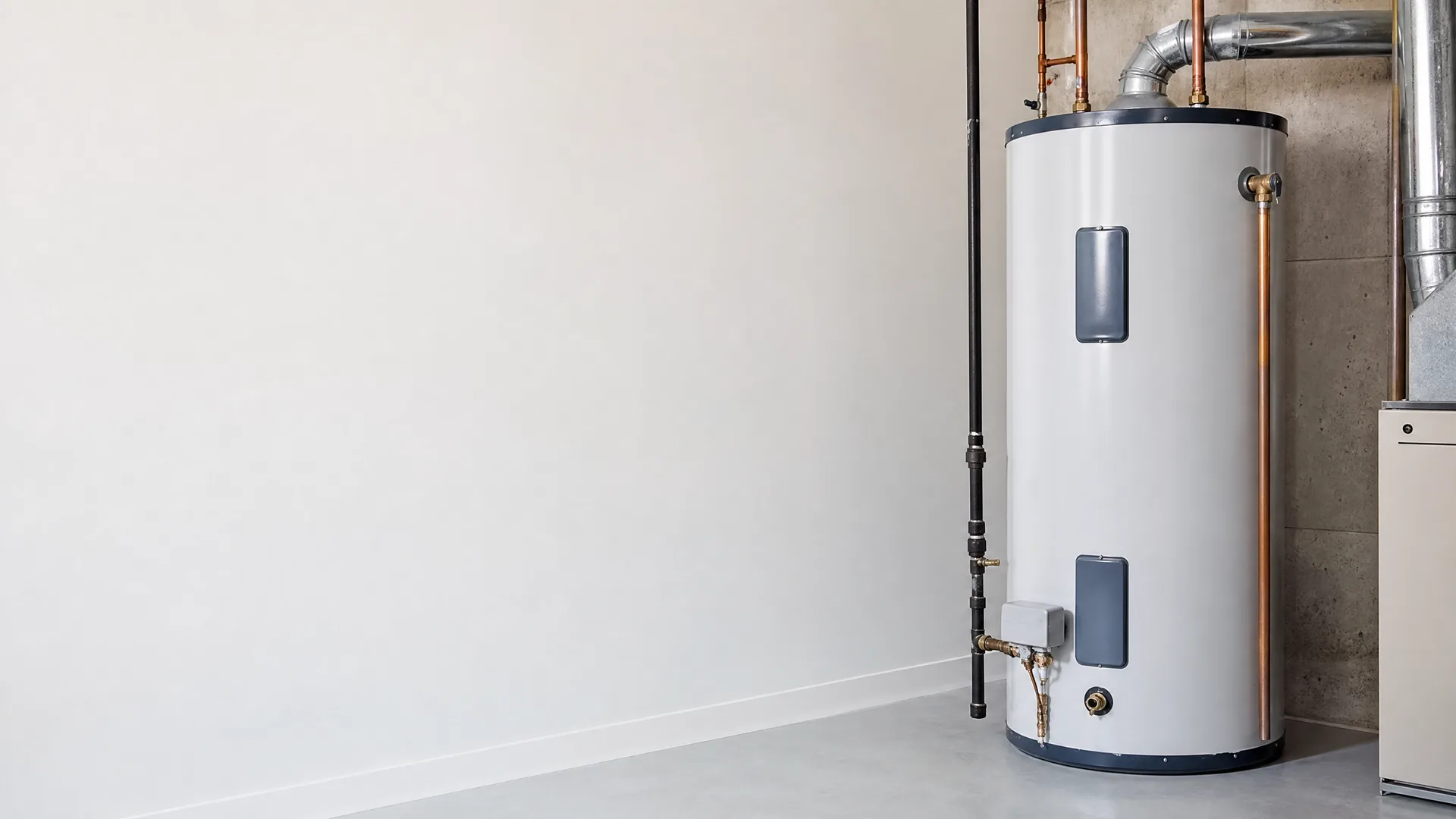
A white cylindrical water heater with copper and black pipes stands against a plain white wall on a gray floor, beside a concrete wall and metal ductwork.

Where a tank still makes sense

If your current tank is only a few years old and working fine, there's no rush. Tankless units cost more upfront, and that cost is harder to justify when nothing's actually broken. A household of one or two people who don't run back-to-back showers and loads of laundry may never notice the difference a tankless unit makes. In that case, the smarter move is waiting until the tank actually fails before replacing it.

Is your water heater actually keeping up with your house?

Run a shower while the dishwasher's going and someone trying to do laundry, and you'll know fast if your tank is too small. The water turns cold, or it never gets fully hot to begin with. Some households just work around it: showers staggered, laundry pushed to the next morning. Others notice the tank straining to recover, running almost constantly between uses. If your water heater is old, you may also be seeing rust-colored water, a popping or rumbling sound as it heats, or water pooling at the base. That last one is worth taking seriously. A tank that's failing can leak into the surrounding floor or cabinet before you know anything is wrong.

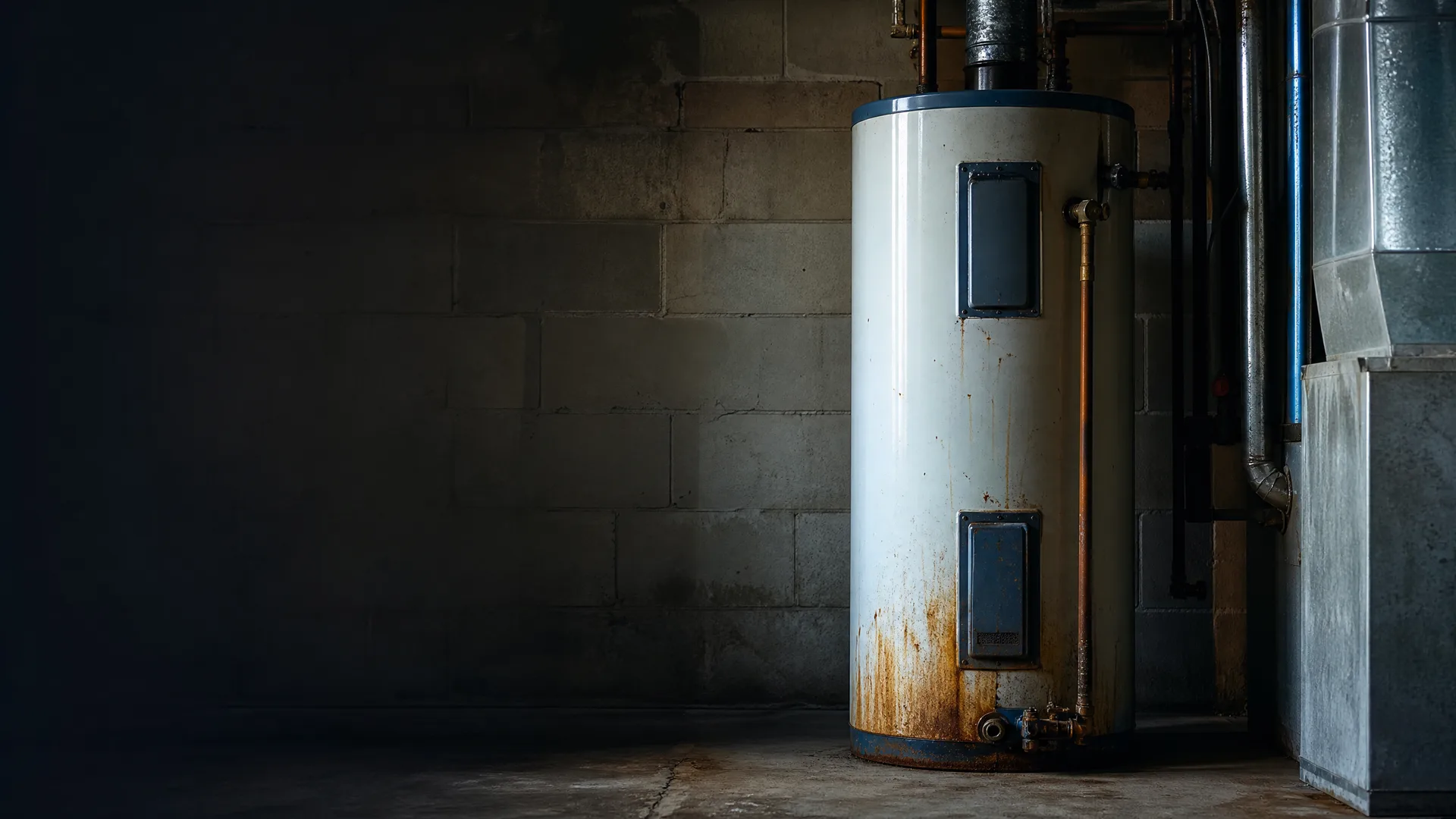
A rusting white and blue water heater with copper and steel pipes stands against a concrete block wall in a dim basement with a bare concrete floor.

You go down to switch a load of laundry and the utility room is warm and a little damp, the way it gets after the water heater's been running most of the evening. It's close to nine, dishes done, someone upstairs just finished a shower. The tank sits in the corner the way it has for years, and tonight you notice the rust at its base, a thin orange line tracking down the side to the floor. You crouch and touch it. Damp, not wet. You stand there a second, laundry basket on your hip, doing the math on how much longer this one has left and what you want to do before it decides for you.

Get matched with a water heater pro in DeSoto County

Describe the project once instead of to every installer.

It costs nothing to send, and you don't have to hire anyone.

A gas tankless unit heats water only when a tap is open, so it isn't holding forty gallons at temperature overnight or while the house is empty all day.

That's the difference between paying to keep a tank of water hot around the clock and paying only for the water you actually run.

A gray-haired, bearded man in a dark coat dusted with snow stands smiling in a dimly lit room with a lamp, mirror, framed art, and a sofa in the background.
An older man with white hair and a beard, wearing a dark snow-dusted coat and scarf, stands in a warmly lit interior hallway with a framed landscape picture, a table lamp and a potted plant behind him, and a snowy view through a window at left.
An older man in a dark snow-flecked overcoat and scarf stands smiling in a warmly lit home entryway, with a glass-paned door showing darkness outside and a lamp-lit room visible through a doorway behind him.
An older man with gray hair and a beard, wearing a dark snow-dusted jacket and scarf, stands smiling in a warmly lit interior hallway with a lit table lamp, a vase of dried branches, and a framed picture in the background.

How a tankless unit actually works

  • A gas tankless unit fires its burner only when a flow sensor detects water moving past it, not on a timer.
  • Cold water runs through a heat exchanger where the burner raises the temperature in a single pass, with no storage tank involved.
  • A fan draws combustion air in and pushes exhaust out through sealed venting, which is why the install usually needs its own vent run.
  • The unit modulates the burner up or down as demand changes, so running two fixtures at once asks more of it than running one.
  • Because there's no tank, the unit needs a minimum flow rate to trigger the burner, so a trickle of water may not get heated.
  • Most gas tankless models still need an electrical outlet nearby to run the fan, ignition and control board, even though gas does the heating.

Open a hot tap and a flow sensor inside the unit picks up the movement right away. That signal tells the burner to fire. There's no tank sitting full and ready, so the water has to pass through a heat exchanger on its way to the faucet, picking up heat in that single pass rather than drawing from water that's already hot. The burner isn't just on or off. It modulates, meaning it ramps up when demand is higher, like a shower and a washing machine running together, and backs off when it's just one sink. That's why running two fixtures at once asks more of the unit than running one, and why the size of the unit matters for a house that uses hot water in more than one place at a time. Because combustion is happening inside the house, the unit needs somewhere for exhaust to go and somewhere to pull combustion air from, which is handled through sealed venting rather than a standard flue. That venting is usually dedicated to the unit alone, which is part of what an installer has to account for. The burner also won't fire for just any amount of water moving through the line. It needs a minimum flow rate to trigger, so a slow trickle at a fixture may pass through without being heated at all. And despite gas doing the actual heating, the fan, the ignition system and the control board all run on electricity, so the unit still needs a nearby outlet to work.

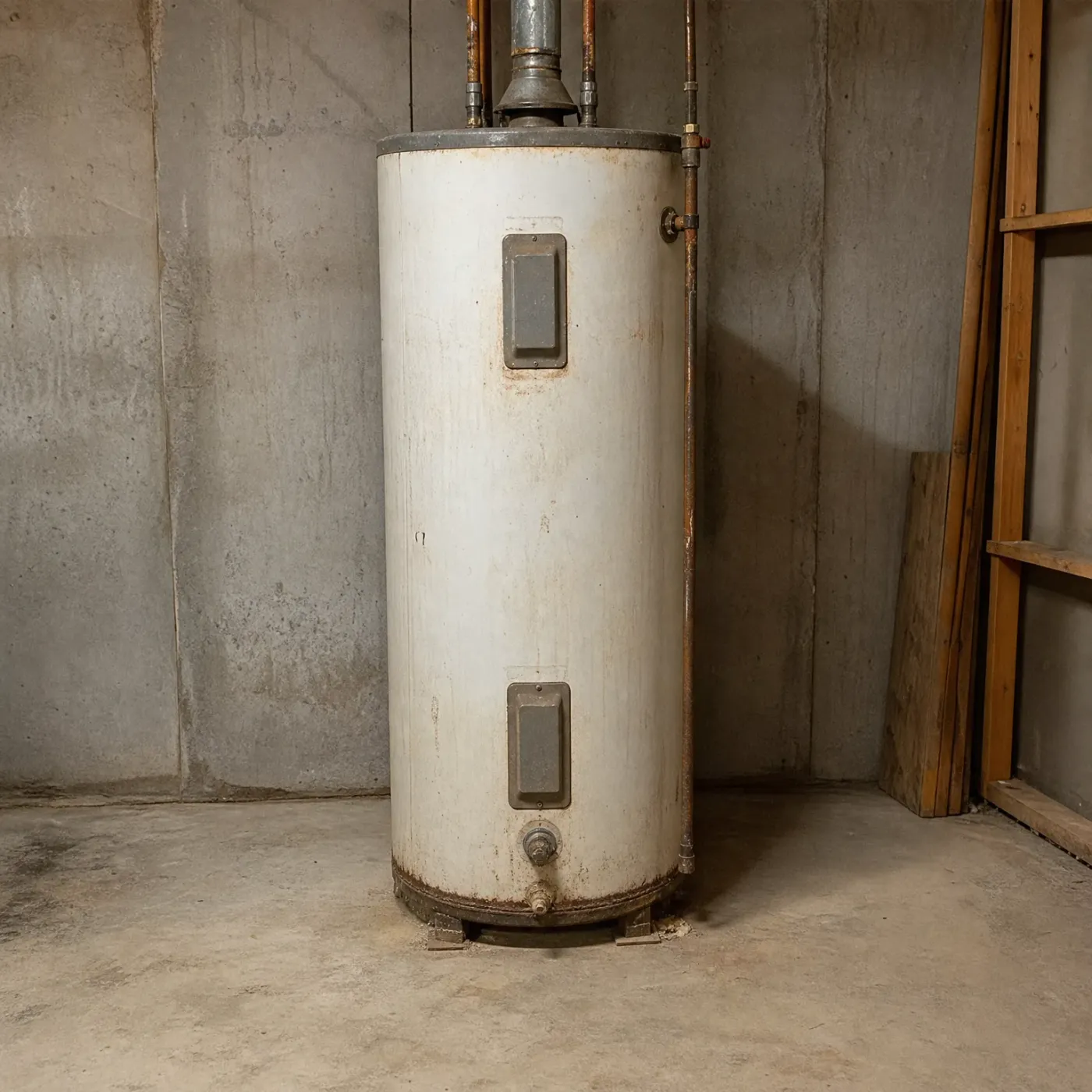
A rusted white cylindrical water heater with two access panels stands in a concrete-walled basement corner, with pipes rising from its top and wooden boards leaning against the wall at right.
Before you get your water heater installation
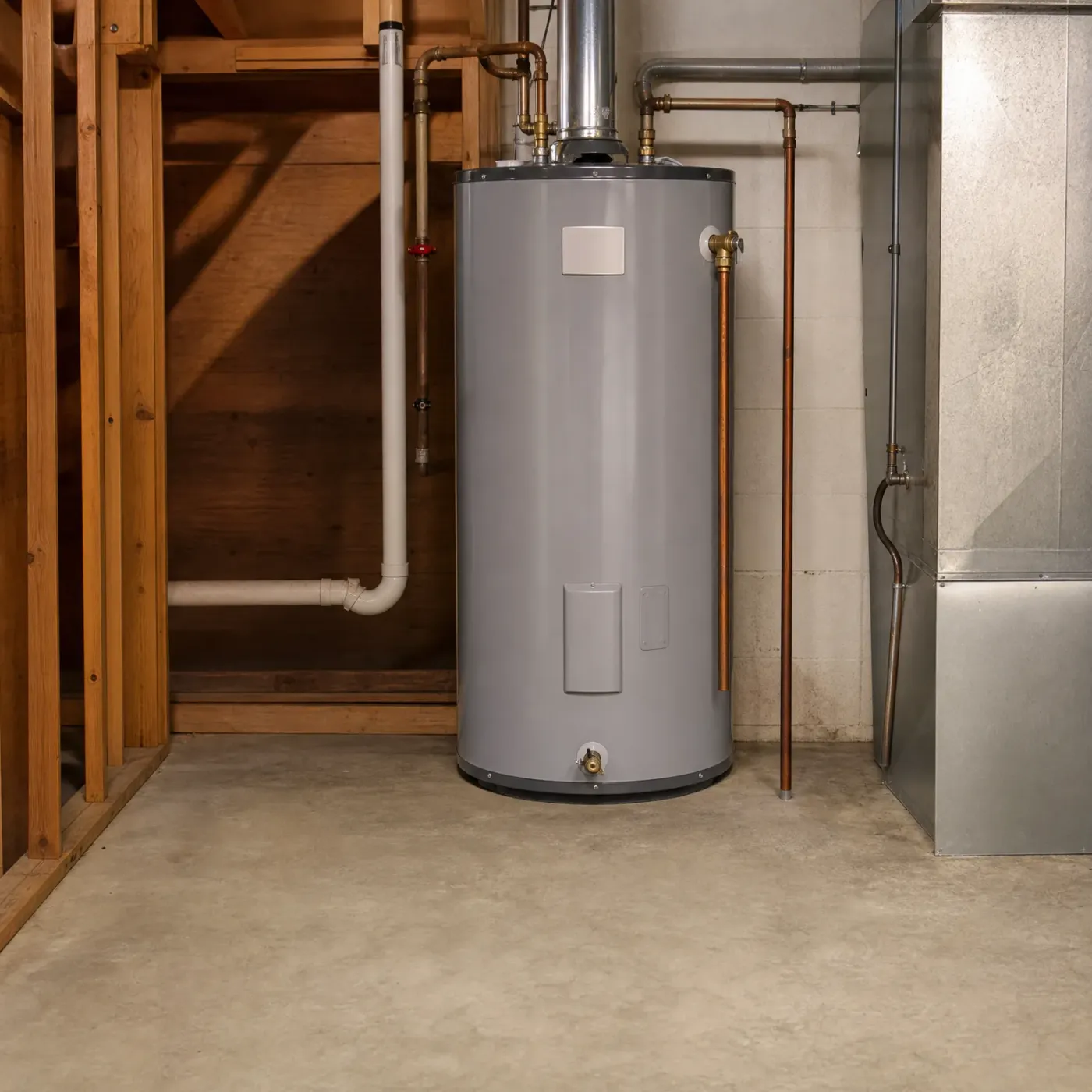
A gray cylindrical water heater stands on a concrete basement floor between an unfinished wood stud wall and a metal furnace duct, with copper and PVC pipes running along the concrete block wall.
After you get your water heater installation

What you give up with tankless

A tankless unit costs more to install than a tank of the same fuel type, and that gap doesn't close on day one. If your gas line or vent needs work to handle the new unit, that adds to the job before you've saved a dime. A tankless heater also needs a minimum flow to fire up, so a trickle from a single fixture, like filling a glass or running a bathroom tap halfway, may not trigger it at all. And when the power's out, a gas tankless unit still won't run, since the ignition and controls need electricity even though the water itself is heated by gas.

What you give up with a tank

A tank holds its forty or more gallons hot around the clock, which means standby loss every hour of the day, even the hours nobody's home. Run it dry during back to back showers and laundry, and the next person waits for it to recover, sometimes twenty minutes or more. A tank also has a shorter working life than a tankless unit, so whoever owns this house next is more likely to face a replacement sooner. And if the tank fails outright, a slow leak can mean water damage to whatever's stored around it before anyone notices.

A woman wrapped in a cream textured blanket sits in an armchair beside a lit lamp and a dark window, with an open book in the foreground.
A woman in a cream knit sweater sits in an armchair with her eyes closed and head tilted back, beside a window showing orange autumn foliage and a wooden side table with a mug.
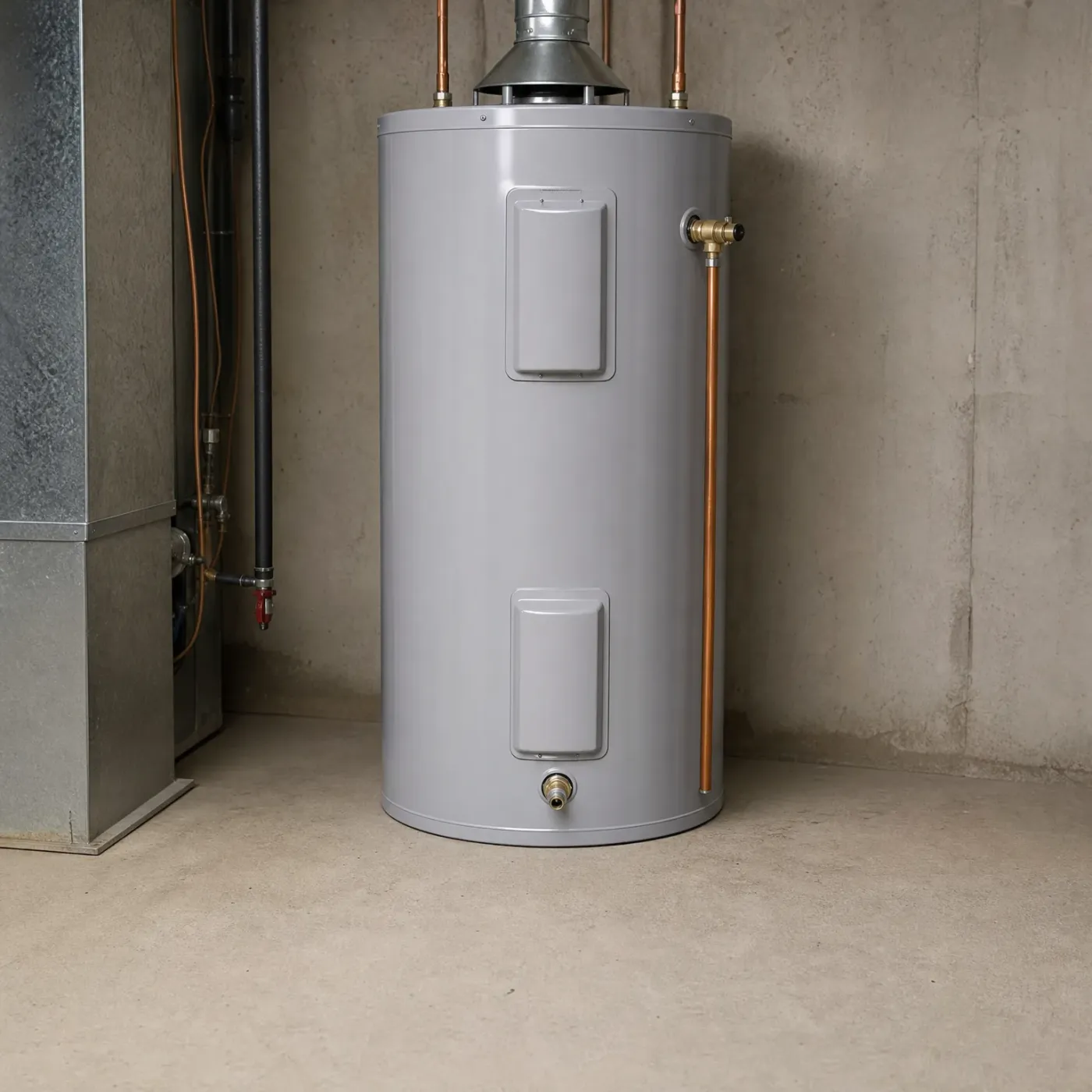
A gray cylindrical water heater with copper piping and a flue stands on a concrete floor in a basement corner beside ductwork and metal equipment.

Tank holding steady

This is a water heater doing its job. Forty gallons or more sit at temperature, the relief valve and drain are where they should be, and the flue carries exhaust out the top. A tank in this shape still costs something to run every hour it sits full and hot, waiting for someone to turn on a tap.
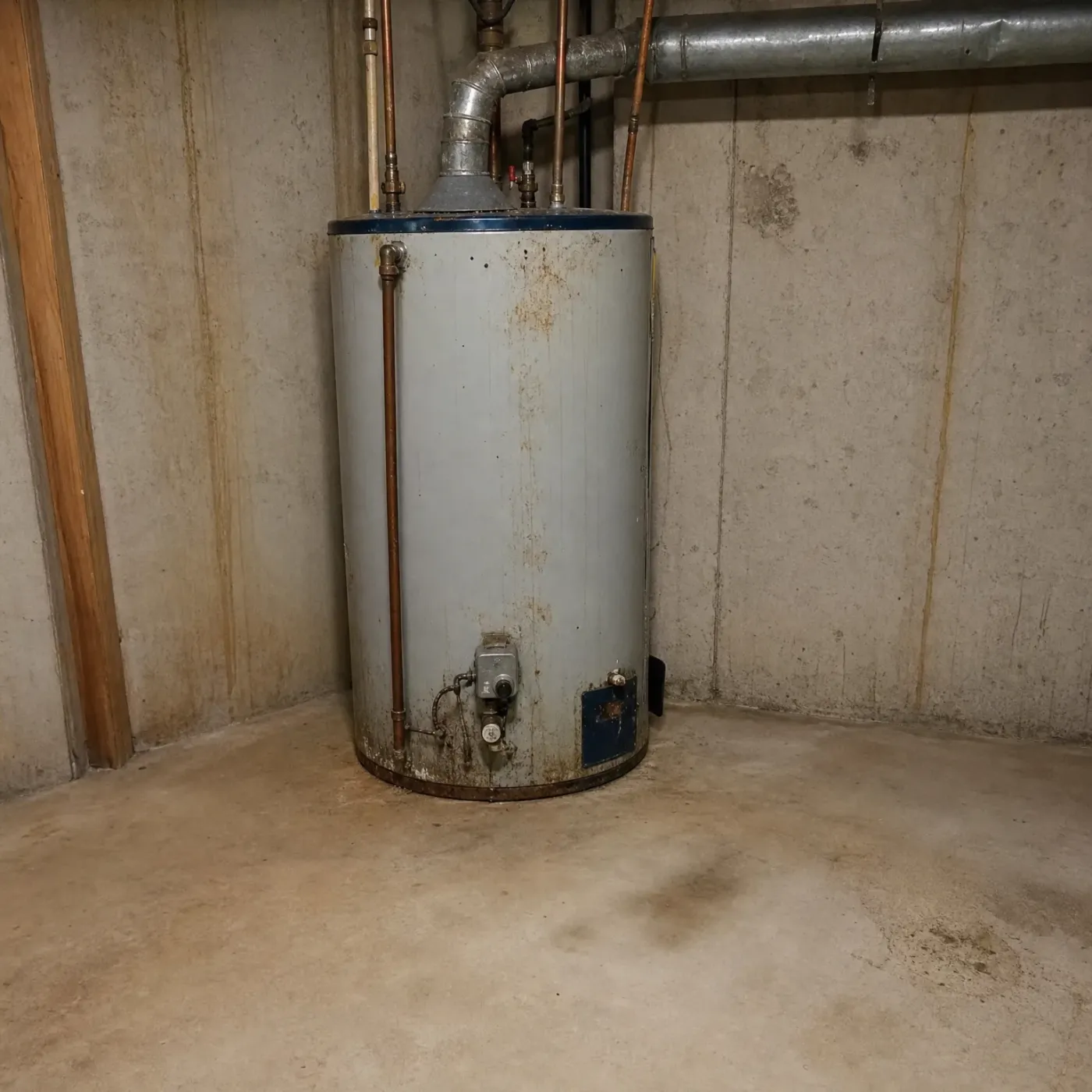

An aging gas water heater with rust streaks stands in the corner of a concrete-walled basement, with copper pipes and a metal flue duct running overhead.

Tank on its way out

Rust like this on the tank body and the floor around it means the steel is failing from the inside, not just showing age on the outside. A tank in this condition is a decision point. If it's already due for replacement, that's when switching to tankless costs you the least to find out.

Power here costs 13.72 cents per kilowatt-hour

Most homes here heat water with gas, so electricity rate doesn't drive the water heater bill directly. But a gas tankless unit still runs a fan and electronics on household power, and 13.72 cents a kilowatt-hour is ordinary, not a reason to switch either way.

EIA-861 2025

  1. You open a hot water tap somewhere in the house.

  2. A flow sensor detects water moving and signals the unit.

  3. The burner ignites and draws combustion air through a fan.

  4. Cold water passes through a heat exchanger and comes out hot.

A man in a dark blue shirt stands in an open front doorway of a stucco and wood-clad house, facing a blond woman seen from behind in the foreground on a stone walkway.

So is it worth it

For most houses around Southaven, tankless earns its keep, especially if the old tank is already failing and gas is already running to it. It costs more going in. It makes that back over years of not heating water you aren't using. If your house runs hot water back to back most evenings, that trade works in your favor.

Where you land depends on what's in your house now, not just what the neighbors have. That's worth a look from someone who can see your gas line, your vent and your actual tank before you decide anything. Answer a few questions about your house and you'll be matched with a contractor who handles installs like yours, and they'll reach out to you directly, no calling around to five companies and repeating the same story each time.

A dark ceramic mug on a round wooden table beside a light grey sofa with a woven cushion and knit throw, with a window, potted plant, floor lamp and wooden cabinet blurred in the background.
A gray cylindrical tank water heater with copper and metal pipes at its top stands on a concrete floor beside a concrete wall and wooden studs in a dim basement.

Find a water heater installation pro in DeSoto County

Step 1 of 3: Equipment