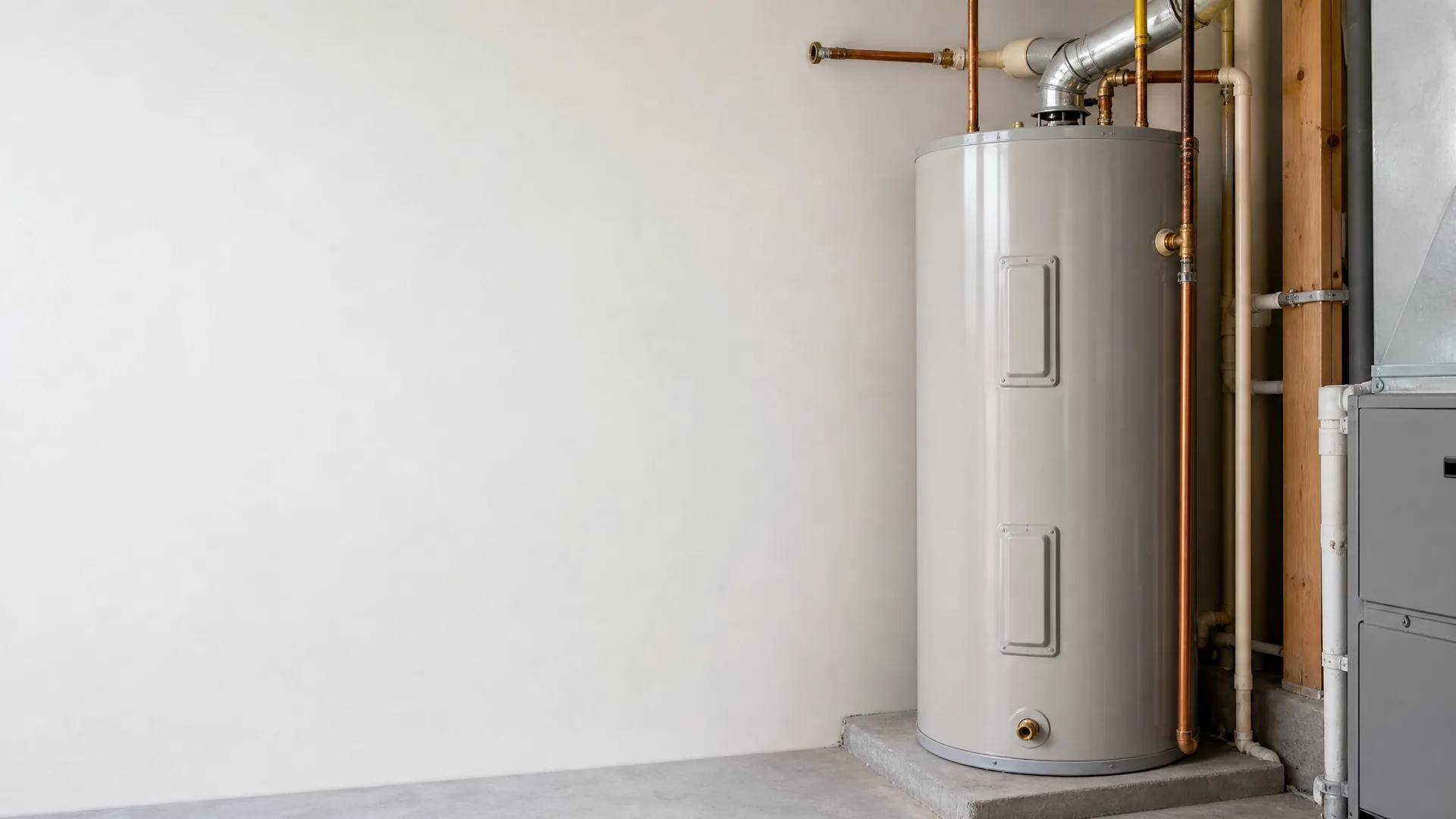
A gray cylindrical gas water heater with a metal flue pipe and copper supply lines stands against a concrete block wall in a dim basement with a concrete floor and a small window.

Hand off the search today

No hot water in Pascagoula, MS

No hot water usually means one of a few things: a dead electric element, a tripped breaker, or a water heater that's simply reached the end of its life. What's actually wrong, and whether it's worth fixing, depends on what a tech finds when they look at your unit. Send the form once and skip the part where you call around Pascagoula explaining the problem over and over.

Hand it over

Most homes in and around Pascagoula heat water with electricity, so no hot water usually traces back to the electric side of the tank. A tripped breaker is the first thing to check. If that's not it, the tank likely has a bad heating element or a failed thermostat, and either one will stop hot water cold rather than just making it lukewarm. Sediment buildup can also bury the lower element over time, especially in a tank that's been running for years without being flushed. If the water heater is old enough that it came with the house, the tank itself may simply be worn out, and an electric water heater usually doesn't give much warning before it quits. None of this is something to diagnose by guessing. A tech can open the panel, test the elements and thermostats, and tell you in a few minutes whether this is a quick fix or a tank that needs replacing.

A smiling man with dark curly hair in a dark green henley shirt sits on a light sofa in a living room with large windows, a lamp, shelving, a stone fireplace, and a bowl of popcorn in the foreground.
A smiling man in a dark long-sleeved henley shirt sits on a beige sofa in a living room, with a bowl of popcorn and a remote on the table in the foreground and shelves, a lamp, and a doorway behind him.
A smiling man with graying hair and stubble in a blue henley shirt sits on a gray sofa with cushions in a living room, with a bowl of popcorn on a wooden table in the foreground.
A smiling man in a dark green long-sleeve shirt reclines on a sofa in a dimly lit living room, with a bowl of popcorn on a side table in the foreground and a bookshelf, lamp, and houseplant behind him.

Why does hot water matter so much in your house

  • 2.5 people per household on average

    A house holding 2.50 people on average runs hot water for several people's showers, dishes, and laundry out of one tank, so when it fails, everyone feels it the same day.

  • Half the homes here were built by 1984

    Half the homes in Jackson County were built in 1984 or earlier, and a tank that old is often original or close to it. Check your water heater's age tag if you haven't.

  • 81.3% of homes heat with electricity

    81.3% of homes here heat water with electricity, so when hot water stops, the breaker panel and the tank's heating element are the first places a tech looks.

ACS 2020-2024

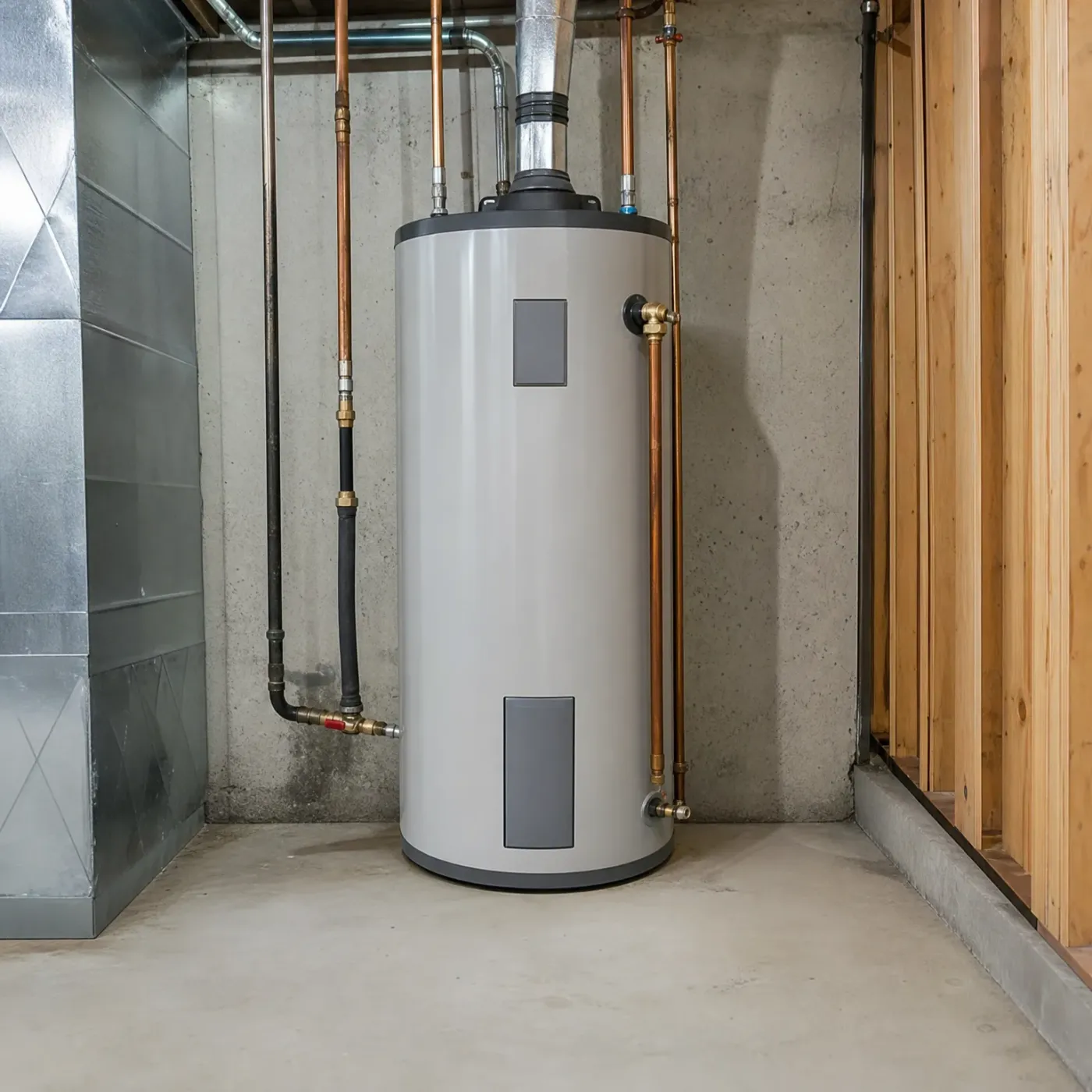
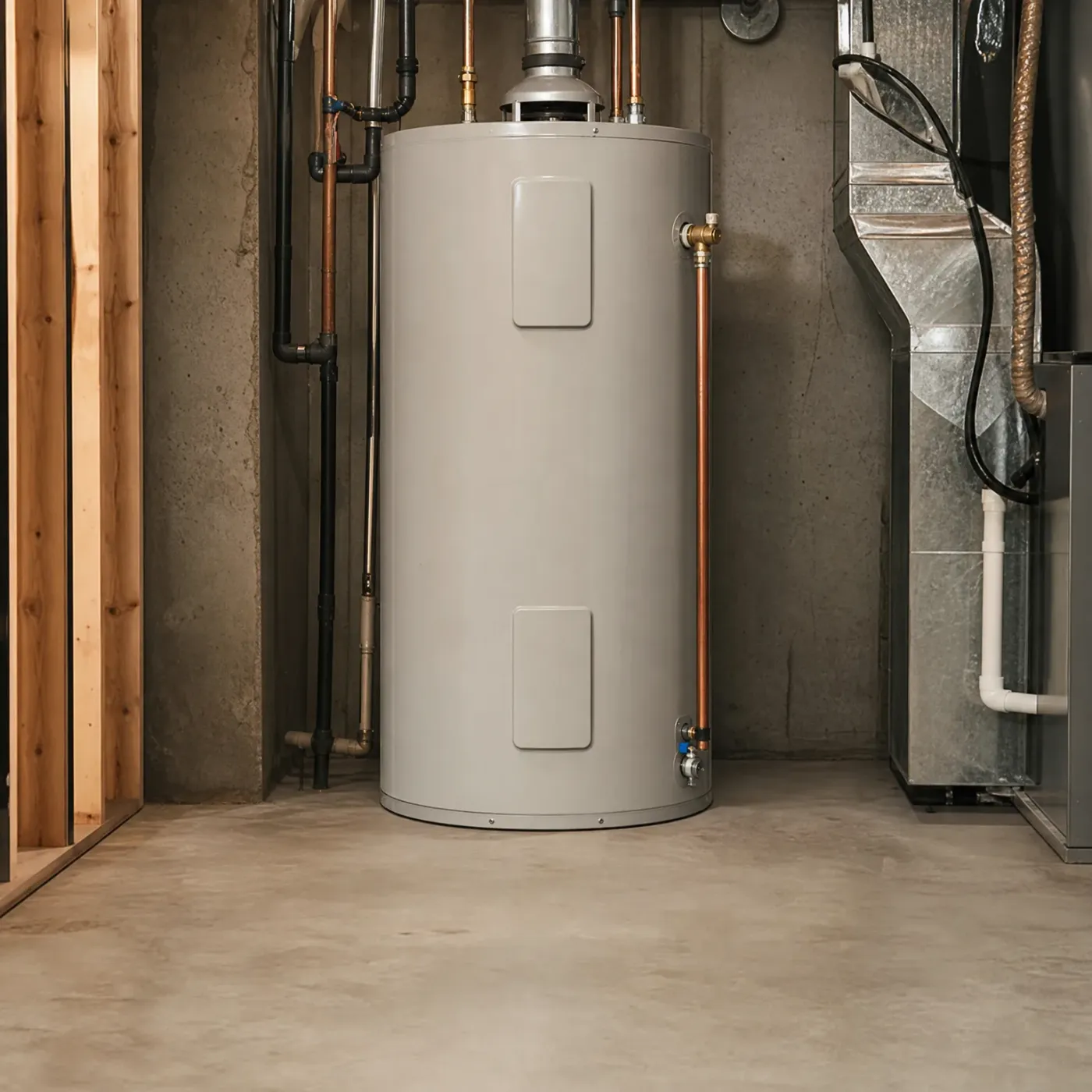
A gray cylindrical water heater standing in a basement corner against a concrete wall, with copper and black pipes, a metal flue, and ductwork nearby, next to wood framing on the right.

The tank running right

Gas line, copper pipes, and the flue all connect clean and sit tight. The jacket holds steady, no rust bleeding through at the seams, no damp on the concrete underneath it. Water comes out of the tap hot because every part doing its job is still doing it.

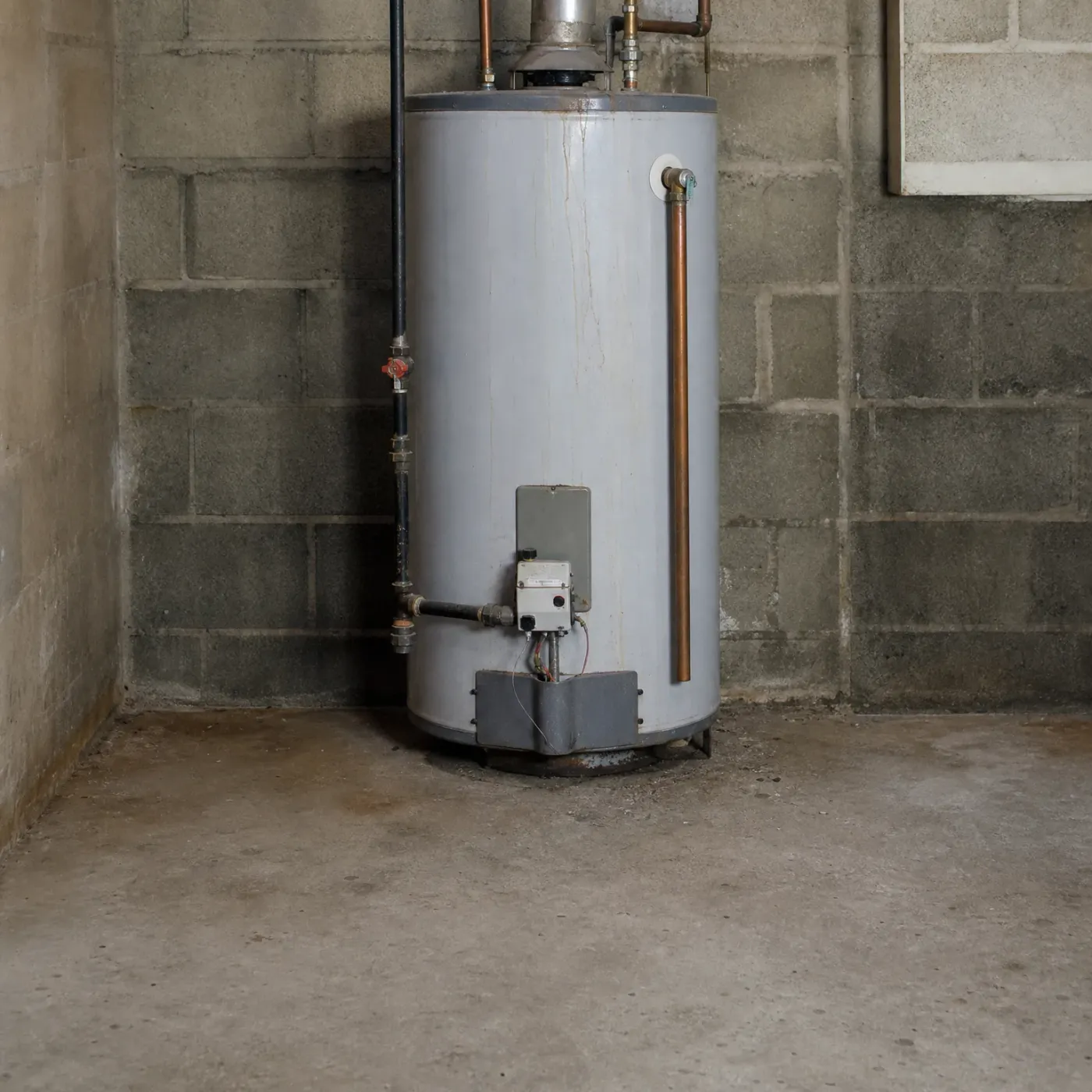
A gray cylindrical gas water heater with copper and black pipes stands in the corner of a basement with concrete block walls and a bare concrete floor.

The tank in trouble

The gas valve and control unit at the base are where a failure usually shows up first. Scorching near the burner, a pilot that won't hold, or a valve that's stopped responding all point to a repair a tech needs to look at directly.

Why does my electric water heater have no hot water at all?

Why does my electric water heater have no hot water at all?

Both elements have failed, or power isn't reaching the tank

An electric water heater has two elements, one near the top of the tank and one near the bottom. The top element heats the water closest to the outlet first, so if only the bottom one fails, you'll still get a little hot water before it runs out. No hot water at all usually means the top element has gone, since the thermostat won't call on the bottom one until the top satisfies first. It can also mean the breaker tripped or the high-limit switch, a safety reset button near the thermostat, has kicked off from overheating. A tech checks the breaker and the switch before pulling either element.

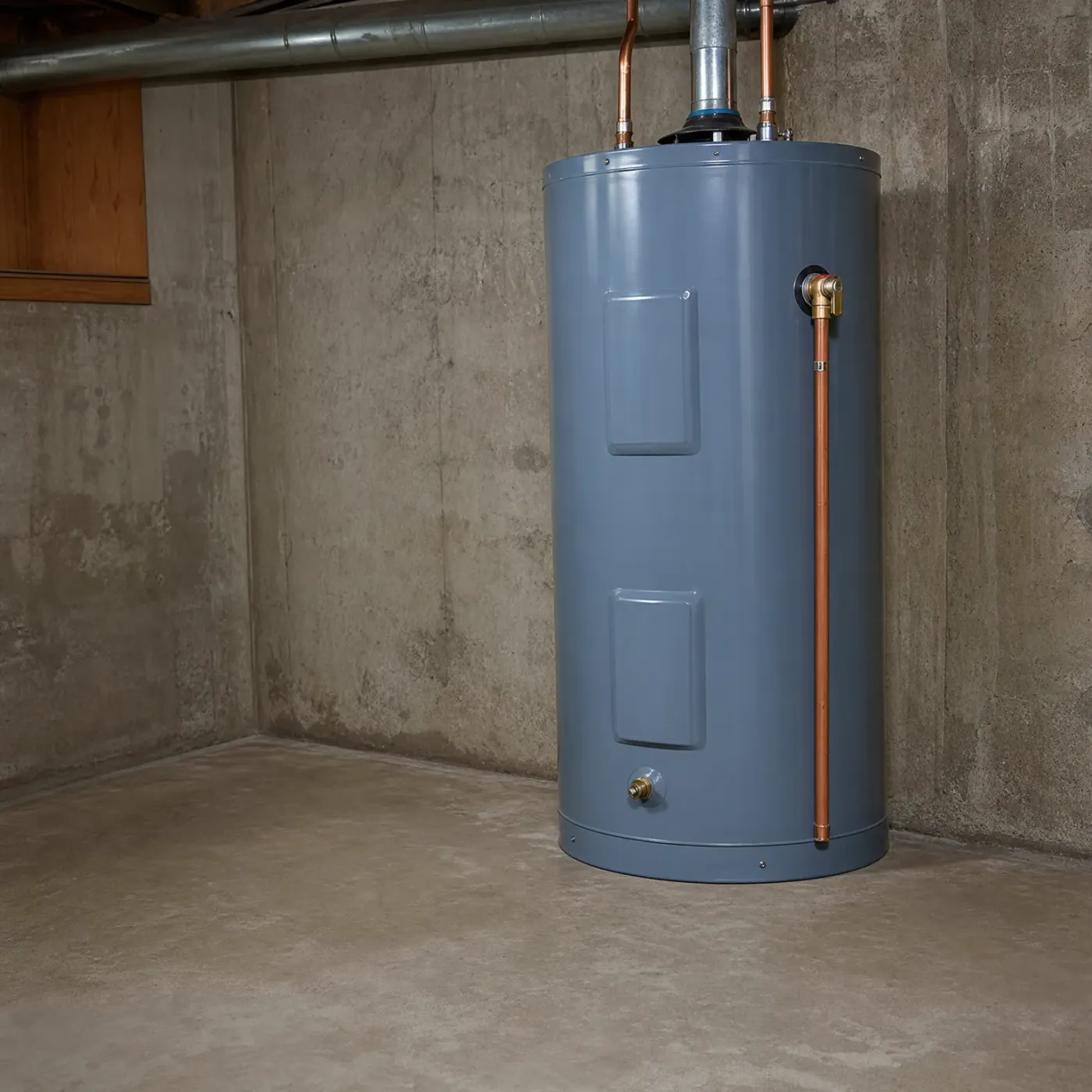
A gray cylindrical water heater standing on a concrete floor in a basement corner, with copper pipes and a metal duct running overhead along bare concrete walls.
Copper lines and the vent connect clean at the top, and the tank holds its full charge of hot water, no rust, no damp spot on the concrete below it.
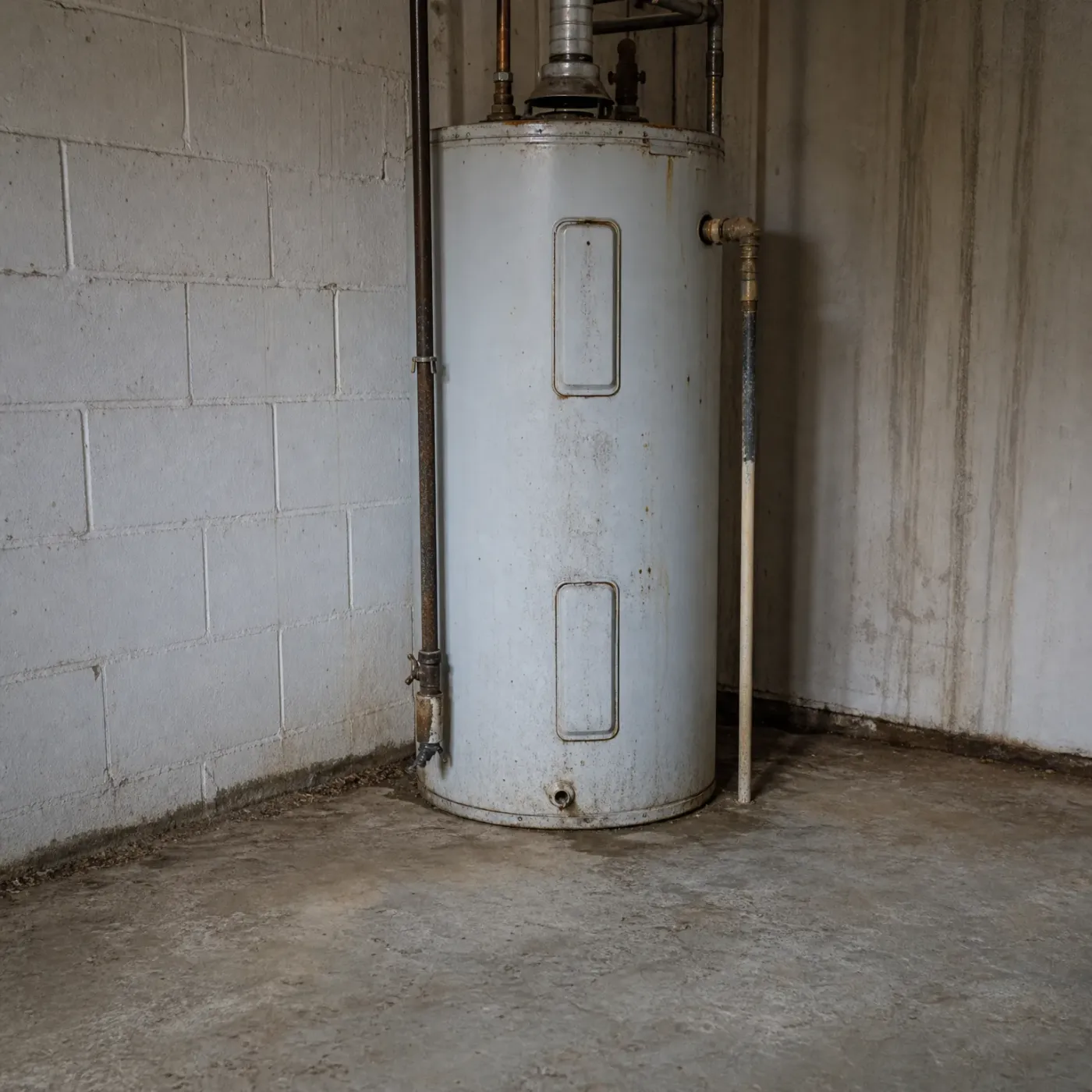
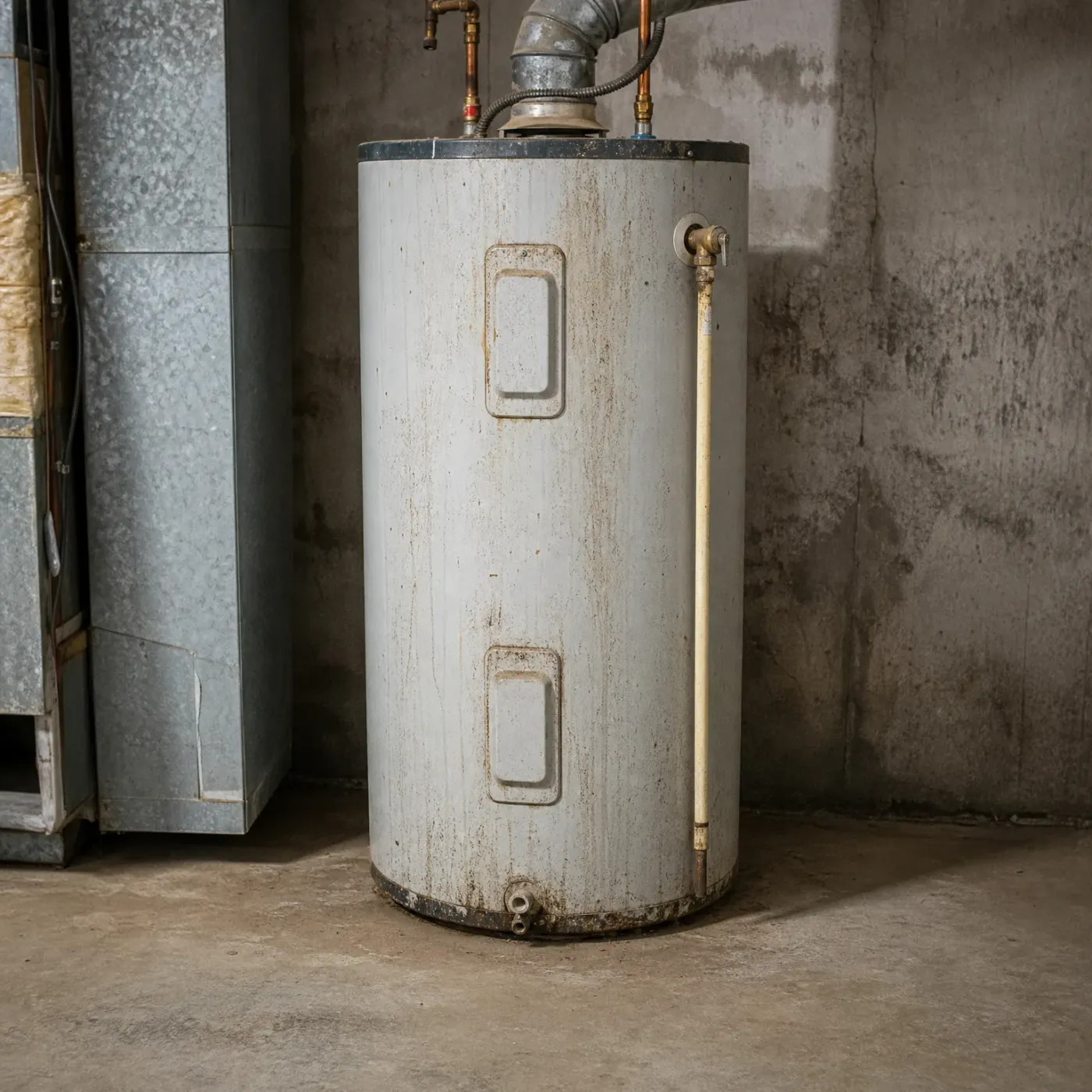
A white cylindrical water heater with rust stains and two access panels stands in a basement corner between a painted concrete block wall and a bare concrete wall, with metal pipes running up and alongside it on a concrete floor.
This one's rusted through at the seams, and corrosion like that usually means the tank is leaking or close to it, not something a new element fixes.
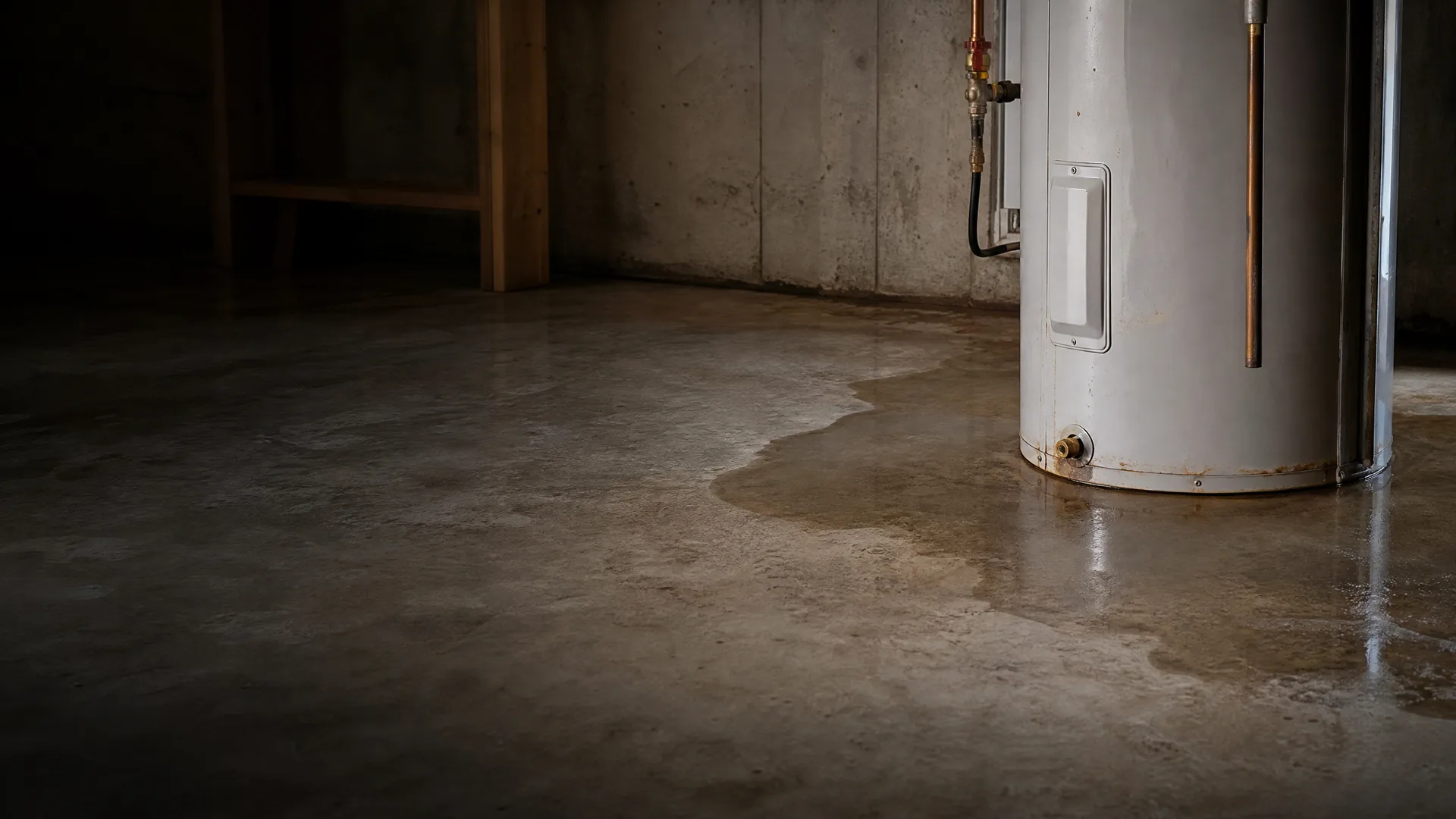
A white cylindrical water heater with copper pipes stands against a concrete basement wall, with water pooled across the surrounding concrete floor.

Saturday morning, and the dishwasher cycle just ended. You head down to the basement to grab something off the shelf and your socks go wet before you see why. A ring of water sits around the base of the tank, already reaching the drain in the floor. The tank itself looks fine from the side, no rust streaking down the jacket, but water keeps beading along the bottom seam and dripping steady onto the concrete. You put a hand on the side. Cool. Upstairs the shower this morning ran lukewarm and you figured it was just low. Down here it's obvious this tank is done, and the load of towels still waiting by the washer isn't getting hot water today.
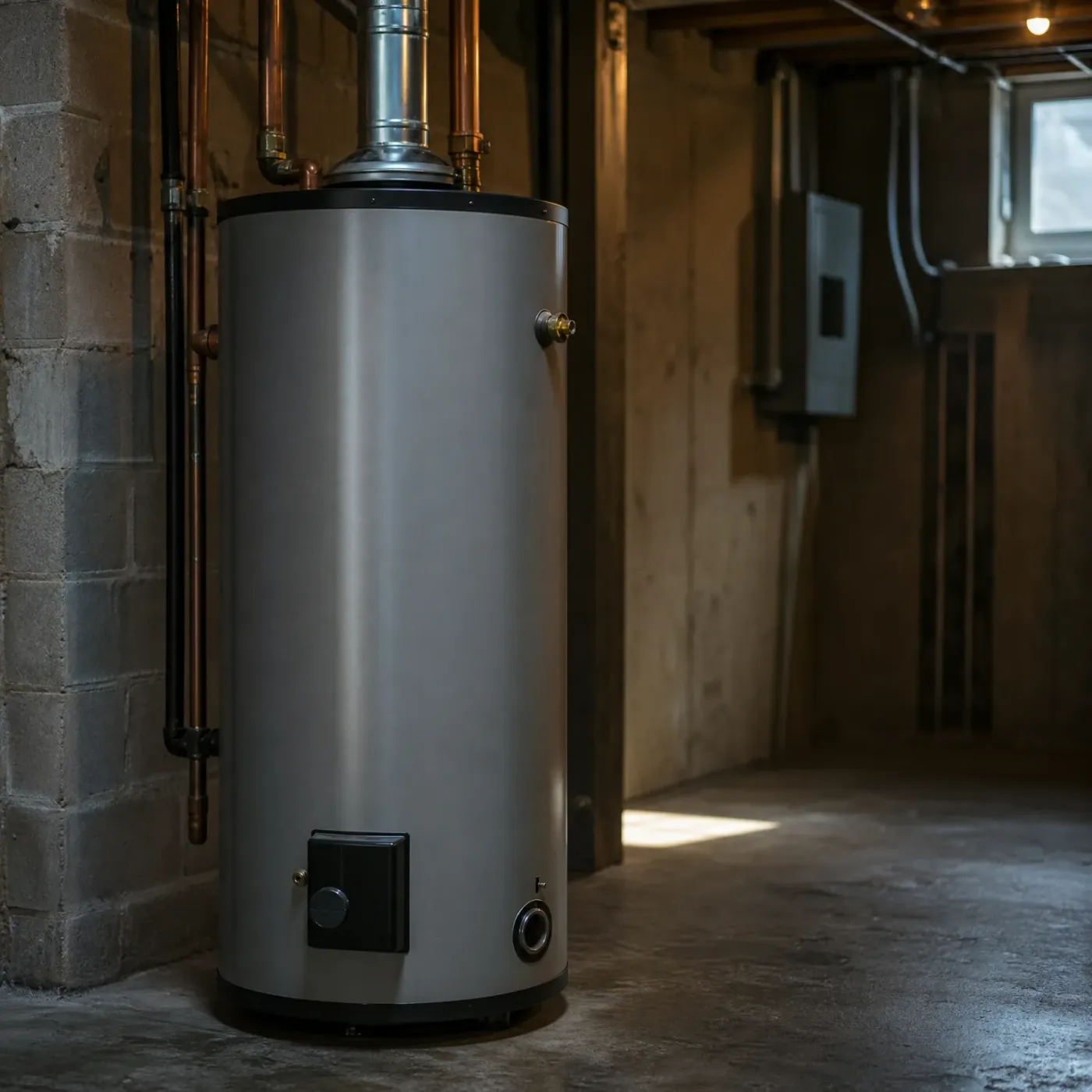

Power here costs 14.15 cents per kilowatt-hour

At 14.15 cents per kilowatt-hour, running a full tank of electric elements to heat a house full of showers and laundry adds up fast. A failing element doesn't just leave you cold, it can cycle on and off trying to heat water that won't hold, pushing that number higher before it quits for good.

EIA-861 2025

An old rust-streaked cylindrical water heater with two access panels, copper pipes and a flue at the top, and a discharge pipe along its side, standing on a concrete floor beside galvanized ductwork against a bare concrete wall.
Before you get your water heater repair
A gray cylindrical water heater with copper piping and access panels stands against a concrete basement wall beside ductwork and vertical pipes.
After you get your water heater repair

Calling around on your own

You pull up a search, start calling plumbers, and ask the same question five times: can you look at a water heater with no hot water, and how soon. One's booked out a week. Another doesn't answer. You write down names, compare what each one quoted you over the phone, and try to remember which one sounded like they knew what they were talking about. Meanwhile the house still has no hot water, and the evening you meant to spend on dinner and the kids goes to this instead.

Sending the form in

You send the details once. What's wrong, where you are, what kind of tank it is. From there, finding someone to come look at it isn't your job anymore. No more calling around Pascagoula asking who's free, no more repeating the same story to a different voice each time. You get your evening back to spend on what you'd rather be doing, and the search for help is off your plate.

A woman in a dark knit turtleneck sweater reclines on a couch under a cream knit blanket, looking down at an open book, with a lit table lamp and framed pictures behind her.
A smiling middle-aged man in a dark green sweater sits at a candlelit table with wine glasses and a plate of greens in a dimly lit interior.

Hand off the water heater problem

A cold shower tells you something is wrong, but not what, and guessing wrong means paying for a part that wasn't the problem. One call, or an afternoon of them, to plumbers who can't say when they'd get to you, isn't worth your time when the water's already cold. Send the request once and a licensed contractor in the Pascagoula area takes it from there, so you're not the one checking the breaker, then the elements, then wondering if the whole tank is just done. Mississippi summers push a house hard enough without cold showers in the mix, and even in a mild winter here, nobody wants to wait on hot water they're already paying to heat with electricity. Whatever's wrong with your tank, getting someone qualified looking at it today matters more than figuring out the cause yourself first. Fill out the form and stop carrying this one alone.

  1. A tech checks the breaker and the high-limit reset switch first.

  2. Power gets tested at both elements with the tank drained of current.

  3. The failed element or thermostat gets identified with a multimeter.

  4. The bad part is pulled and swapped for a matching one.

Repair or Replace the Tank

Repair

  • A single failed element or thermostat is a straightforward swap once a tech confirms which one quit.
  • Most tanks in Jackson County run on electricity, so the fix usually stays on the electric side, not the gas line or flue.
  • If the tank itself is sound, no rust at the seams, no damp underneath, repair gets your hot water back without replacing the whole unit.
  • A tripped breaker or a bad high-limit switch can look like a dead water heater and costs nothing to fix once it's found.
  • Repair buys time if the tank is only a few years into its life and everything else checks out clean.

Replace

  • Rust bleeding through the seams or a damp spot on the concrete underneath means the tank is leaking and no part swap fixes that.
  • When both elements have failed or the tank won't hold a charge of hot water, you're paying to patch a unit on its way out.
  • A tank near the end of its expected life will likely fail again soon even after a repair, so the next cold shower may come fast.
  • Replacement resets the clock, which matters in a house running hot water for several people's showers, dishes, and laundry every day.
  • If corrosion has reached the tank itself rather than just a fitting, replacement is the only option a tech will offer.
A white cylindrical water heater stands against a plain wall in a room with a concrete floor, connected to copper and metal pipes with a small expansion tank mounted on a block wall at left.

Fixing it yourself

You can reset a tripped breaker or push the high-limit reset button on the thermostat. Past that, opening the access panel means working near live wires feeding a 240-volt element, and guessing which part failed without a multimeter usually means buying a part you didn't need. Most people get the breaker checked, find the tank still cold, and stop there.

A beige cylindrical water heater on a raised concrete pad in a corner, with copper and metal pipes above it, an exposed wood stud, and a gray metal appliance at right.

Having a tech look at it

A tech opens the panel, tests both elements and the thermostat with the tank's power confirmed off, and tells you which part failed before touching anything. If it's a single element, that's a straightforward swap. If the tank itself is rusted or leaking at the seams, replacement gets put on the table instead, with the reasons why.

A closed laptop and a ceramic mug of dark coffee sit on a wooden table, with a blurred kitchen counter, potted plant, wooden utensils and cutting boards, and a large window in the background.

No hot water comes down to a few parts, and a tech can tell you which one

A dead element, a tripped breaker, a failed thermostat, or a tank that's finished after years of service. That's the list. A tech who opens the panel and runs a multimeter knows which one in minutes, and once they know, the fix is usually a straightforward swap, not a guessing game.

You don't have to find that tech yourself. No calling five plumbers to ask if they work on water heaters and when they could come. No sitting on hold, no explaining the ring of water on your floor twice, no stacking up quotes you can't compare because nobody gave you the same answer twice. Send the form once and that search is somebody else's job now, not yours.

A large weathered ceramic vase and a shallow wooden bowl sit on a rustic wooden table beside a window with linen curtains, with a blurred sofa with cushions and a hanging fabric panel in the background.
A gray cylindrical water heater with copper piping and an expansion tank stands on a drip pan against a dark concrete basement wall, next to metal ductwork.

Send one request and you're done looking

Skip calling shops to ask who repairs water heaters in Jackson County.

Step 1 of 3: Equipment