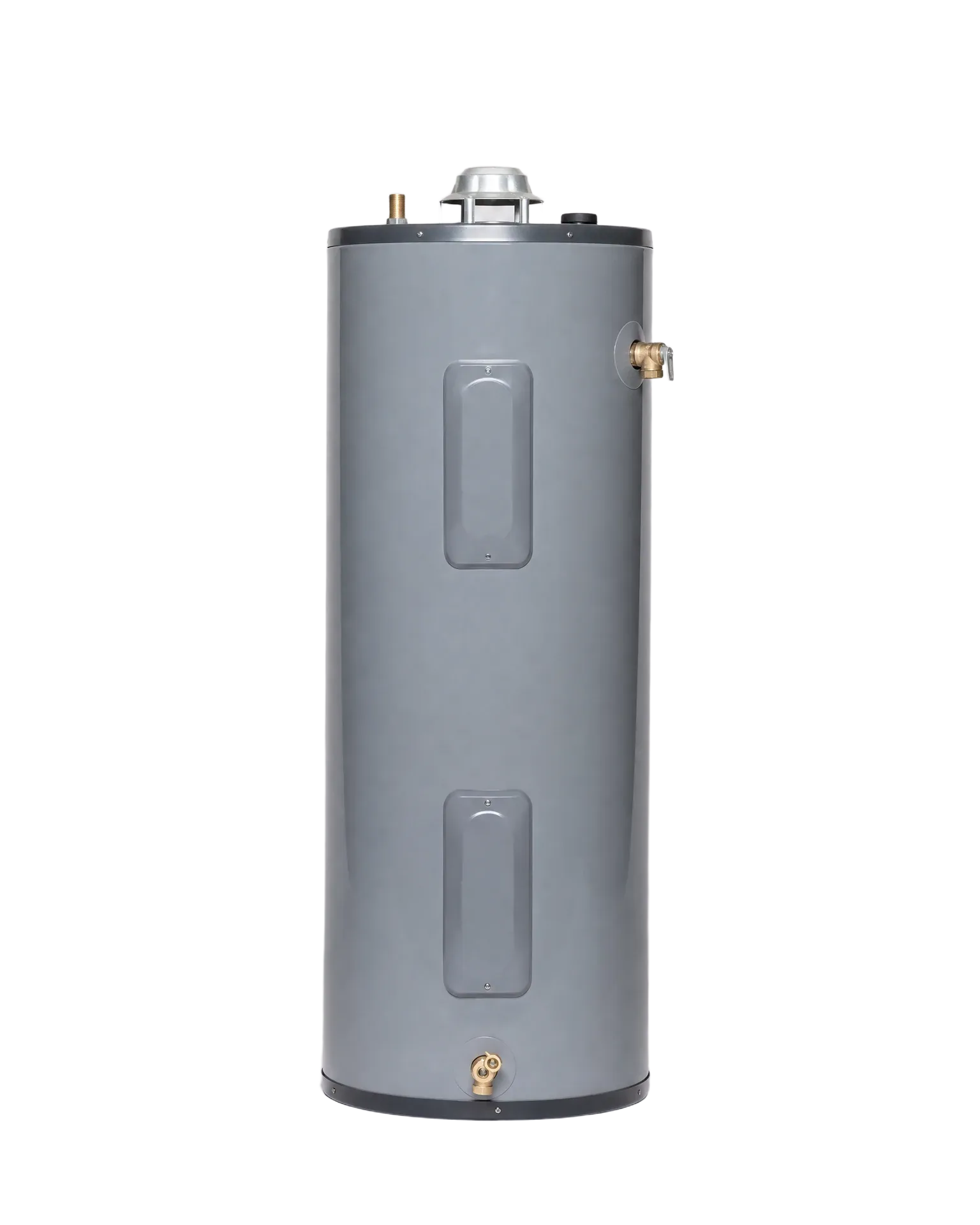
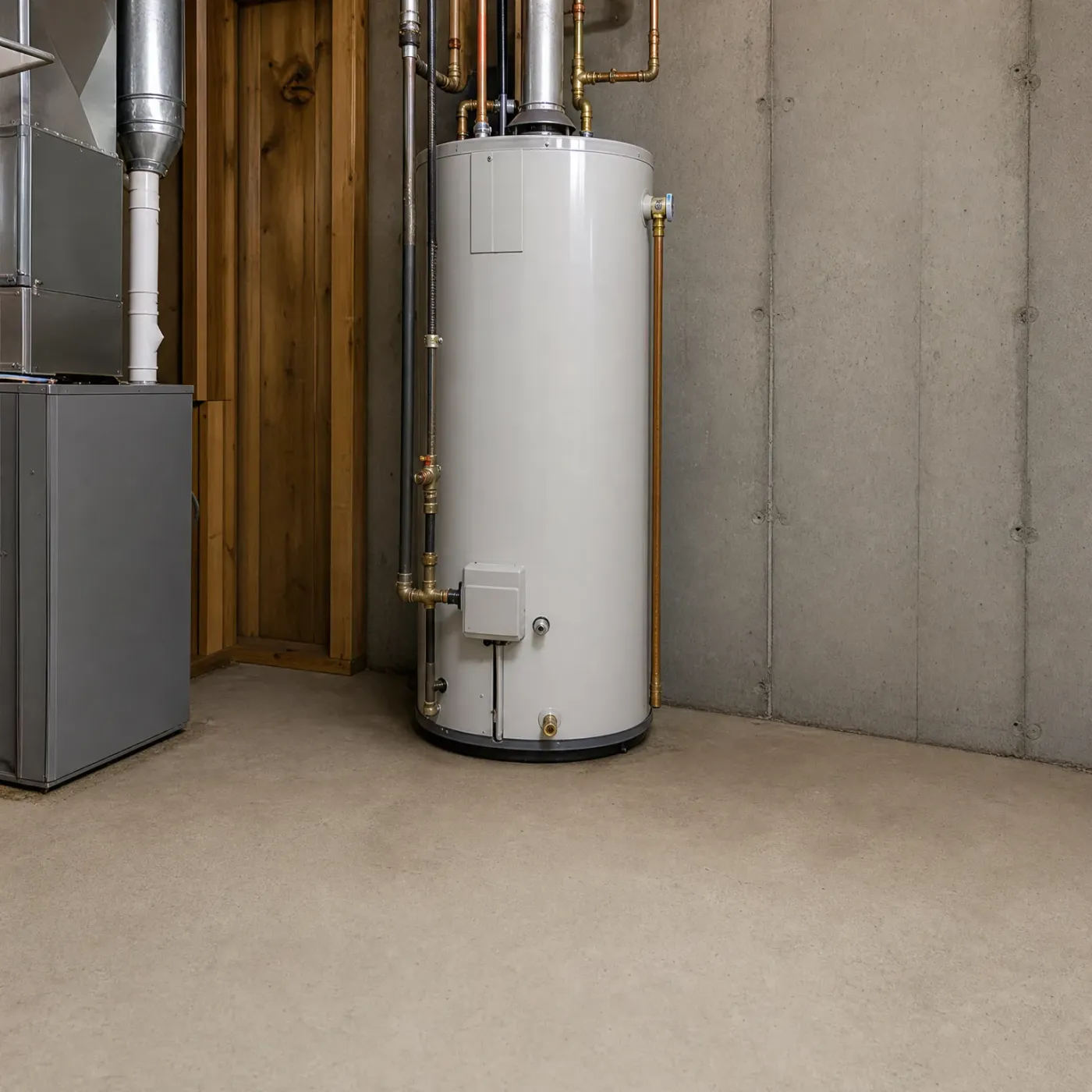
Still running fine
Your water heater is doing its job. Hot water comes on when you turn the tap, the tank isn't leaking, and nothing looks out of place around the base or the fittings. A unit in this shape just needs an eye kept on it.
You're not sure if the water heater is worth fixing again or if it's time to replace it. Most people only think about this when something's already gone wrong, like a puddle on the floor or water that won't get hot. With most homes here heating water with electricity, a failing unit shows up fast in a higher bill before it ever fully quits.
A water heater tank doesn't patch itself. Once it starts leaking from the tank itself, rather than a loose fitting, the steel has already rusted through from the inside, and that only gets worse. Rust-colored water from the hot tap, even when it clears up, points to the same corrosion. Age matters too. Most tanks last 8 to 12 years, and after that, the risk of a sudden leak goes up fast. An electric water heater that's struggling also tends to run longer to heat the same amount of water, which shows up as a jump on your power bill before the tank actually fails.
Your water heater is doing its job. Hot water comes on when you turn the tap, the tank isn't leaking, and nothing looks out of place around the base or the fittings. A unit in this shape just needs an eye kept on it.
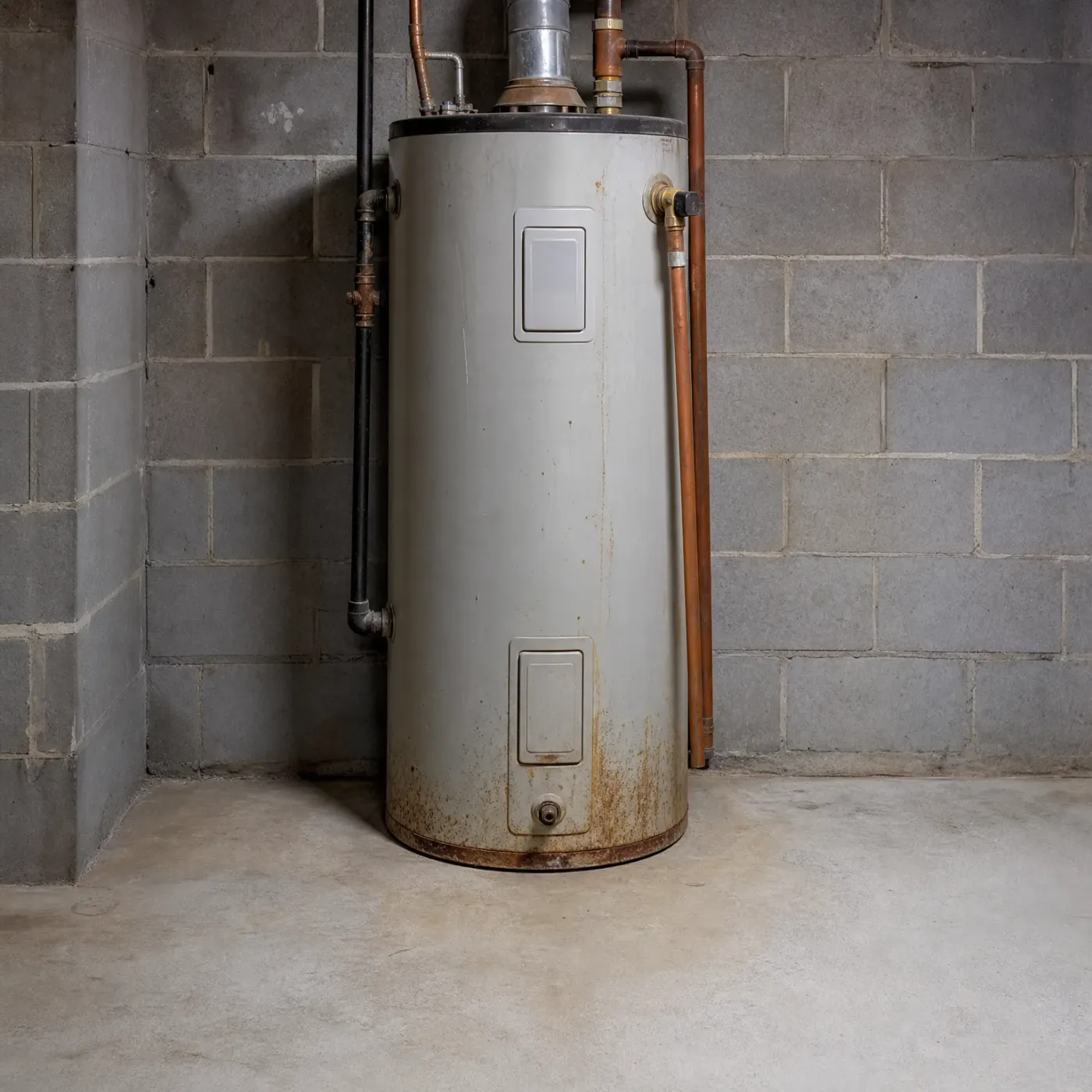
Rust along the base or the seams means the tank itself is failing, not just a part inside it. Once steel starts rusting through like this, it doesn't stop or reverse. That's a sign to replace, not repair.

Most houses in Mississippi heat water with electricity, and a tank that's struggling to hold temperature runs longer to make up for it. You'll see that on the power bill before you see a leak. Rust in the water, a tank that takes longer to recover between showers, or a pilot light or heating element that won't stay on are all signs the tank is losing the fight, not just having a bad week.
Wait too long and the choice gets made for you, usually on a weekend when the tank finally gives out and floods a closet or a garage floor. At that point you're not weighing options, you're calling around to whoever can come fastest, explaining the same problem over and over to each one, trying to compare quotes while water is still on the floor. Sending the form now means someone else does that legwork instead of you, and you get to make this decision while the tank is still just failing, not already flooded.

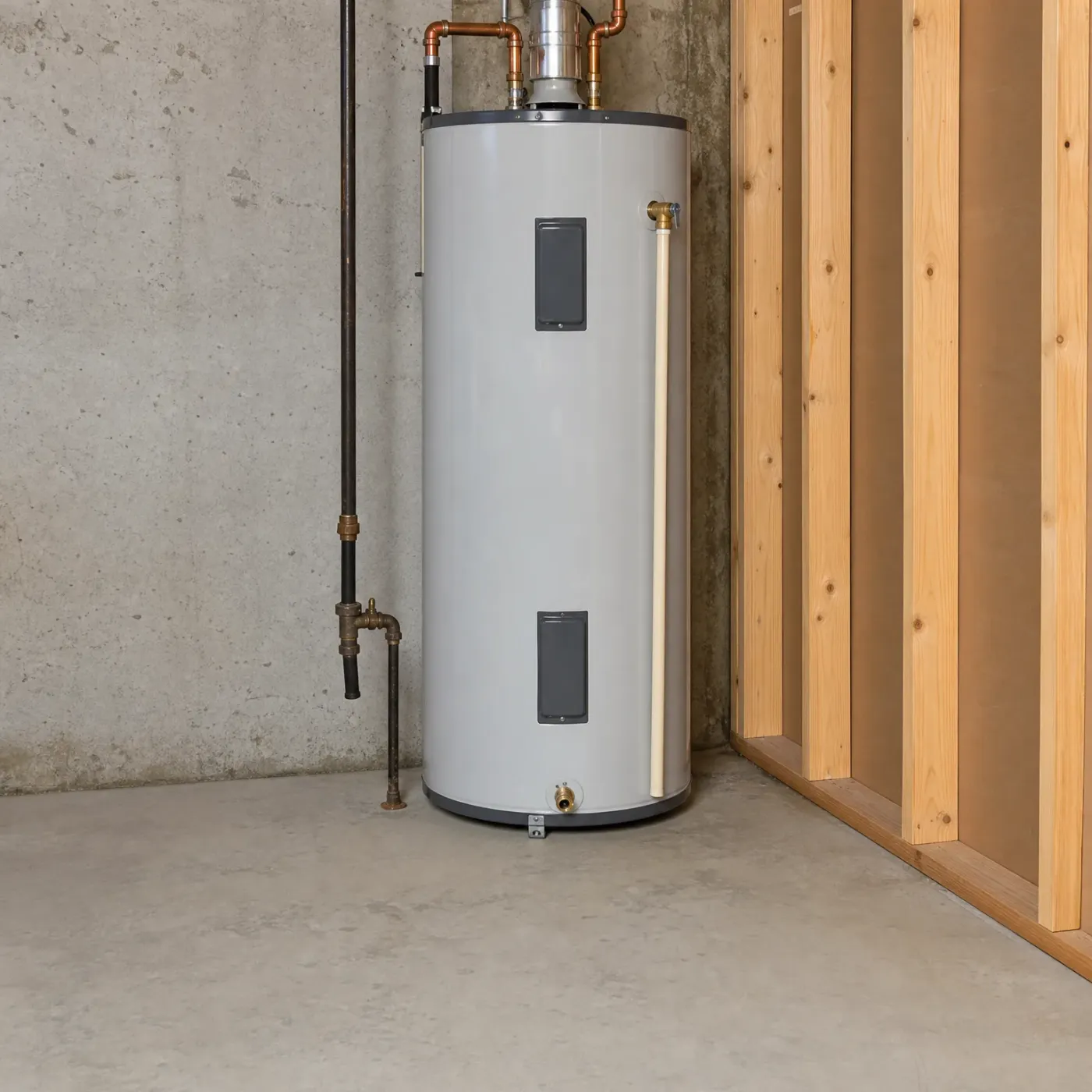
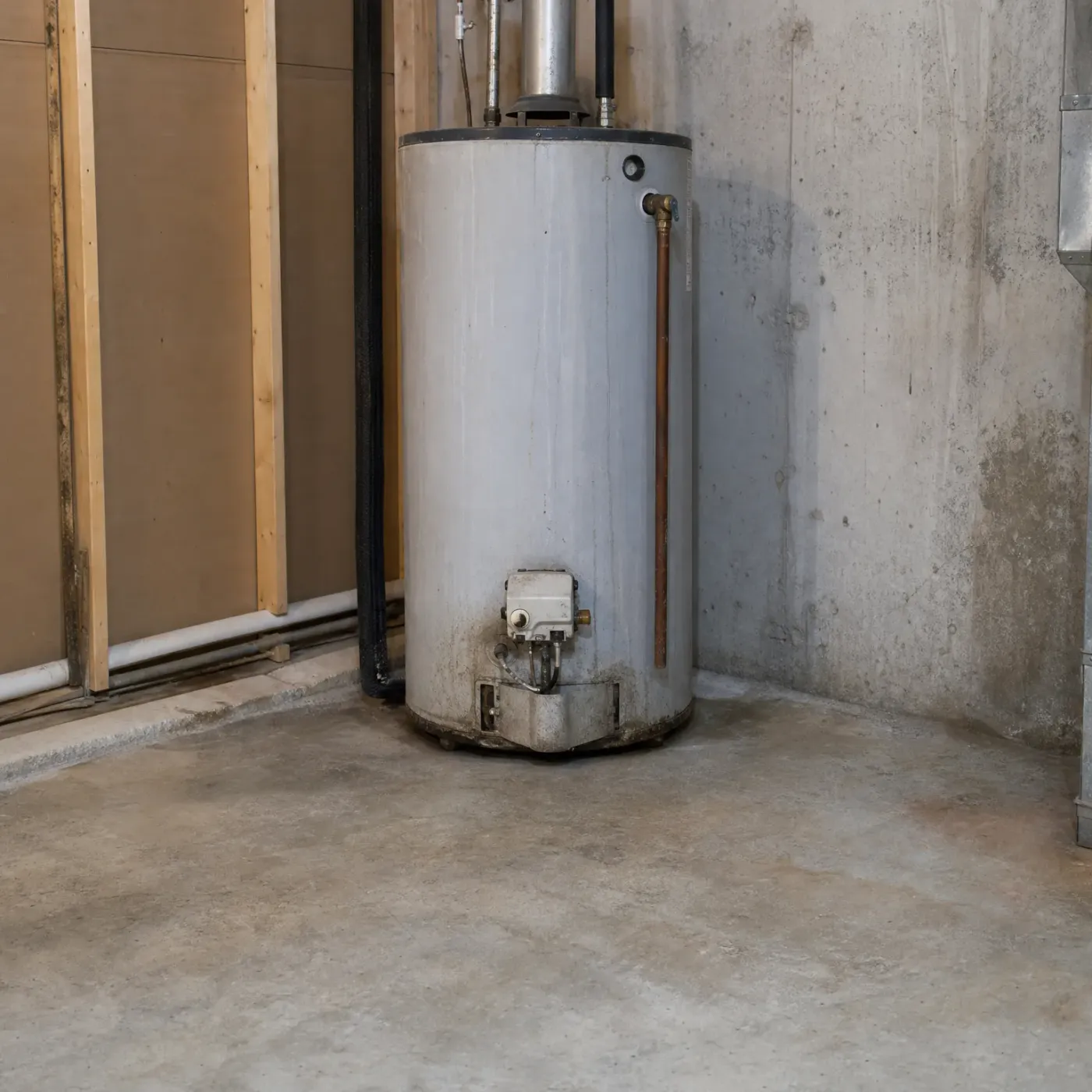
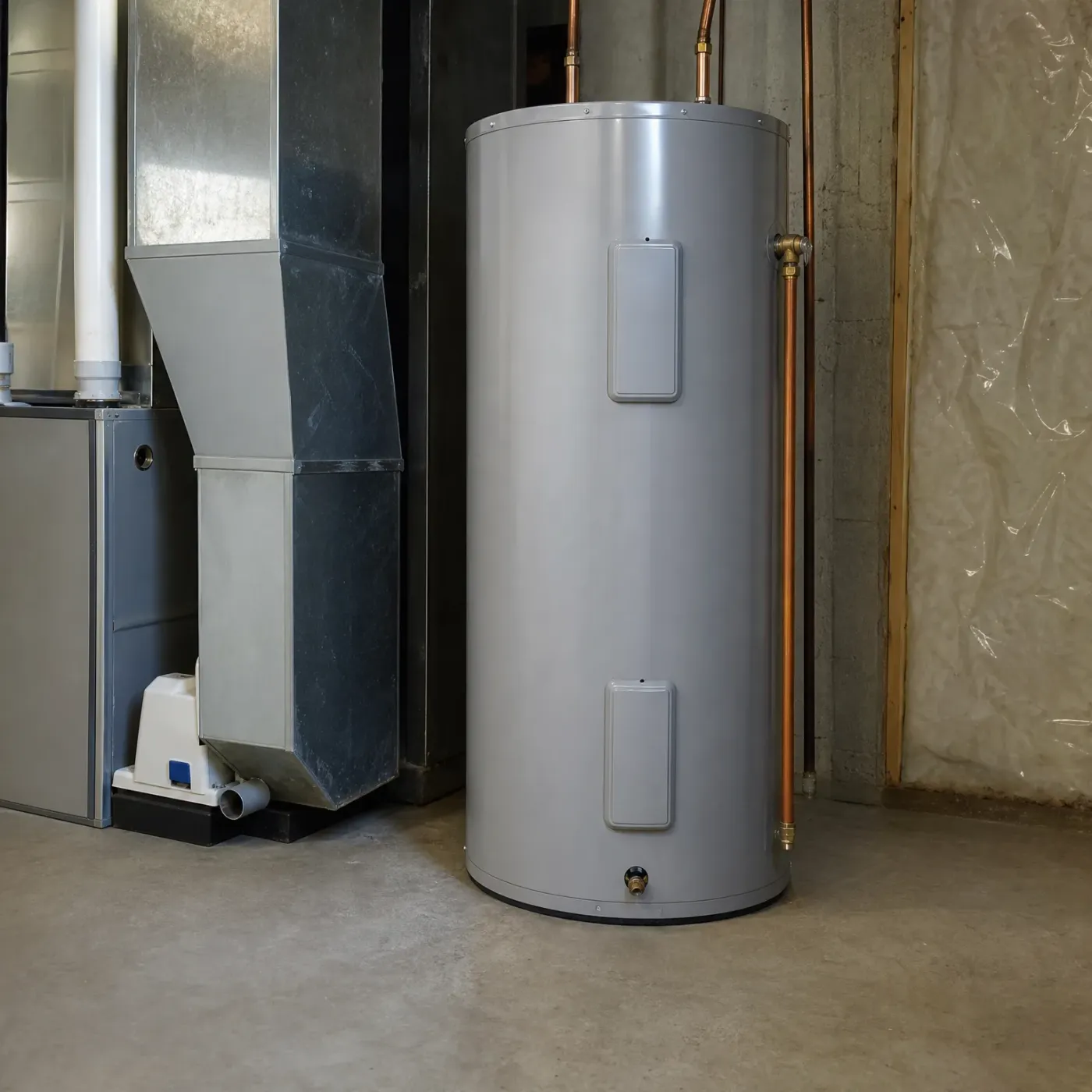
The tank sits against the wall with its panels closed up and the copper lines tight at the top. No water around the base, no drip from the relief valve's discharge tube. A water heater in this shape just needs the drain valve checked once in a while.
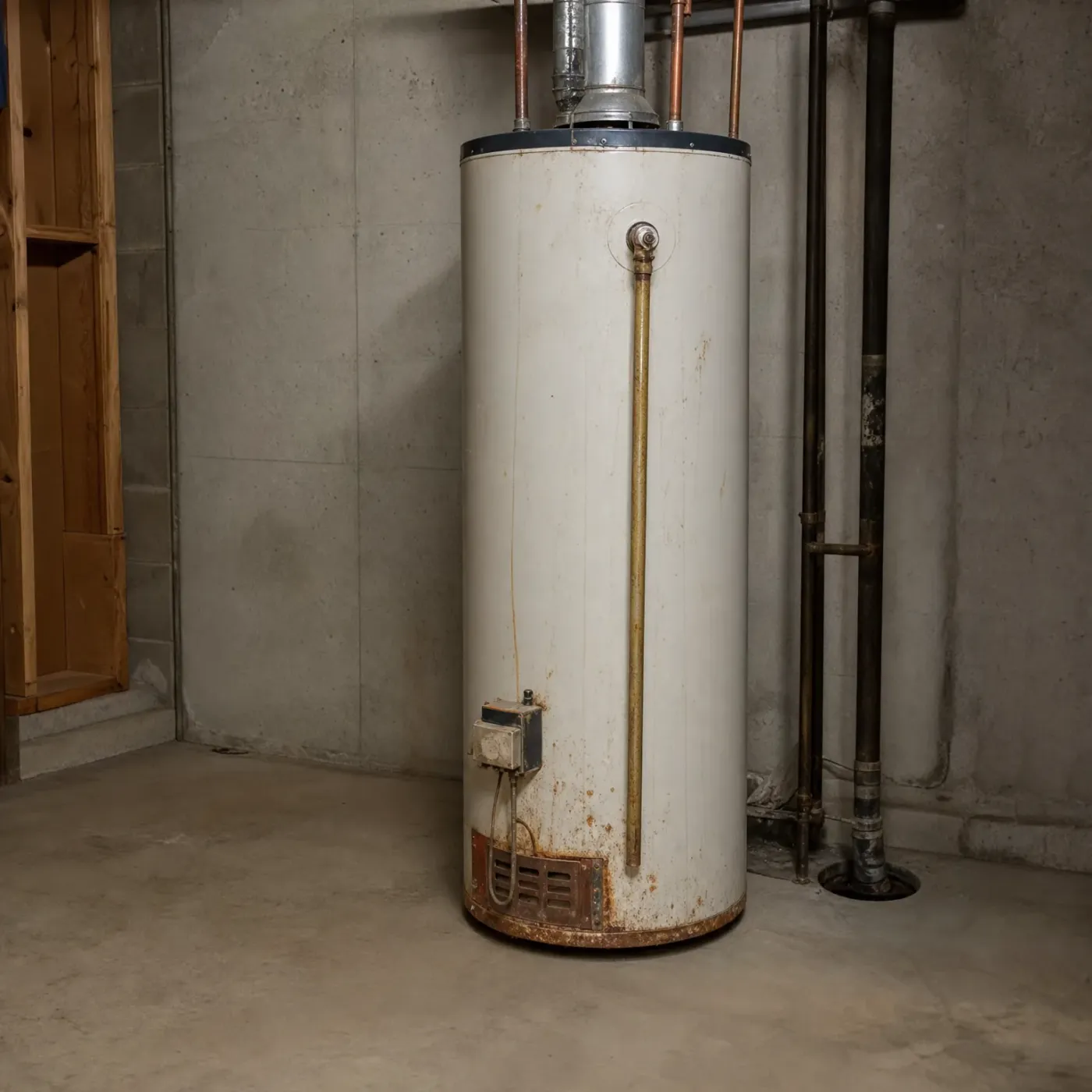
Rust has eaten into the lower section and spread across the base. That's the steel giving out from the inside, not just dirt on the outside. Once rust reaches the tank's skin like this, it's a matter of when it leaks, not if, and patching the outside won't stop it.
You've probably noticed the shower takes longer to warm up, or the hot water runs out before everyone's had a turn. Maybe there's a tint to it, a rust color that wasn't there before, or a smell when you run the tap. Check around the base of the tank. Any dampness there, even a little, means something's already failing inside. Listen to it too. A rumbling or popping sound when it's heating means sediment has built up at the bottom of the tank, and that makes it work harder for less hot water. None of this fixes itself. Left alone, a tank that's struggling can fail outright, and when it does, you're looking at water damage on top of a replacement you weren't planning for.
Describe your water heater job once, to one pro.
Sending the form costs nothing.
Most tank water heaters are built to last about ten to thirteen years. Past that point, the glass lining inside the tank has usually worn through in spots, and steel is sitting in contact with hot water. Repairs can patch a fitting or swap a thermostat, but they don't restore a liner that's already breaking down. If your water heater came with the house and you don't know its age, the manufacture date is stamped on the rating plate near the top. That date tells you more than how it's running today.
A water heater that's near the end of its life doesn't usually fail all at once. It's a new heating element this year, a pressure relief valve the next, a pilot that won't stay lit after that. Each fix is reasonable on its own, and that's what makes the pattern easy to miss. Add up two or three service calls in as many years and the math stops favoring another repair. A new unit means no more open questions about what's going to go next, and no more guessing with every strange noise or slow warm-up.
With most houses here running electric water heaters, yours is probably working harder than it should once the tank starts failing. An electric unit straining to heat water shows up as a higher power bill before you ever see a leak.
ACS 2020-2024 5-year B25040
A plumber can replace a thermostat, swap an element, or flush the tank again. Each fix costs something, and none of it changes what's happening to the tank itself. The steel keeps corroding at the same rate it was before the repair. You'll be back to the same decision in a few months, maybe sooner, and you'll have spent money getting there instead of toward a new unit.
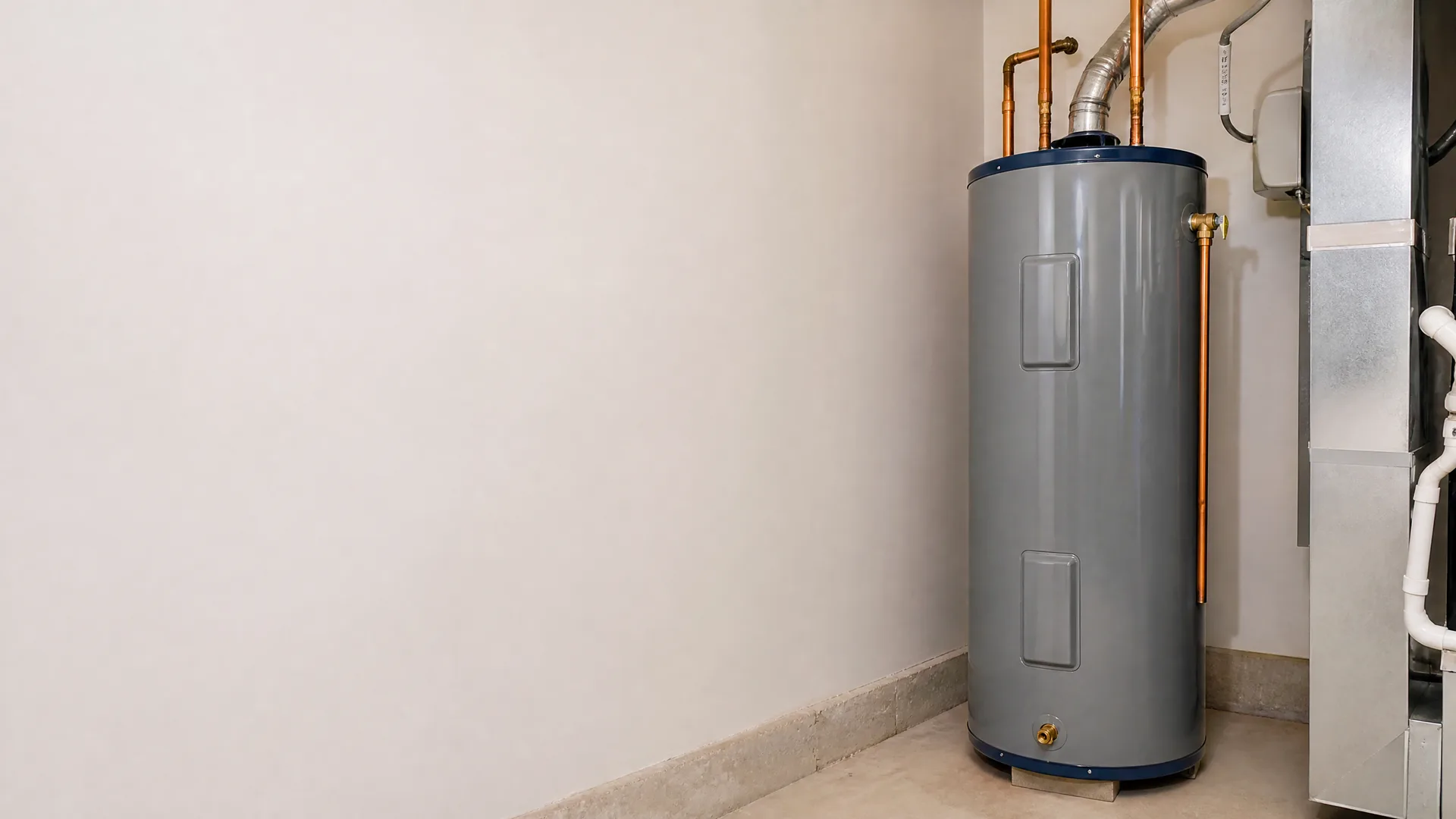
A new water heater comes with a full warranty and none of the wear the old one had built up. It heats water the way yours did when it was new, without the extra minutes on the thermostat or the rust working through the lining. You stop watching for the next failure and stop checking the floor around the tank. Once it's in, water heating is off your list of things to think about.
A water heater tells you where it stands if you look at it straight. Rusty water, a tank that can't keep up, a puddle at the base, a unit past ten or thirteen years old. Any one of those is reason enough to stop patching and start pricing a replacement. Fixing it again might buy a few more months, but the tank itself keeps corroding at the same rate, and the power bill keeps climbing while it does. You don't need to wait for it to fail outright to know it's time. Once you've matched what you're seeing against what's true of your water heater, you're not guessing anymore. You know where you stand, and you know what comes next. Finding someone licensed to do the work right is the only step left, and it doesn't have to be yours to carry alone.




Send one request and you're done looking
Skip collecting and comparing quotes for the new water heater.

