Tell us about the job
Takes about a minute. No obligation.
A contractor quoting a water heater replacement in Greene County starts with the fuel supply, because that determines what a new unit is allowed to be and what the existing infrastructure has to support. Electricity heats more occupied homes in Greene County, Mississippi than any other fuel, at 84.6% (2020-2024 ACS 5-year). With electric resistance heating dominant across the county, most homes were wired and plumbed for electric water heaters from the start, and the service panel, the breaker size, and the absence of a gas line all shape what a replacement can realistically take. A contractor who skips that assessment risks specifying a unit the house cannot run without an electrical upgrade.
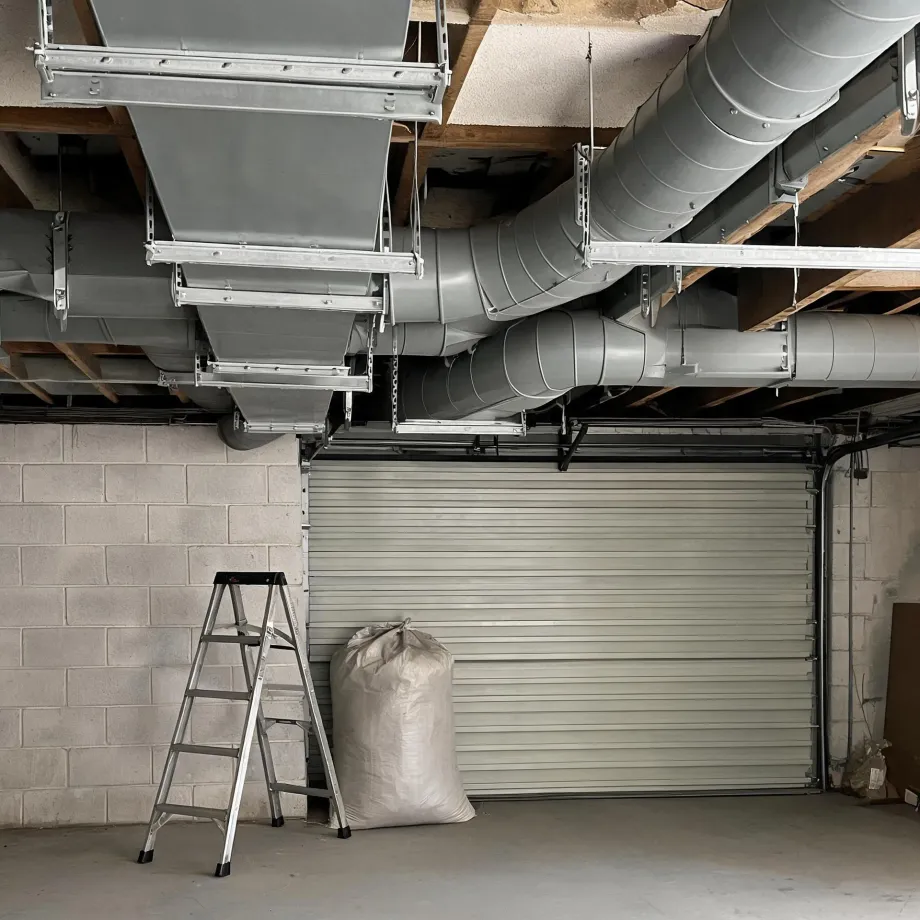
Ductwork and plumbing routed for one generation of equipment do not automatically suit the next. Half the homes in Greene County, Mississippi were built in 1987 or earlier (2020-2024 ACS 5-year). A contractor sizing a water heater installation here has to look at what the house already carries before the new unit is ever ordered, because the runs, the connections, and the available clearances were set up around something that is no longer in the house. What is already there either fits the new installation or it requires modification first.
What a Water Heater Installation Covers
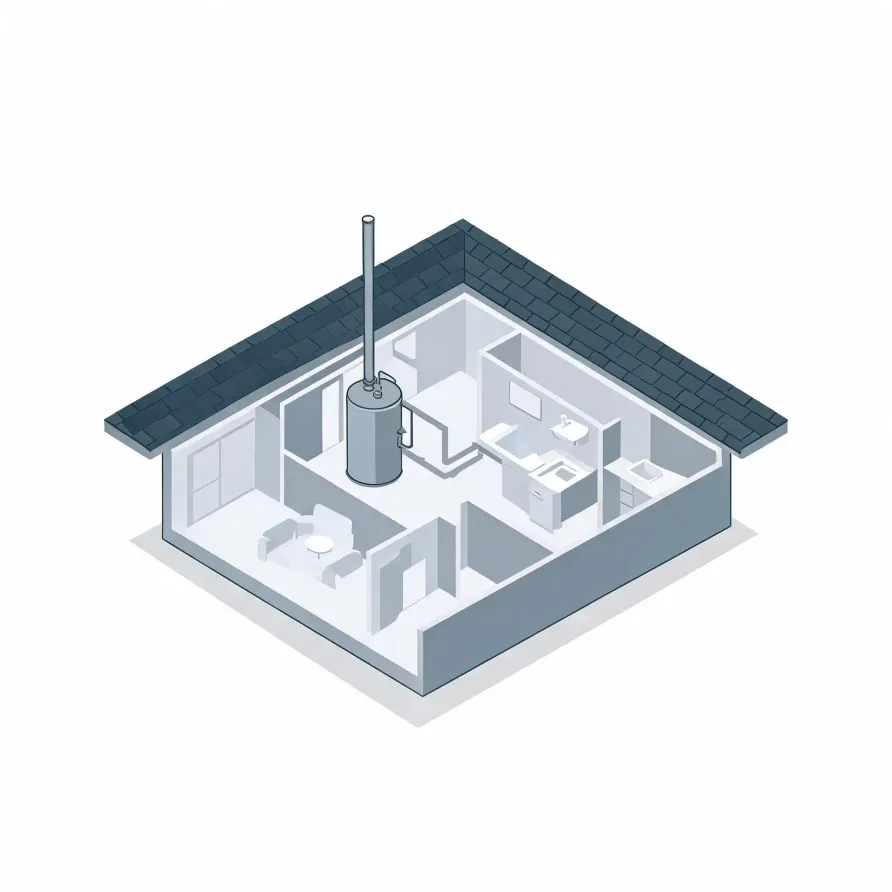
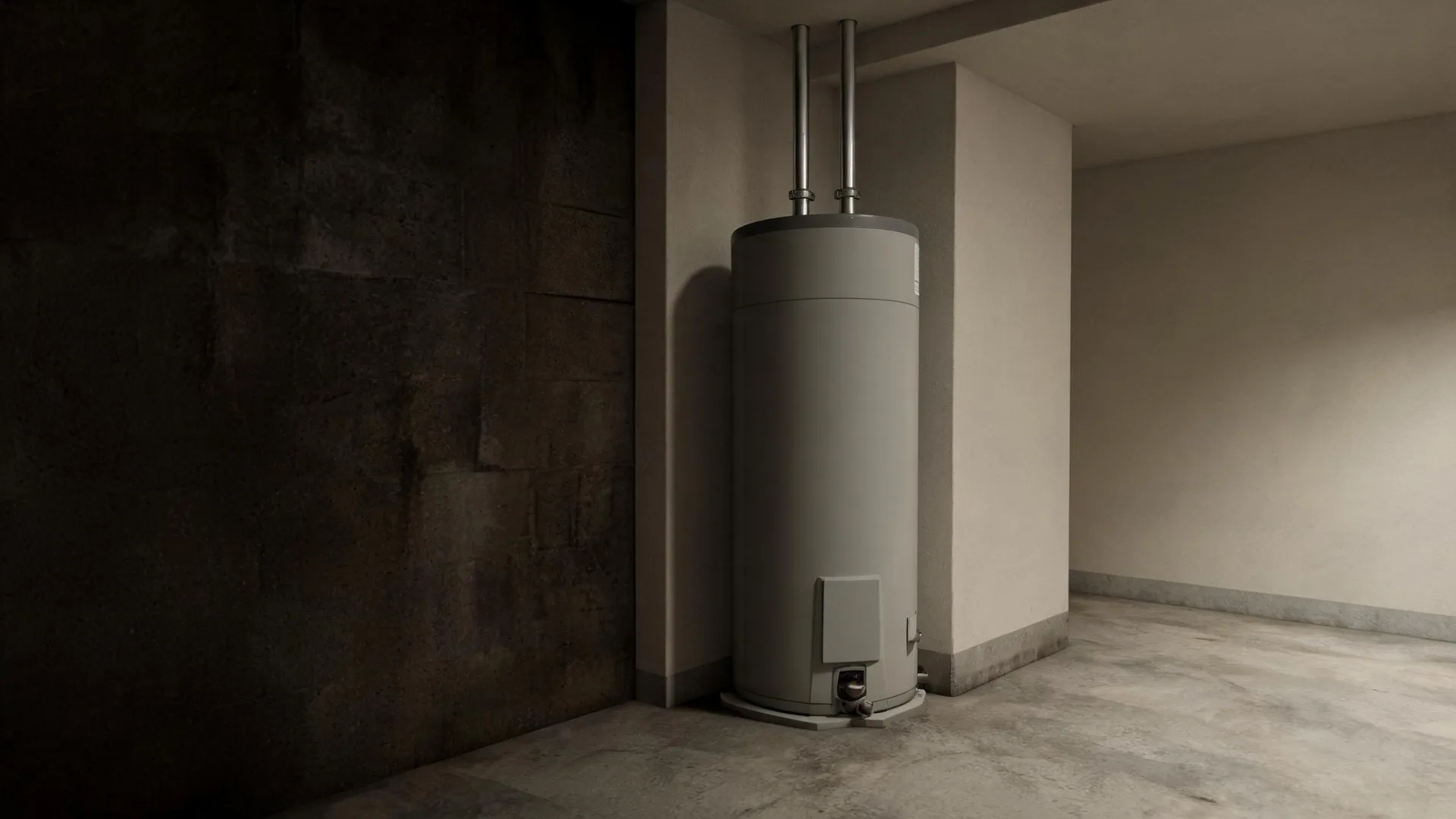
The tank is the piece most homeowners have seen: a tall cylinder that sits in a utility closet, basement, or garage and holds water at a set temperature until a tap calls for it. The burner assembly or heating element sits at the base or inside the tank and is what actually raises the water temperature.
The pressure relief valve mounts to the side of the tank and opens automatically if pressure inside climbs too high. A cold-water supply line feeds into the top of the tank, and a hot-water outlet carries heated water out to the rest of the house. The flue or exhaust vent runs from the top of a gas unit up and out of the building.
The drawing shows a representative layout, and a licensed contractor determines exactly what applies to your home and its existing setup.
Find a contractor in Greene CountyGreene County by the Numbers
51 severe weather events were recorded in Greene County, Mississippi between 2015 and 2024.
NOAA National Centers for Environmental Information, Storm Events Database, bulk CSV export, events 2015-01-01 through 2024-12-31.Half the homes in Greene County, Mississippi were built in 1987 or earlier (2020-2024 ACS 5-year).
U.S. Census Bureau, 2020-2024 American Community Survey 5-Year EstimatesGreene County, Mississippi holds 5,190 housing units (2020-2024 ACS 5-year).
U.S. Census Bureau, 2020-2024 American Community Survey 5-Year EstimatesOwners occupy 82.2% of the occupied homes in Greene County, Mississippi (2020-2024 ACS 5-year).
U.S. Census Bureau, 2020-2024 American Community Survey 5-Year EstimatesSevere Weather Events in Greene County
Extreme weather puts water heaters under pressure: demand spikes, power fluctuations, and temperature swings shorten equipment life and stress installations that were not sized for local conditions. Greene County's weather record is part of what a contractor here has to account for.
51 severe weather events, 2015–2024. Source: NOAA National Centers for Environmental Information, Storm Events Database.