A Jackson County pro who repairs water heaters gets your request.
Water pooling around the tank or dripping from a fitting means something inside has given out. It will not fix itself, and it will not wait for a convenient day.
A leak can come from a few places. The tank itself may have rusted through from the inside, and once that happens the tank is done. It could be a loose fitting, a valve, or the pressure relief valve doing its job because pressure inside has built up too high. Each of those means different work, and only someone looking at your unit can tell you which one you have.
If the leak is from the tank itself, turn off the water supply to the heater and the power or gas to it, and let it drain somewhere safe if you can. That limits the damage while you wait. If it is a fitting or valve, the same shutoff buys you time without losing the whole tank's worth of water onto your floor.
Jackson County homes mostly run on electric water heaters, and a leak near the bottom of an electric tank is almost always the tank itself failing, not something upstream of it. That matters for how fast this needs attention and what kind of fix makes sense.
This isn't something to leave for later. A tank that's actively leaking is at the end of its life or close to it, and the longer it sits, the more water finds its way into your flooring, your drywall, whatever's nearby.
Once you send the form, you're not the one making calls or tracking down someone available. A contractor who handles water heater repair in your area gets your details and reaches out to you directly. You've done the part that takes effort. What happens next is someone else's job to sort out.
A leaking water heater usually means one of a few things. A fitting or valve can weep at a connection, and that's often an easy fix. The pressure relief valve can open because the tank is building up too much pressure. Or the tank itself has rusted through from the inside, and once that happens, the tank is done. There's no patching a rusted tank. With most homes in Jackson County heating water with electricity, a bad heating element can also let water seep out around its gasket, which looks like a tank failure but isn't. Shut off the power to the unit and the water supply line feeding it, then get it looked at. If the leak is coming from the tank itself, it needs replacing. If it's a fitting or element, it can likely be repaired.
How much does a water heater leak affect your house in Jackson County?
2.5 people per household on average
With 2.50 people in the average Jackson County household, a leak that cuts off hot water affects showers, dishes and laundry for everyone under that roof, not just one person waiting it out.
Half the homes here were built by 1984
Half the homes in Jackson County were built in 1984 or earlier, so a water heater that came with a house that age has had plenty of time to rust from the inside out.
81.3% of homes heat with electricity
81.3% of homes here heat with electricity, so an electric water heater is almost always what's leaking, and the fix depends on getting that unit right, not a gas one.
ACS 2020-2024
A fitting leak versus a tank leak
A fitting leak shows up as a drip or a damp spot around a valve or a pipe connection, and it stays small. You can often see exactly where the water is coming from, and the tank itself stays dry. A contractor can usually tighten or replace that fitting without touching the tank, and the water heater goes back to work the same day. If the leak is only here, the unit underneath it is still sound. This is the better situation to find yourself in, and it's worth checking the connections first before you assume the worst about the tank.
Why a tank leak doesn't stop
A tank leak looks different. Water shows up underneath the unit, along the bottom seam, or seeping from the tank wall itself, and no amount of tightening makes it go away. That's the inside of the tank rusting through, and once steel has corroded enough to let water through, there's no patch or part that reverses it. The leak will keep going and likely get worse. A water heater in this state needs to be replaced, not repaired. If you're seeing water at the base of the tank with no fitting or valve nearby to explain it, that's the leak you're dealing with.
A water heater has a handful of places where water can get out, and each one tells you something different. The cold and hot lines on top connect with fittings that can loosen or wear out their seal over time, which is usually a simple repair. The pressure relief valve on the side or top is designed to release water when pressure or temperature inside climbs too high, so it opening isn't a failure, it's the valve doing its job. The drain valve near the bottom, used for flushing sediment out, can drip if it's not fully closed or has worn down after years of use. Inside the tank, a glass liner keeps the steel from corroding, and an anode rod is there to corrode first and take the damage instead of the tank. Once that rod wears out or the liner cracks, the steel itself starts rusting, usually along the bottom or the side seam where sediment and water collect. That's the leak that means the tank is done, not the one that just needs a tightened fitting.
What's actually happening inside the tank
Most tanks have two water lines on top: cold comes in through a dip tube, hot leaves from the other port, and a leak at either fitting usually just needs the connection tightened or re-sealed.
The pressure relief valve sits on the side or top of the tank and is built to open on its own once pressure or temperature inside gets too high, so water coming from its discharge pipe means it did its job, not that it's broken.
A drain valve near the bottom of the tank gets opened for flushing sediment, and a slow drip there is often just a valve that was never closed all the way or has worn out.
Steel tanks have a glass liner inside to keep the steel from touching water directly, and once that liner cracks, the steel underneath starts rusting until it wears through.
A rusted-through tank almost always leaks from the bottom or the seam along the side, since that's where water sits and sediment collects over time.
An anode rod inside the tank corrodes on purpose so the steel tank doesn't have to, and once that rod is used up, the tank itself starts taking the damage instead.
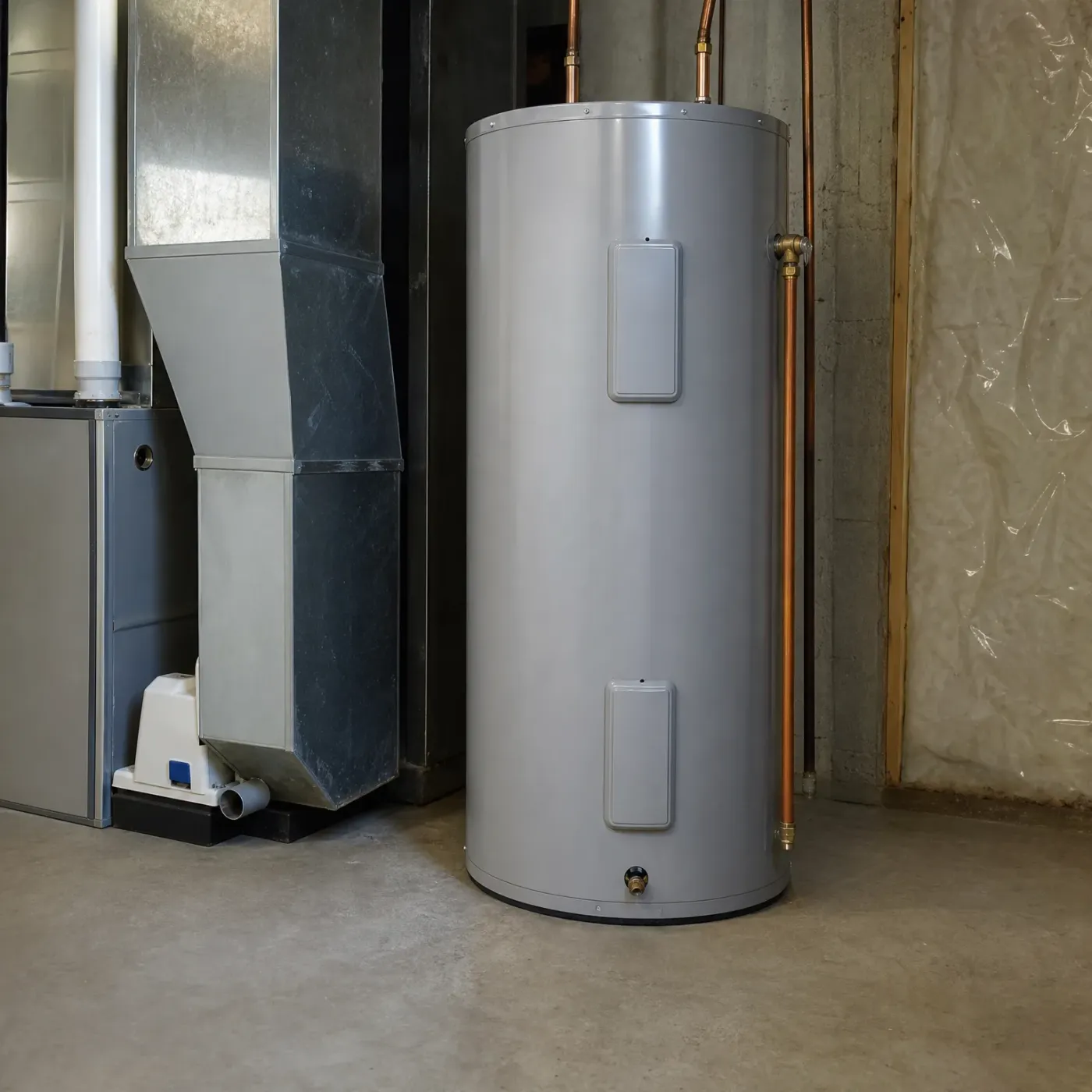
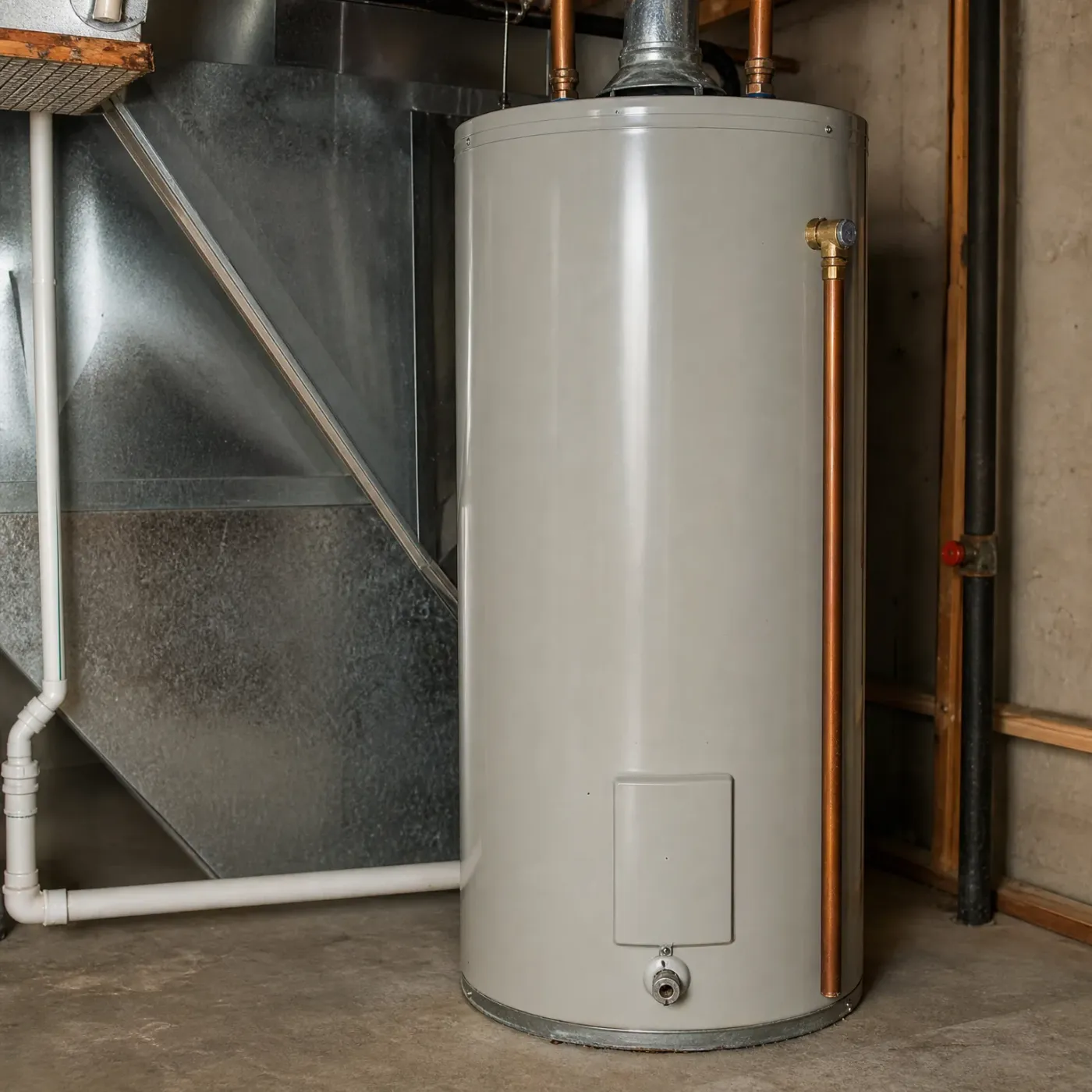
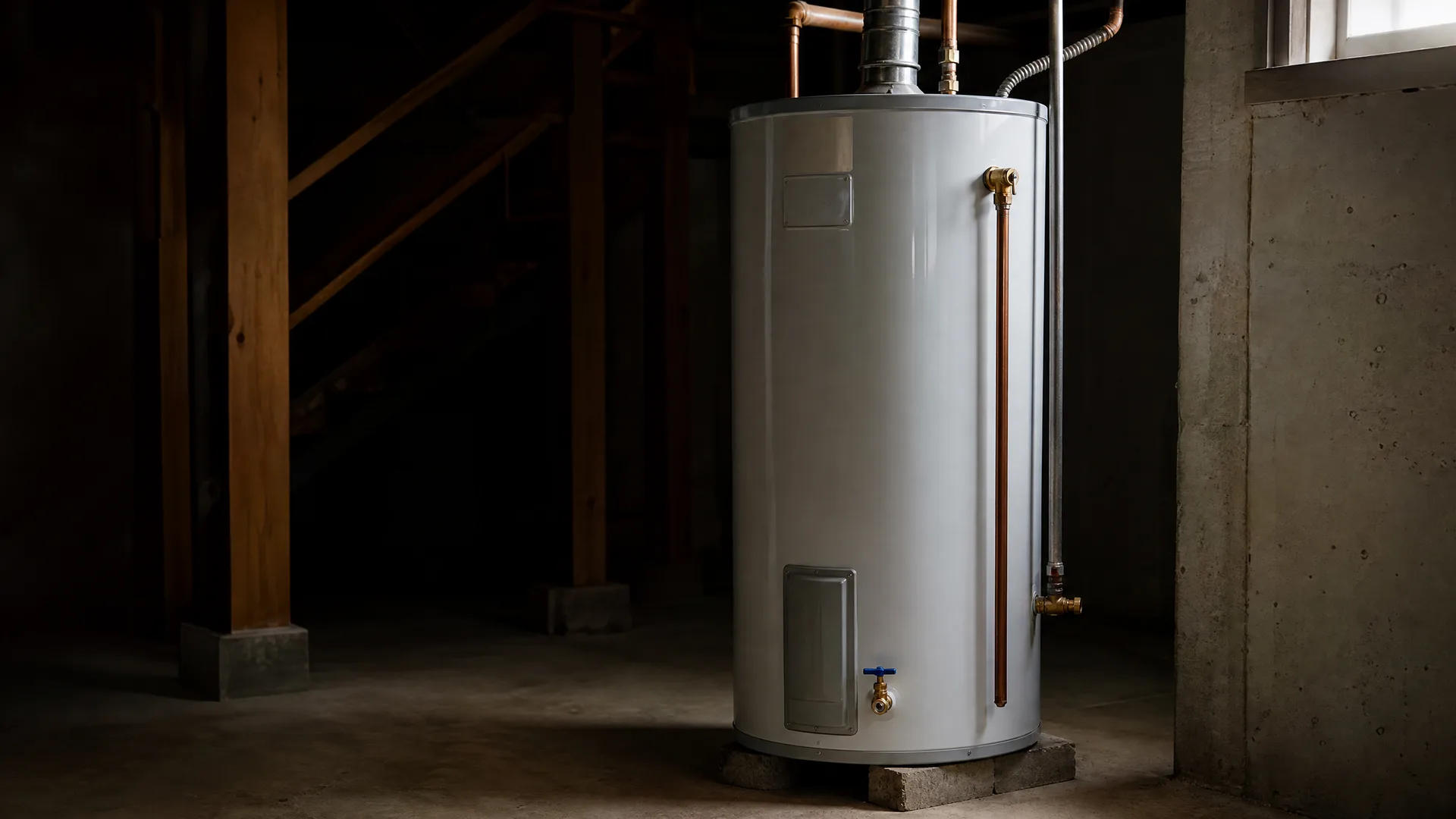
This one still has years in it, with sound fittings and a dry floor underneath.
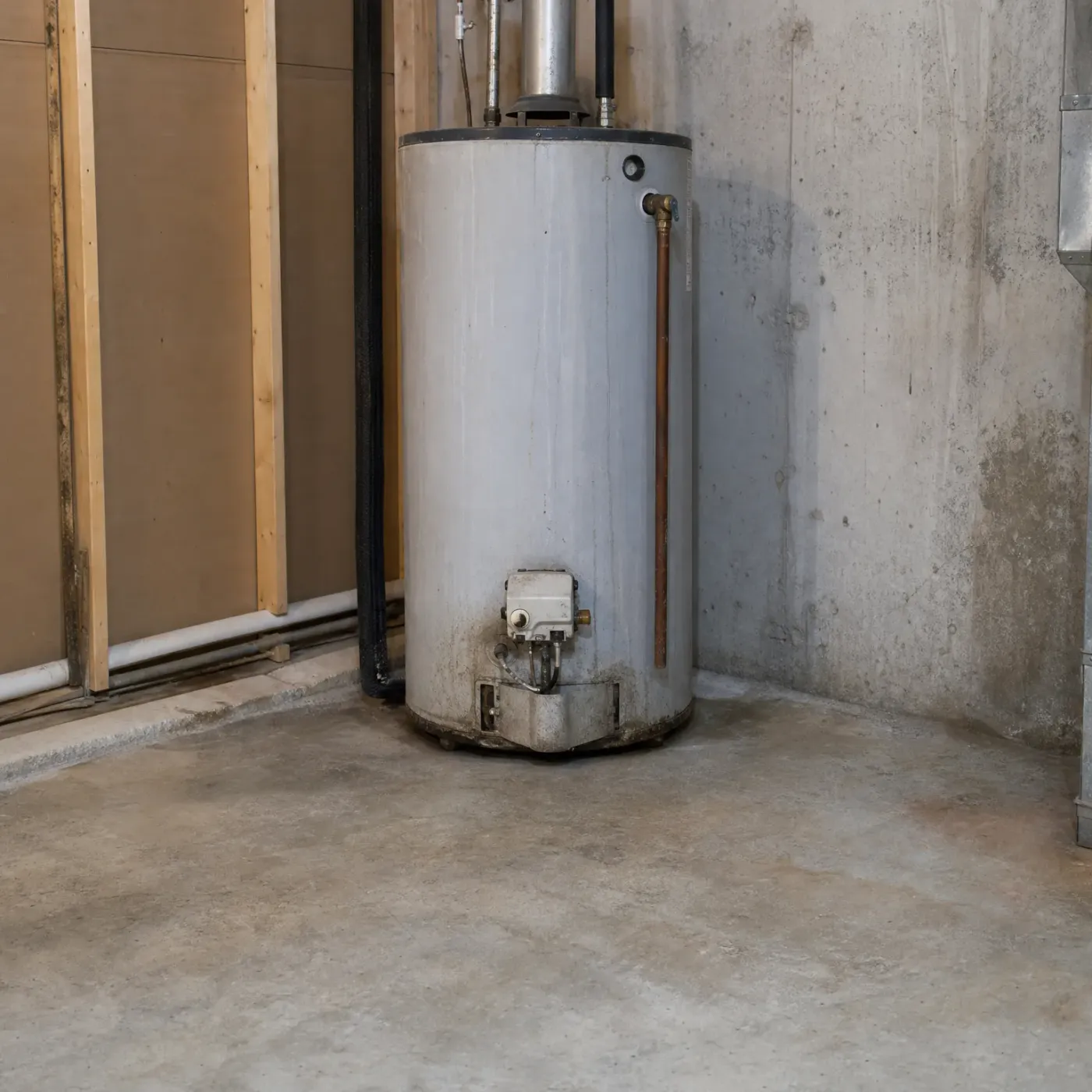
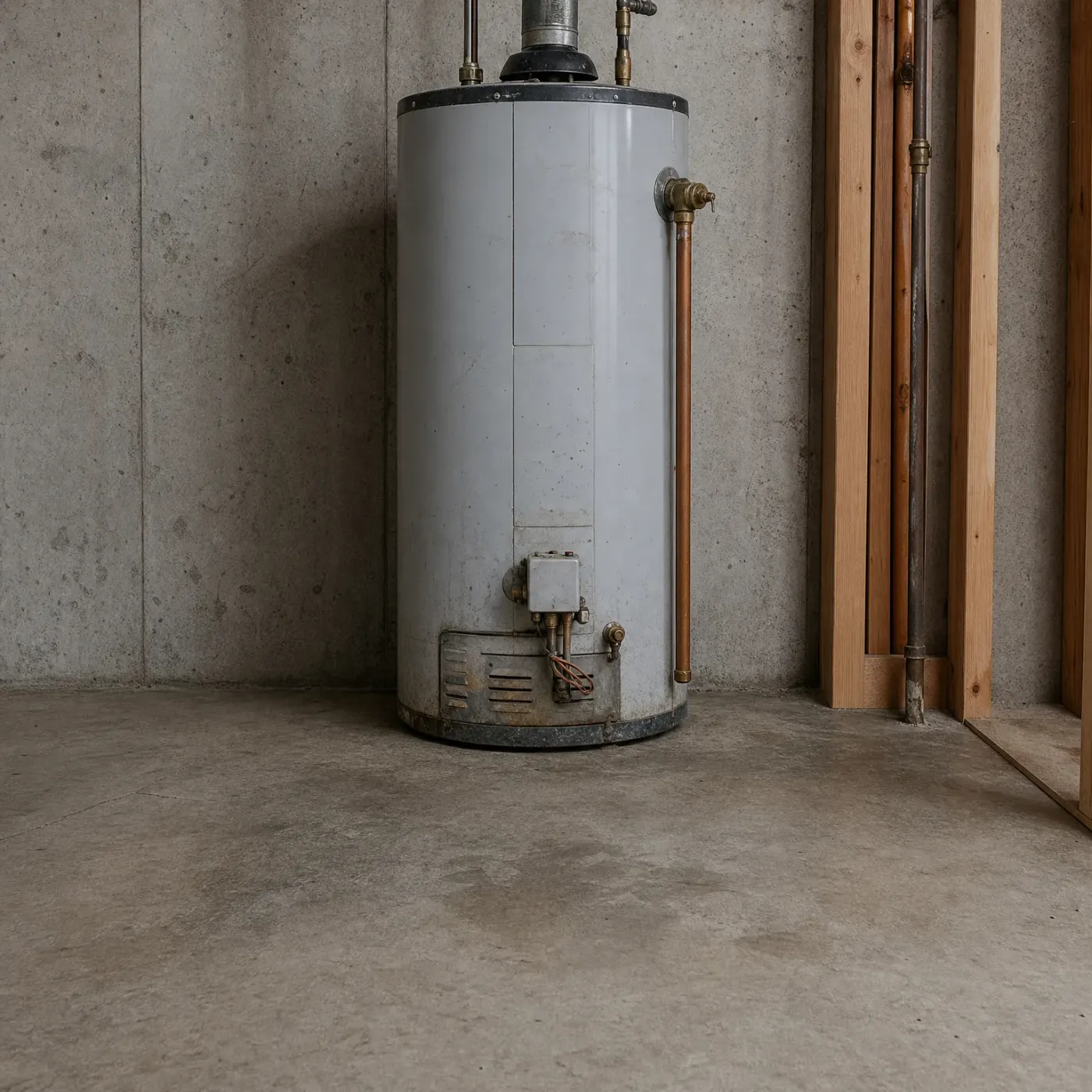
Rust around the base and a corroded burner like this mean the tank is on its way out.
Get the right pro for your water heater
Send the request today and stop worrying about who to call.
Get matched with a pro who fixes water heaters in Jackson County.
No charge to send it. You decide if you hire them.
Repair the Leak or Replace the Tank
Repair
A fitting leak at a supply line or the drain valve usually means a contractor tightens or re-seals the connection, and the tank keeps running.
If the pressure relief valve is the source, replacing that single part can solve it without touching the rest of the tank.
Repair makes sense when the tank itself is dry and the rust, if any, is limited to a fitting or a connector.
A repair costs less upfront and keeps a tank running that still has working parts.
If your water heater is newer, repair is usually the first thing a contractor checks before talking about replacement.
Replace
Rust coming through the steel of the tank itself means the metal has failed, and no fitting repair reaches that.
A tank that's leaking from the bottom or around the base is usually done, since that's where corrosion collects first.
If your water heater came with the house, its age is worth checking against the tank's rated life before paying for repair.
Replacement resets the clock, so you're not back to patching the same tank again within a year or two.
A new tank also comes with current safety features and a fresh warranty, which an aging tank no longer carries.
1
Water pools in the pan or on the floor first.
2
A contractor traces the leak to its exact source.
3
Fittings get tightened or re-sealed where they're loose.
4
A failed relief valve or drain valve gets replaced.
What's that puddle under your water heater
You might have found it by stepping in it, a wet sock in the hallway closet or the garage. Or you noticed the drywall near the tank gone soft, or a musty smell that wasn't there before. Sometimes it's rust-colored water, which usually points to the tank itself rather than a fitting. If the leak has been going a while, check the floor underneath for soft spots or staining, since standing water sitting against wood or drywall long enough can cause damage beyond the tank. And if the tank has already shut down or is leaking enough that you're not using it, everyone in the house is doing without hot water until it's sorted out.
Working the way it should
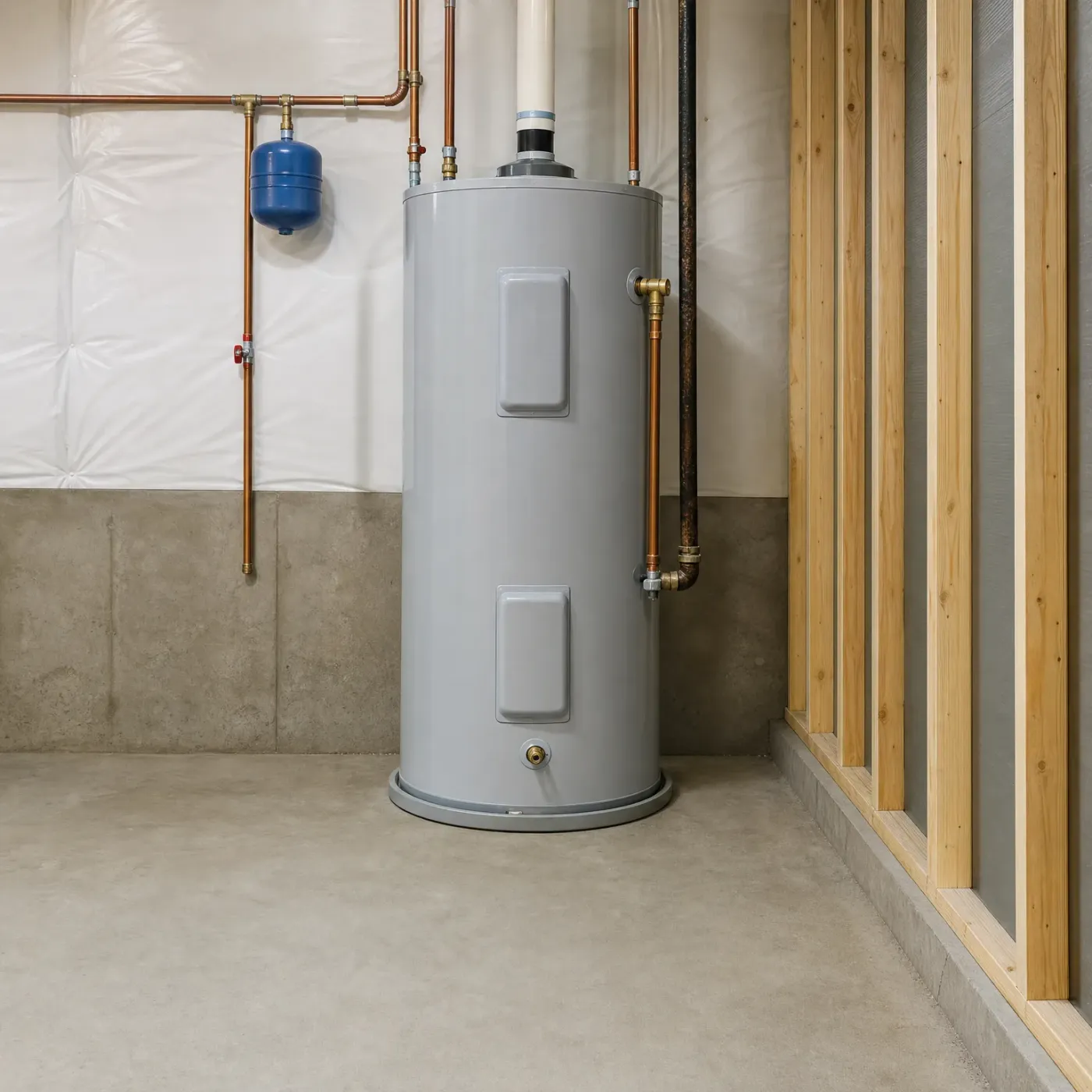
Copper lines run clean into the top of the tank, and the expansion tank mounted on the pipework is doing its job absorbing pressure. No rust, no drips, no damp spot on the concrete below. A water heater like this still has life in it.
On its way out
Rust and grime have built up around the burner at the bottom of this tank, and that kind of corrosion doesn't stay put. Once it reaches this stage, a leak from the tank itself is a matter of when, not if, and tightening a fitting won't touch it.
Power here costs 14.15 cents per kilowatt-hour
At 14.15 cents per kilowatt-hour, a replacement water heater here doesn't cost much more to run than the one leaking in your closet or garage. If a cracked tank is behind the leak, swapping it out won't put a dent in your power bill either way.
EIA-861 2025
Where this leaves you
A fitting leak usually gets tightened or re-sealed without touching the tank itself.
A failed pressure relief valve or drain valve gets swapped out, and the tank keeps running.
A tank rusted through from the inside has to be drained and replaced, not patched.
Letting a leak sit risks water damage to the floor and the drywall around the closet or garage.
A contractor traces the water to its exact source before deciding what gets fixed or replaced.
Once you send the form, finding the right contractor is off your plate.
A water heater leak comes down to one of two things. Something small, like a fitting or a valve, can be tightened or swapped without touching the tank. Or the tank itself has rusted through, and at that point replacement is the only real fix. Nobody can tell which one you have by guessing, which is why tracing the water back to its source matters more than reacting to the puddle itself. What you don't want to do is leave it alone. A fitting that's weeping today can soak the floor underneath or the drywall in the closet or garage before you notice how far it's spread, and that damage costs more to undo than the leak would have cost to fix. The good news is that once a contractor has looked at it, the path forward is usually straightforward. A loose connection gets re-sealed. A bad relief valve gets replaced. A corroded tank gets drained and swapped for a new one. None of that is complicated work for someone who does it regularly, even if it's not something you'd want to take on yourself. Send the form and the search for who does that work stops being yours to carry. You'll have a contractor in Jackson County looking at your specific situation instead of a general description of what might be wrong, and that's the difference between guessing and knowing what's actually under your house.