Most pilot lights relight in minutes
If the flame holds once lit, the thermocouple is fine. A thermocouple that won't stay lit after relighting points to a part that needs replacing, not a pilot you can keep relighting yourself.
Get your water heater to the right pro
A pilot light that won't stay lit usually means a bad thermocouple, a draft at the vent, or dirt blocking the flame. Gas water heaters in Gulfport and the rest of Harrison County see this often enough. Below is what to check before you call anyone, and a way to get matched with a contractor who can relight it and find out why it keeps going out, without you calling around Gulfport for quotes yourself.
Match me with a proA pilot that keeps going out almost always comes down to one of three things. The thermocouple, the small sensor the pilot flame touches, can wear out and fail to tell the gas valve the flame is lit, so the valve shuts the gas off. A draft from the vent or from a door near the water heater can blow the flame out, especially in a closet or garage where the unit sits close to an opening. Or the pilot opening itself is dirty, choked with dust or soot, so the flame is too weak to hold. Most homes in Gulfport and the rest of Harrison County heat with electricity, so a gas water heater here is often the one gas appliance in the house, and when the pilot won't stay lit, you lose hot water until it is fixed. Relighting it yourself works sometimes. If it goes out again within a day, something is actually failing and needs a look.




If the flame holds once lit, the thermocouple is fine. A thermocouple that won't stay lit after relighting points to a part that needs replacing, not a pilot you can keep relighting yourself.
Dust and soot build up in the small tube over time and choke the gas feeding the pilot. A contractor can clean it or confirm it needs a different fix.
2.48 people per household on average
Harrison County households average 2.48 people, so one water heater usually covers the whole household. A pilot that won't stay lit leaves everyone without hot water at once.
Half the homes here were built by 1994
Half the homes in Harrison County were built in 1994 or earlier. If your water heater is original to a house that old, a worn thermocouple is a likely cause, not just a draft or dirt.
76.3% of homes heat with electricity
Electricity heats 76.3% of homes here, more than any other fuel. If yours is one of the fewer homes still running on gas, a pilot light is something most of your neighbors never have to deal with.
ACS 2020-2024
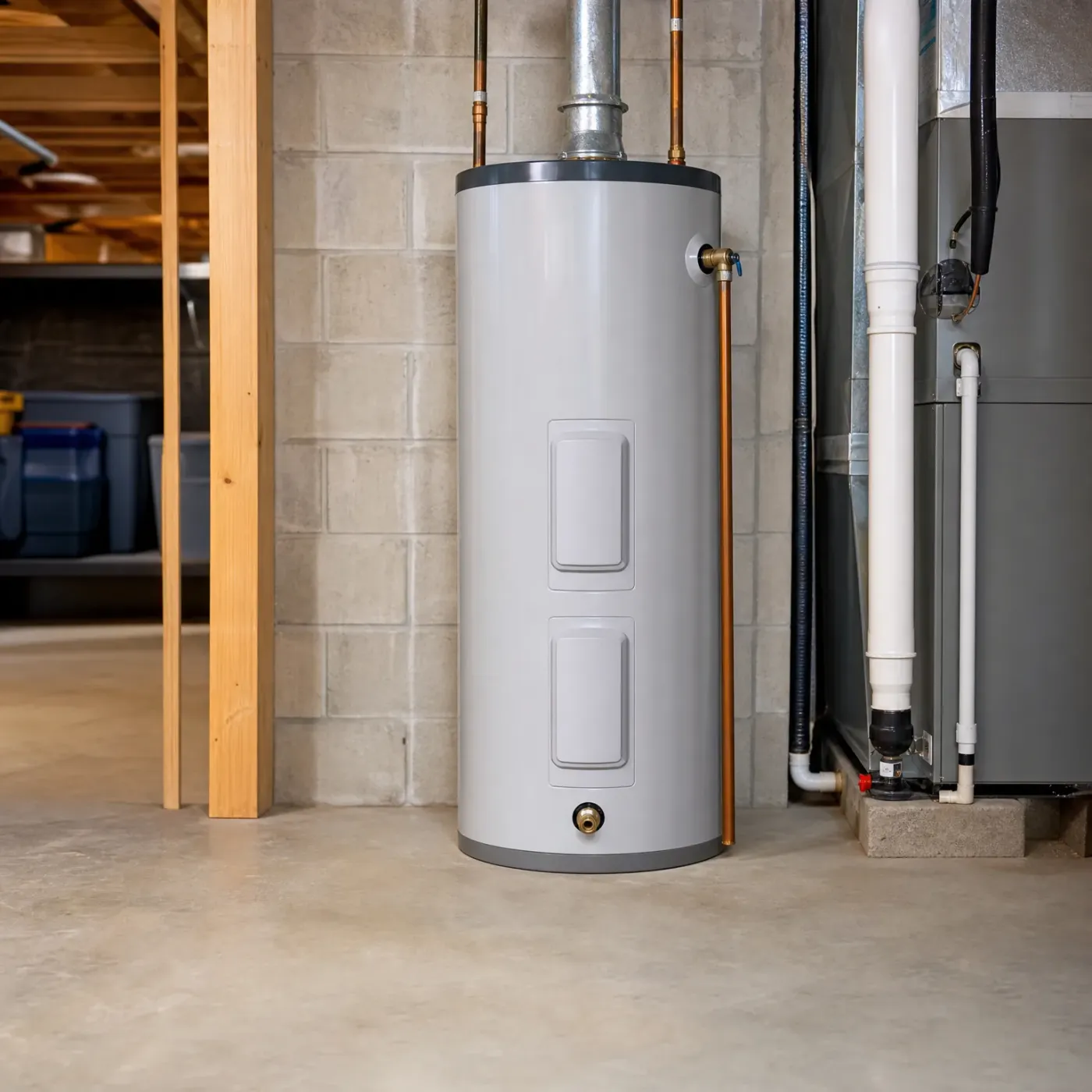
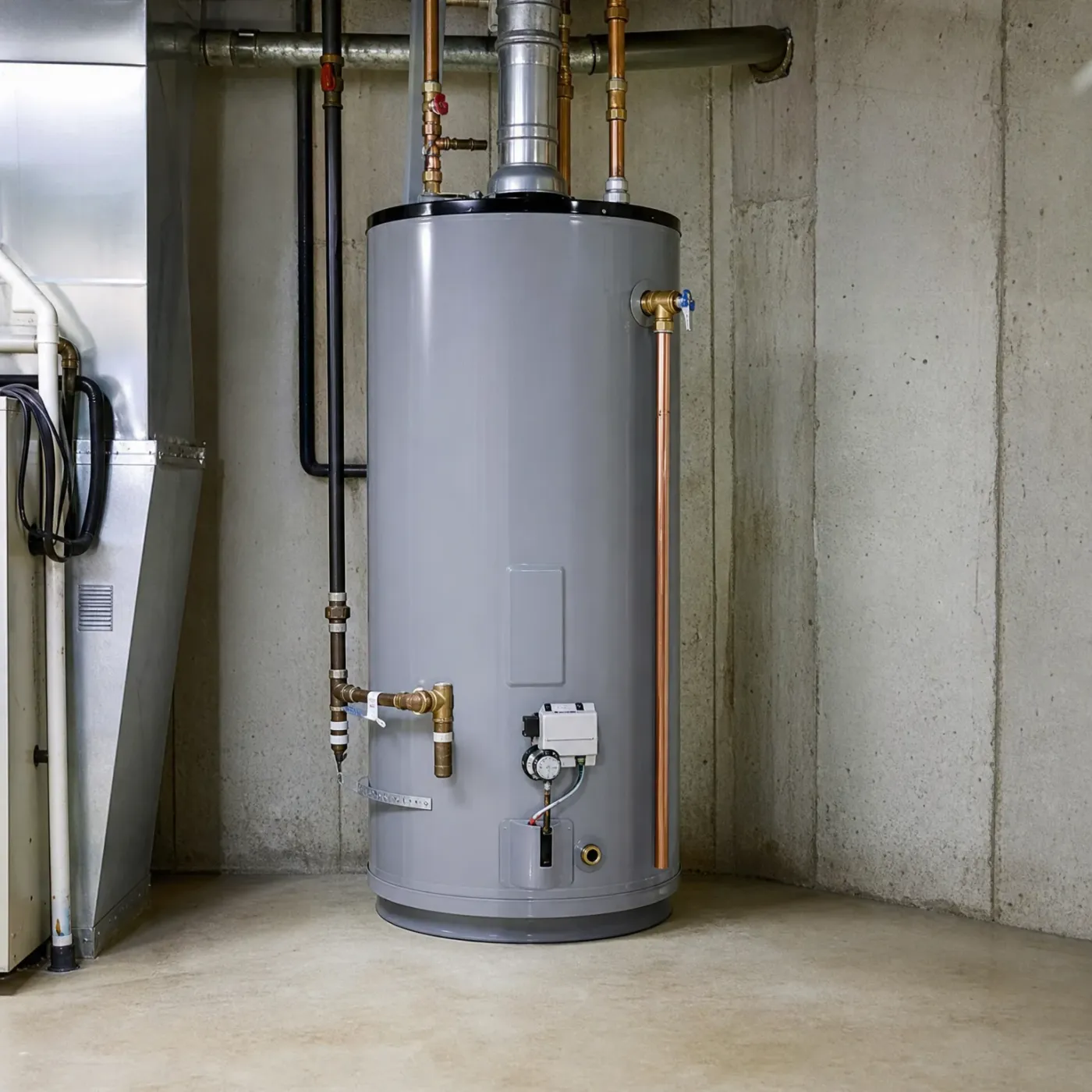
This is what a working water heater looks like. The pilot stays lit, the burner fires when the tank calls for heat, and the flue draws the exhaust straight up and out. No rust, no soot, nothing blocking the burner compartment underneath.
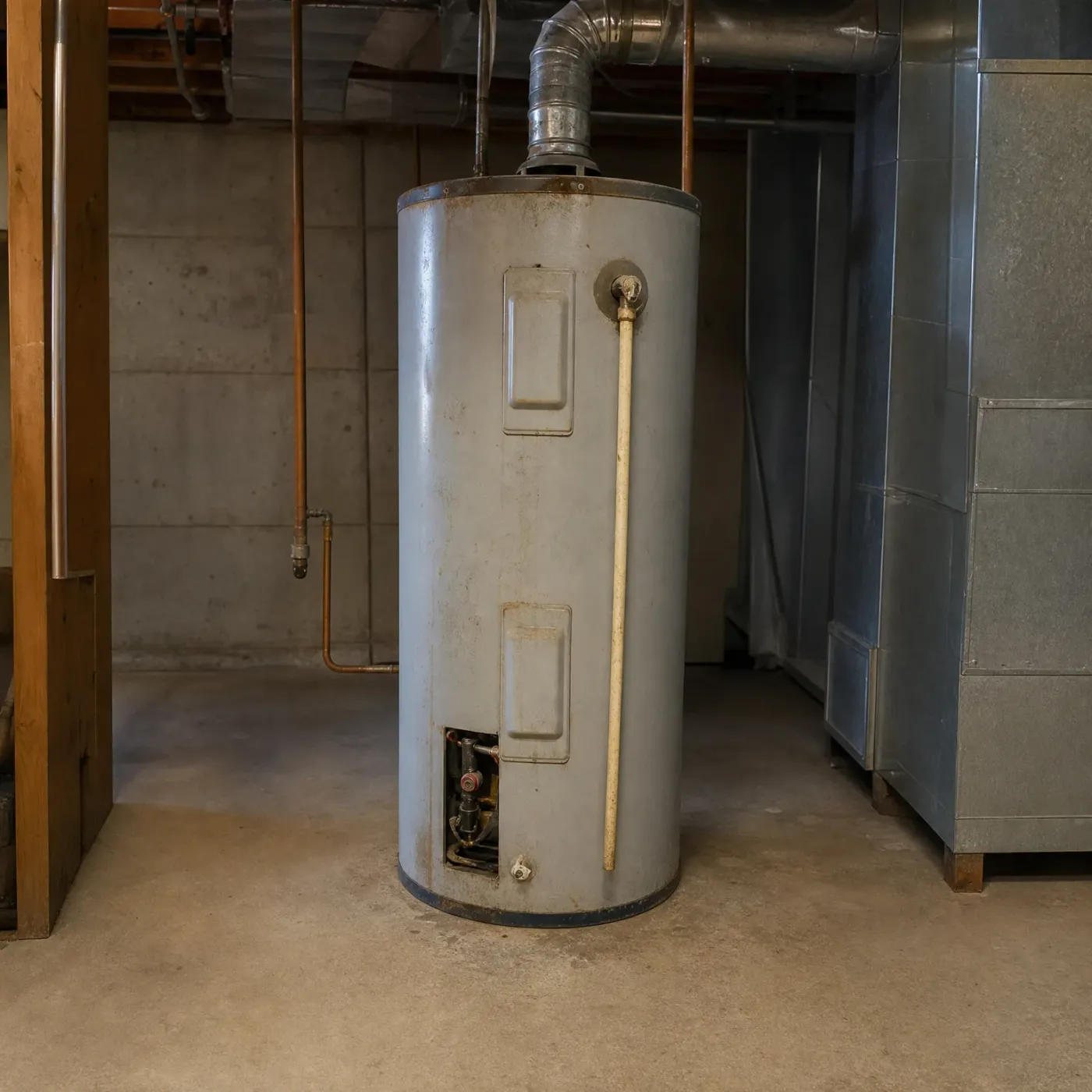
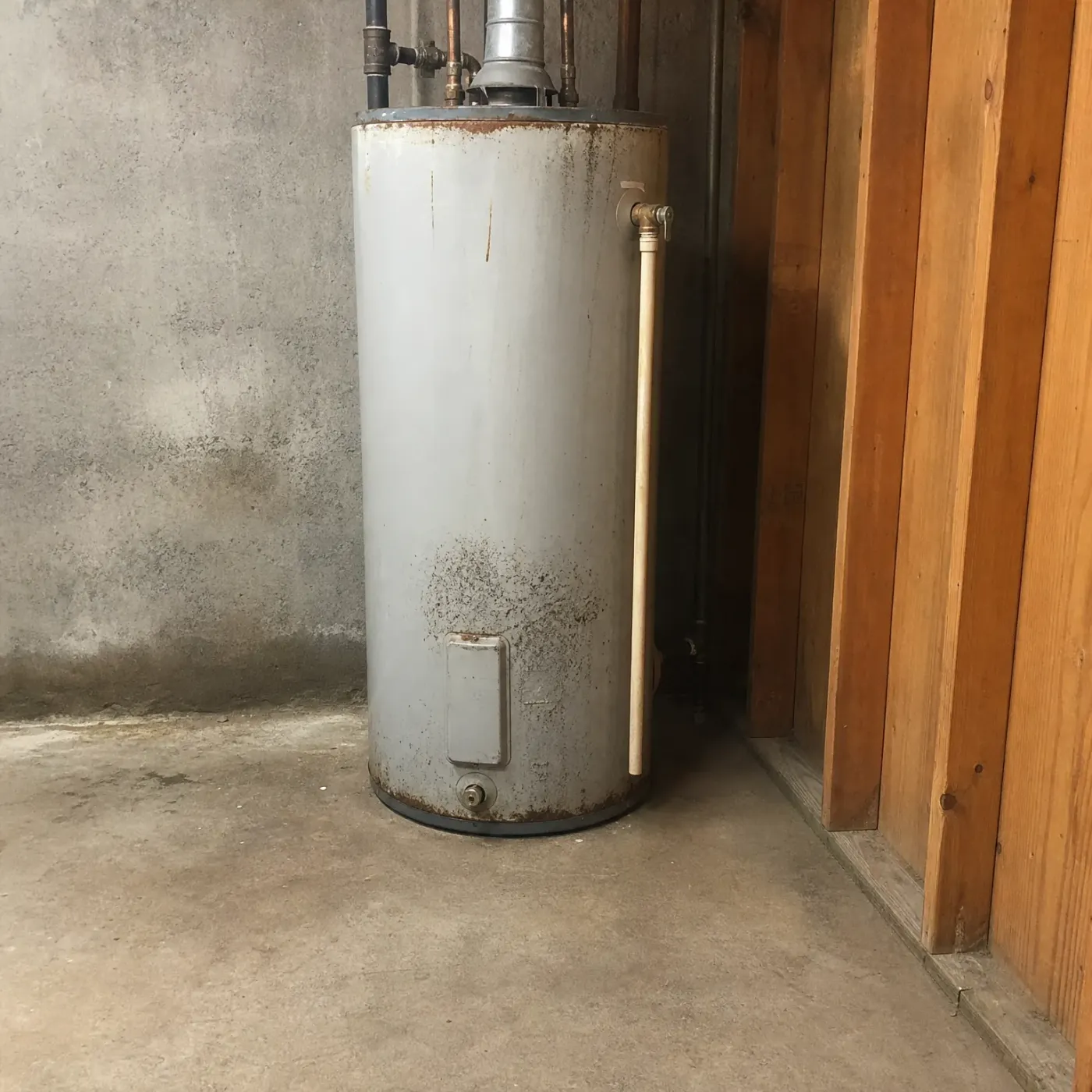
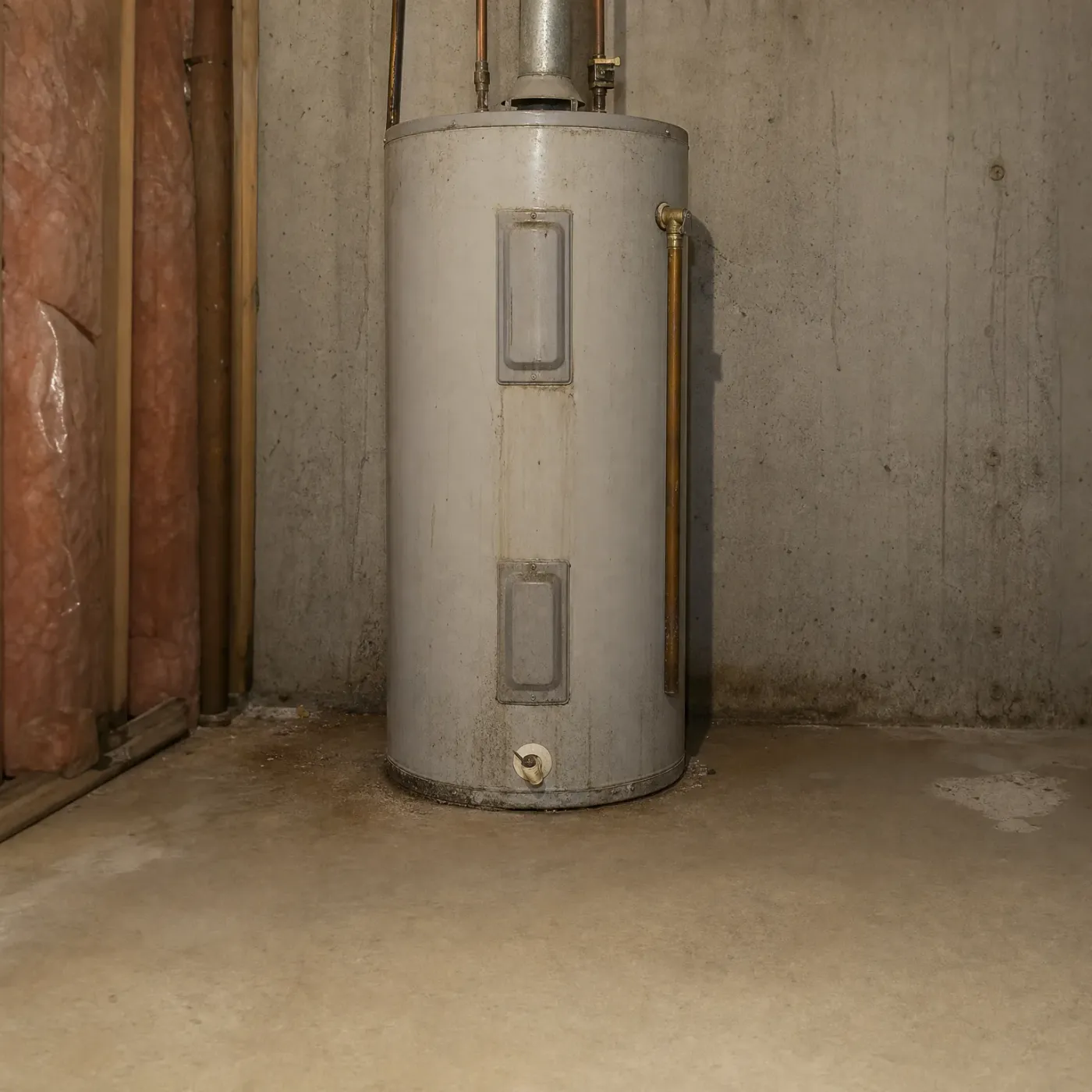
Rust like this on the tank often shows up alongside pilot trouble, especially on an older unit. Check the flue connection at the top and the relief valve pipe on the side. If the tank itself is rusting, a contractor should look at more than just the pilot.
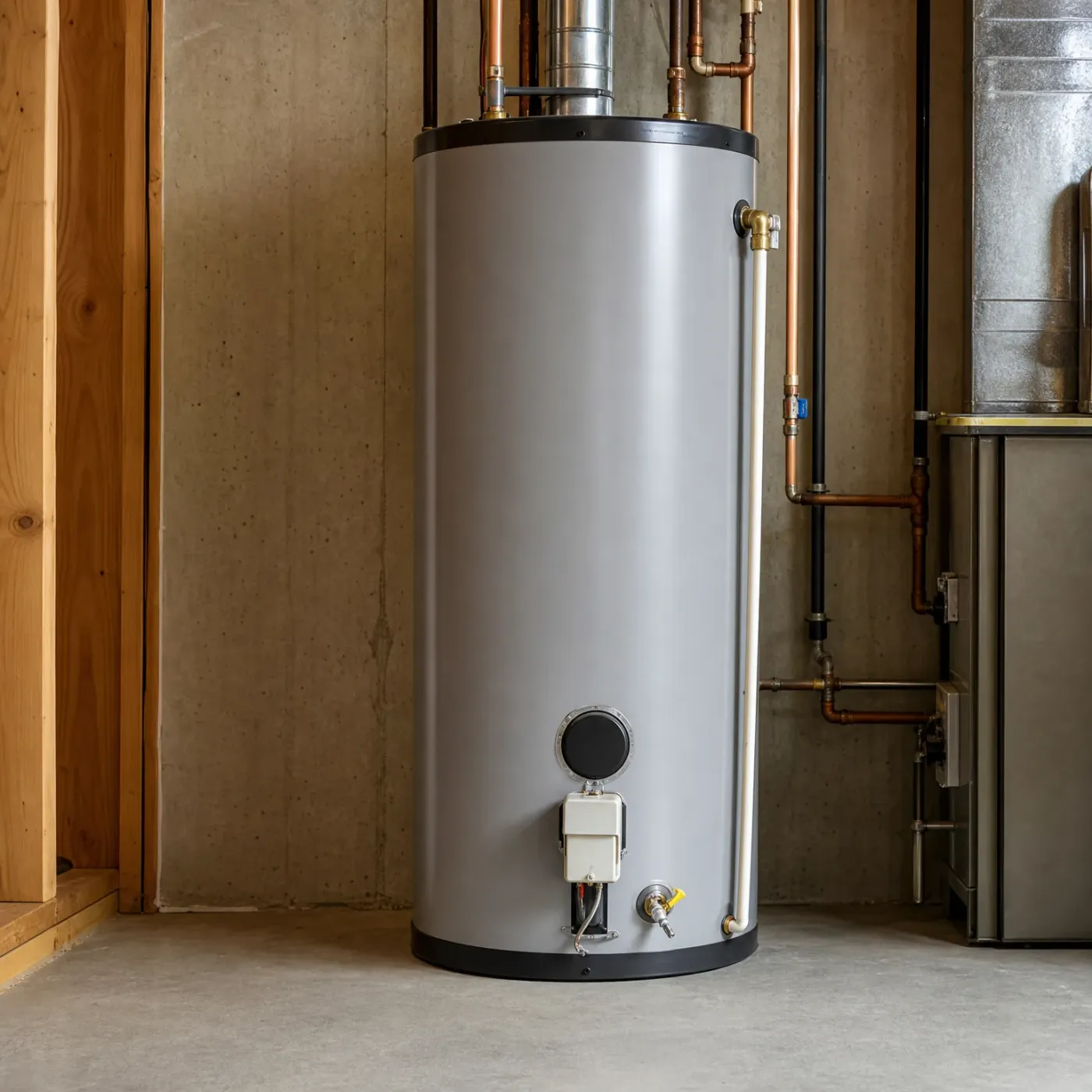
The copper lines are tight, the flue runs straight up without a dent, and the gas valve box shows no rust. A tank in this shape relights and holds without a fight.
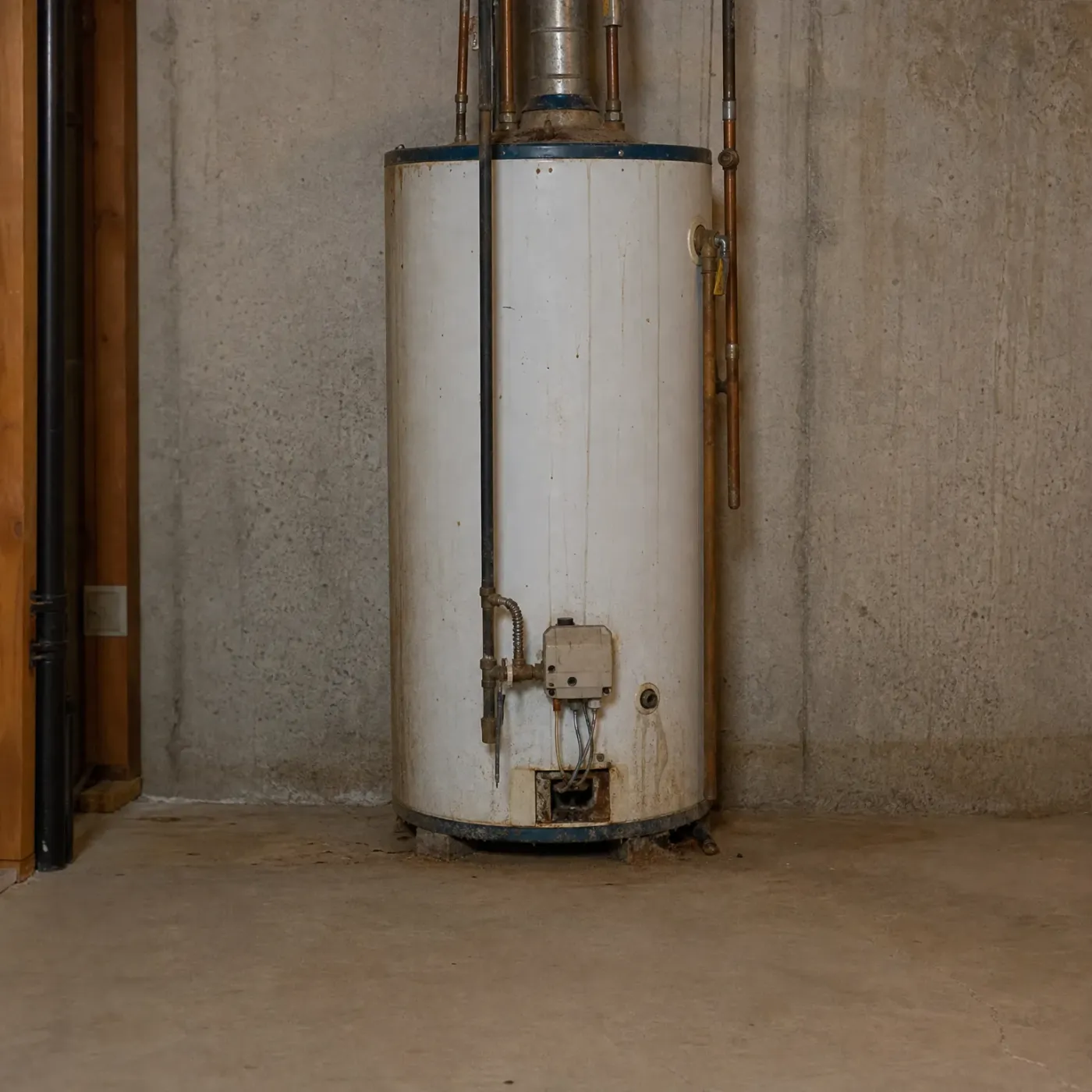
Rust stains down the tank and a corroded flue pipe mean moisture has been getting in where it shouldn't. A pilot on a tank like this may relight and still go back out, or the tank itself may be near the end.
You hold the reset button, let go, and within a minute or two the flame dies again. Or it holds for a day and quits once the furnace or AC kicks on nearby and pulls air through the house. You might hear the gas valve click as it tries to relight, or smell a faint trace of gas near the tank right after it goes out. If the glass on the pilot window looks sooty, or the flame is more yellow than blue when it does catch, that's dirt or a draft problem, not just bad luck. Until it stays lit on its own, the tank won't hold water temperature, and everyone in the house finds out at the same time, usually mid-shower.
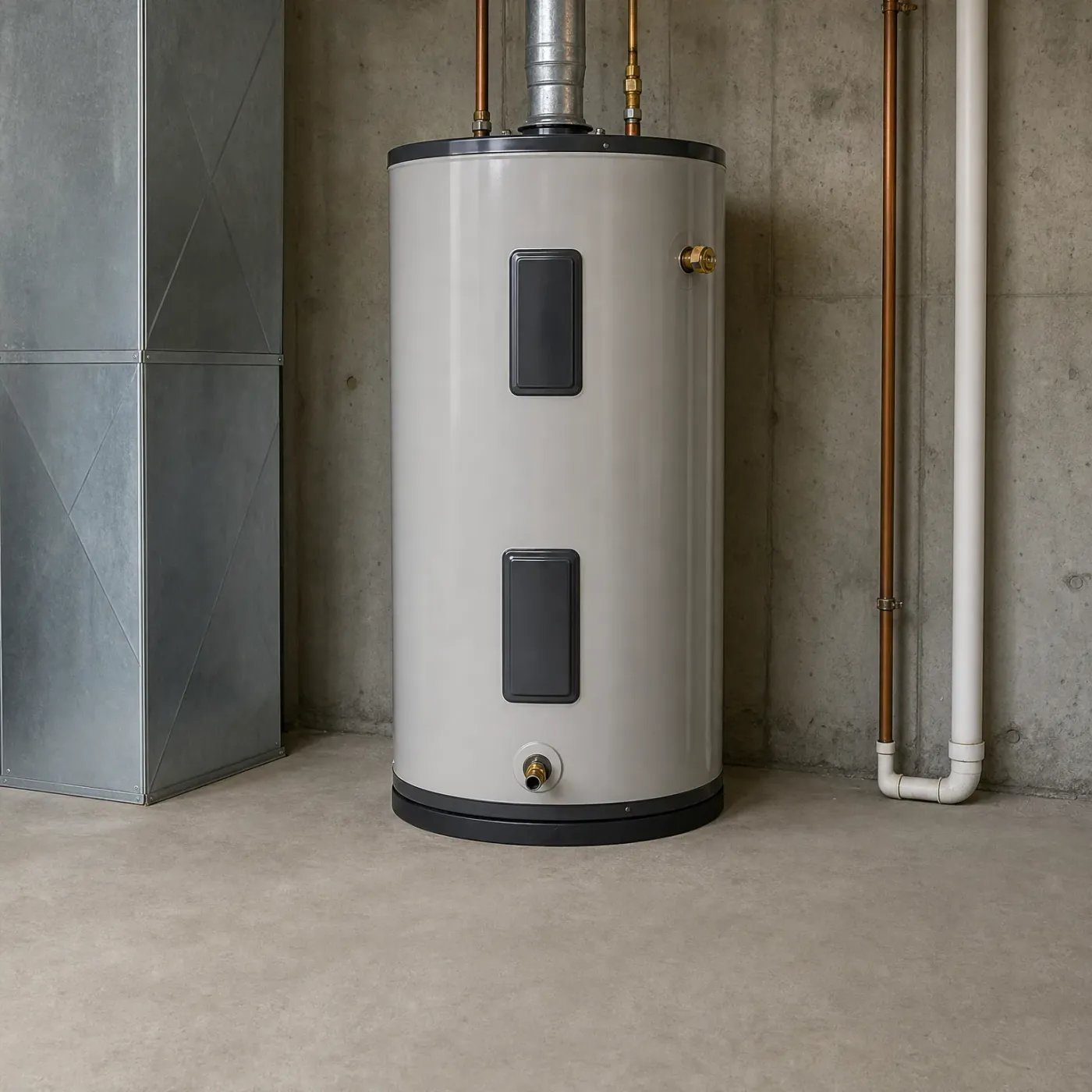
The pilot flame heats the thermocouple tip inside it.
The thermocouple sends a small signal to the gas valve.
That signal tells the valve to keep the gas flowing.
A weak or dirty thermocouple cuts the signal, and the valve shuts the gas.
Skip calling shops to ask who repairs water heaters in Harrison County.
Sending the form costs nothing.
Most pilot lights go out once and relight fine. You turn the gas valve to pilot, hold it down, light the pilot, and keep holding the button for the full 30 seconds to a minute the manual tells you to. If it's a first-time issue, this is a five-minute fix and costs you nothing. If the flame holds overnight and stays lit when the burner fires, the problem was just a draft or a weak flame that finally caught.
If you relight it and it goes out again within a day, or it won't catch at all, you're past what a relight can fix. That points to a thermocouple that needs replacing, a gas valve problem, or something blocking the pilot tube that a contractor needs to clear or swap out. Calling around to find someone licensed for gas work, explaining the same problem to each one, and comparing what they quote takes time you'd rather not spend with no hot water in the house.
Most homes here heat water with gas, but the tank's igniter and any blower or control board still run on electricity at 14.63 cents per kilowatt-hour. A thermocouple or gas valve replacement won't show up on the power bill in any real way, so that cost sits almost entirely in the parts and the labor, not the electric rate.
EIA-861 2025
A pilot you keep relighting yourself is a pilot you'll be relighting again next week. If the flame won't hold past a day or two, the thermocouple or gas valve needs a contractor's attention, not another match.
A pilot that holds for good means someone traced the actual cause, whether that was a worn thermocouple, a draft at the vent, or soot in the pilot tube, and fixed that part instead of guessing at it.


A pilot that won't stay lit is telling you one of three things: the thermocouple has worn out, a draft at the vent is snuffing the flame, or dirt in the pilot tube is starving it. You relight it once, hold the button the full minute, and watch what happens next. If it holds, you were probably dealing with the draft or the dirt. If it dies again within a day or two, that's the thermocouple or the gas valve, and no amount of relighting fixes either one. Rust on the tank or a corroded flue changes the question entirely. At that point you're not deciding whether to repair a pilot, you're deciding whether the tank itself is still worth fixing.
Either way, the work that follows isn't yours to do. Finding a licensed plumber or gas fitter in Gulfport, getting someone on the phone, describing the same problem to three different companies, and sitting with three different quotes takes real time, and it's time that matters when a household of two and a half people is sharing one water heater with no hot water between them. Getting matched with a contractor who already knows gas water heaters skips that part. You still need someone to look at the thermocouple, the valve, or the tank itself. But you won't spend your evening finding them.

Matched to your water heater job