
When to replace a water heater in Southaven, MS
How do I know when to replace my water heater?
Your water heater is getting older and you're starting to notice things, maybe rust-colored water, a popping sound when it runs, or water pooling near the base. You're not sure if it's time to replace it or if a repair will carry it through another year. With gas water heaters common here and winter dropping incoming water temperatures, the question matters more than it would somewhere milder.
Replace it once it's leaking, rusting, or past 10 to 12 years old
A water heater tank doesn't get repaired once it starts leaking. The tank is lined, and once that lining fails, rust works through the steel from the inside and no patch holds it back. Rust-colored water, a tank that's damp or wet at the bottom, or a popping and rumbling sound from sediment buildup all point the same direction. Age matters too. Most tanks last 10 to 12 years, and once you're past that, a failing part often isn't worth fixing on its own. In DeSoto County, winter drops the incoming water temperature, so an aging gas water heater works harder through those months and a weak unit tends to show its problems first in winter, not summer.

Rust or sediment builds up inside the tank over the years.
The lining breaks down and metal starts to corrode.
Small leaks start at the base or the fittings.
The tank weakens until it fails and needs replacing.
What does your household and home tell you about replacing it?
2.68 people per household on average
DeSoto County households average 2.68 people, per Census figures. A full house means more showers back to back and more strain on a tank that's already starting to go.
Half the homes here were built by 1999
Half the homes in DeSoto County were built in 1999 or earlier, per Census figures. If yours is one of them, the original water heater is long gone, but check what replaced it and when.
55.3% of homes heat with gas
55.3% of homes here heat with gas, per Census figures. A gas water heater has a burner and venting to account for, parts an electric tank doesn't have to worry about.
ACS 2020-2024
A water heater that's already rusting or leaking doesn't wait for a convenient week to quit. If yours fails while you're away, or overnight, you could come home to a wet floor and a soaked closet or garage wall. A full house in Southaven means the tank is working harder most days, and once rust or a leak shows up, it's past the point where it levels off. Sediment at the bottom of the tank also makes it work harder to heat the same amount of water, so you may already be paying more to get less hot water than you used to. If the tank lets go, you're not just buying a new water heater, you're dealing with water damage, too. Replacing it on your schedule, before it fails, means you pick the day and avoid the mess. Waiting means the tank picks the day instead, and it's rarely a good one.
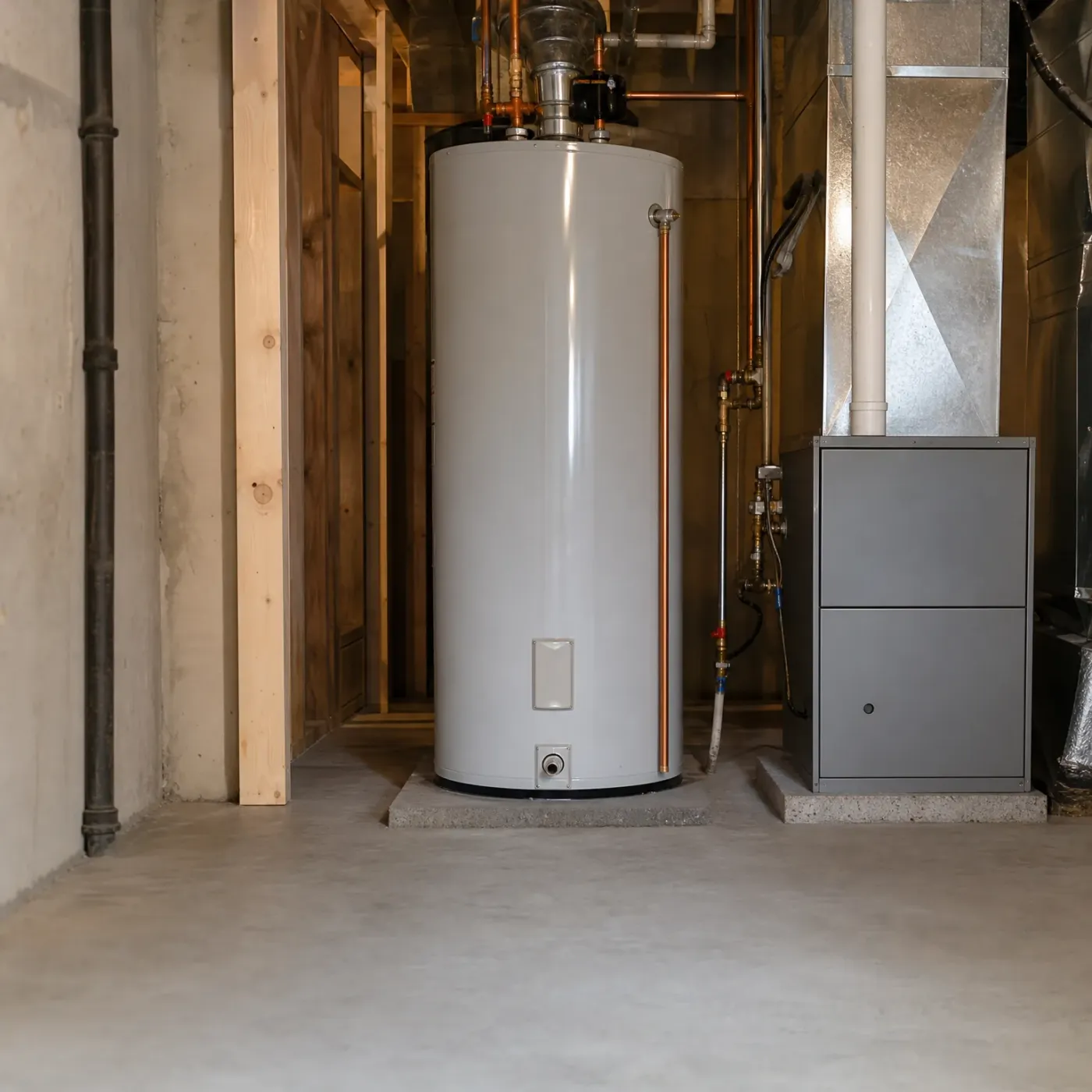
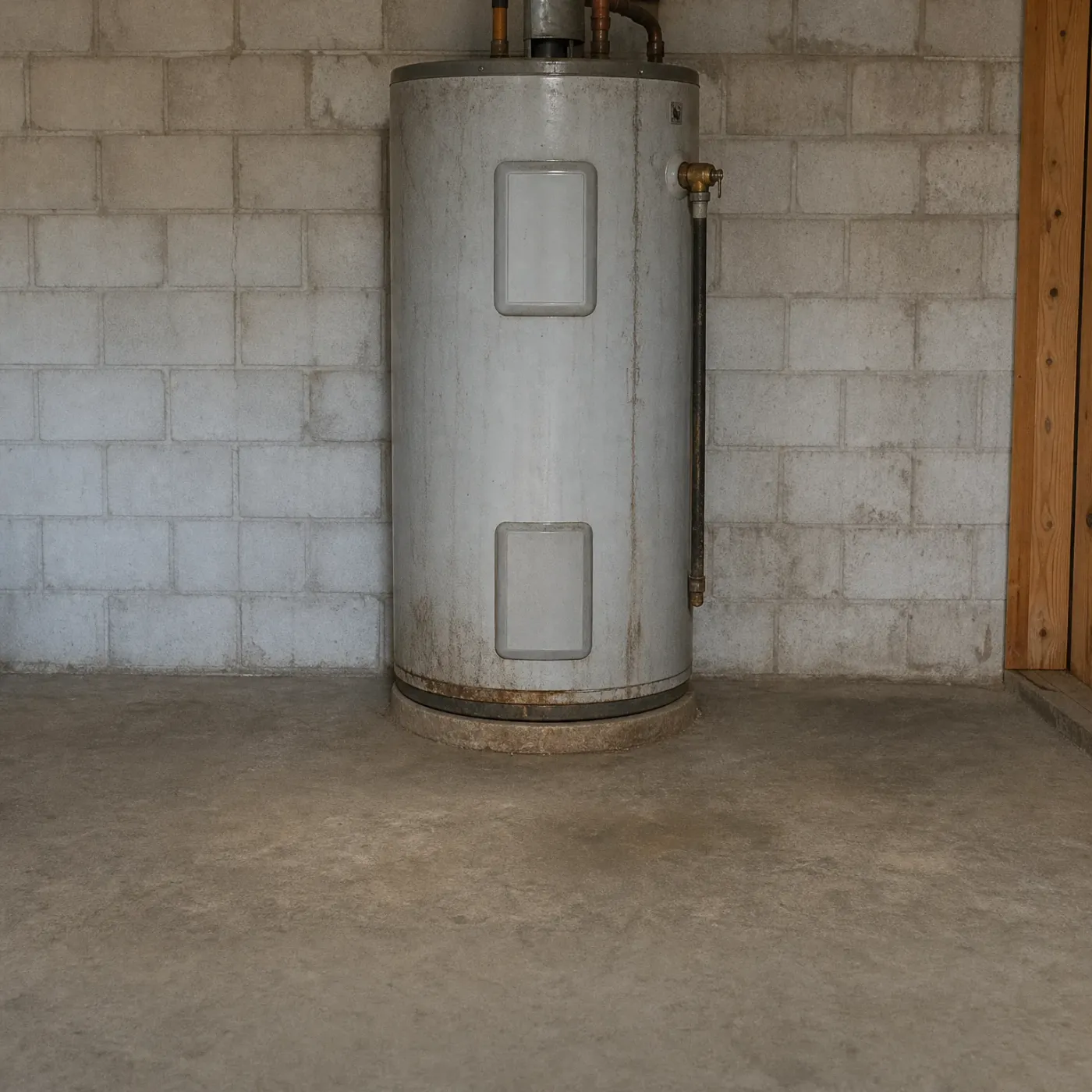
A gas water heater burns fuel under the tank, and the heat travels up a flue running through the middle to warm the water around it. Inside the tank, an anode rod takes the corrosion so the steel tank doesn't have to, at least for a while. Once that rod is used up, rust starts working on the tank itself. Sediment collects at the bottom over time, and it sits between the burner and the water, so the burner runs longer to do the same job. The thermostat only checks the temperature at one point on the tank, which is why you can run out of hot water before the dial says you should. The pressure relief valve is there to let off steam and pressure if they build up, and it ages right along with everything else in the tank. None of this shows up from the outside until a fitting starts to weep. A tank can hold its full capacity and still be leaking slowly enough that you don't notice until there's water on the floor.
How a gas water heater actually works
- Gas water heaters sit on top of a burner that heats the tank from below through a flue running up the center.
- The anode rod inside the tank attracts corrosion first, and once it's used up the tank itself starts to rust.
- Sediment that settles at the bottom insulates the burner from the water above, so the unit works harder to heat the same amount.
- The thermostat reads the water temperature at one spot on the tank, not the whole volume, so hot water can run out faster than the dial suggests.
- A pressure relief valve lets built-up steam or pressure escape, and that valve wears out on the same timeline as the tank.
- Most tanks hold their rated capacity in standby, so a slow leak from a worn fitting can go unnoticed until it reaches the floor.




It's off your list after this
A licensed installer who works in DeSoto County gets your project.
One request ends the search for a water heater installer.
There's no charge for the request.


What's actually going on with your water heater
Walk past it and you might hear a low popping or rumbling as it heats, that's sediment shifting at the bottom of the tank. Look at the water coming out of the hot tap. If it runs rust-colored or has a metallic smell, corrosion has started inside the tank itself. Check the floor around the base. Any dampness, a small puddle, or a rusty ring where the tank meets the floor means a leak has already started, even a slow one. None of this fixes itself. Once the tank is rusting or leaking, it keeps going until it fails outright, and that usually happens without warning, often overnight or while you're out of the house.
Gas water heaters and vent draft
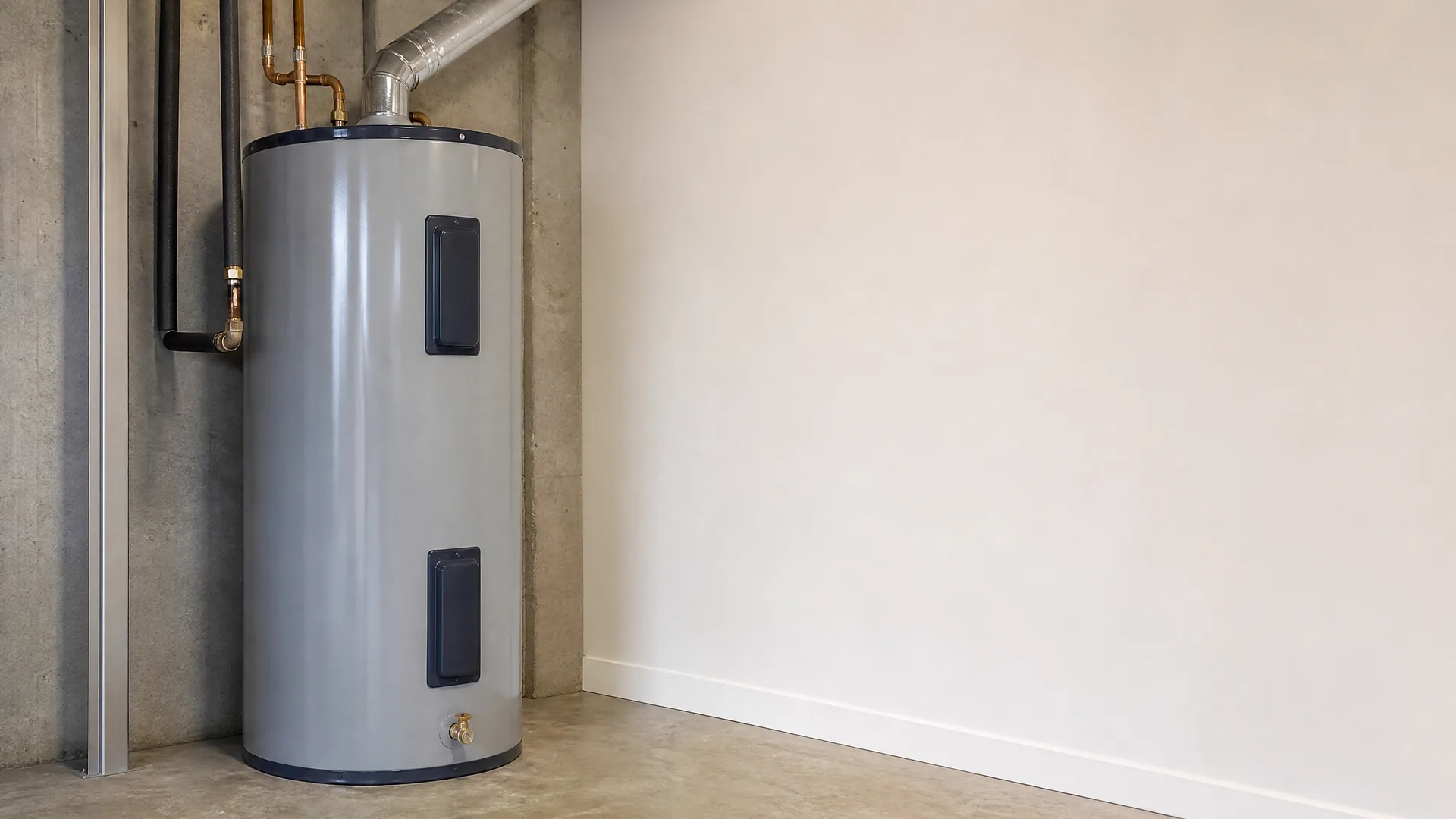
Most homes in and around Southaven heat water with gas, and a gas water heater needs a clear path for exhaust through the flue and out the vent. Rust around the draft hood or at the top of the tank often means moisture is backing up instead of venting out. That moisture speeds up the corrosion already working on the tank from the inside, which is part of why a tank showing rust at the top rarely slows down from there.
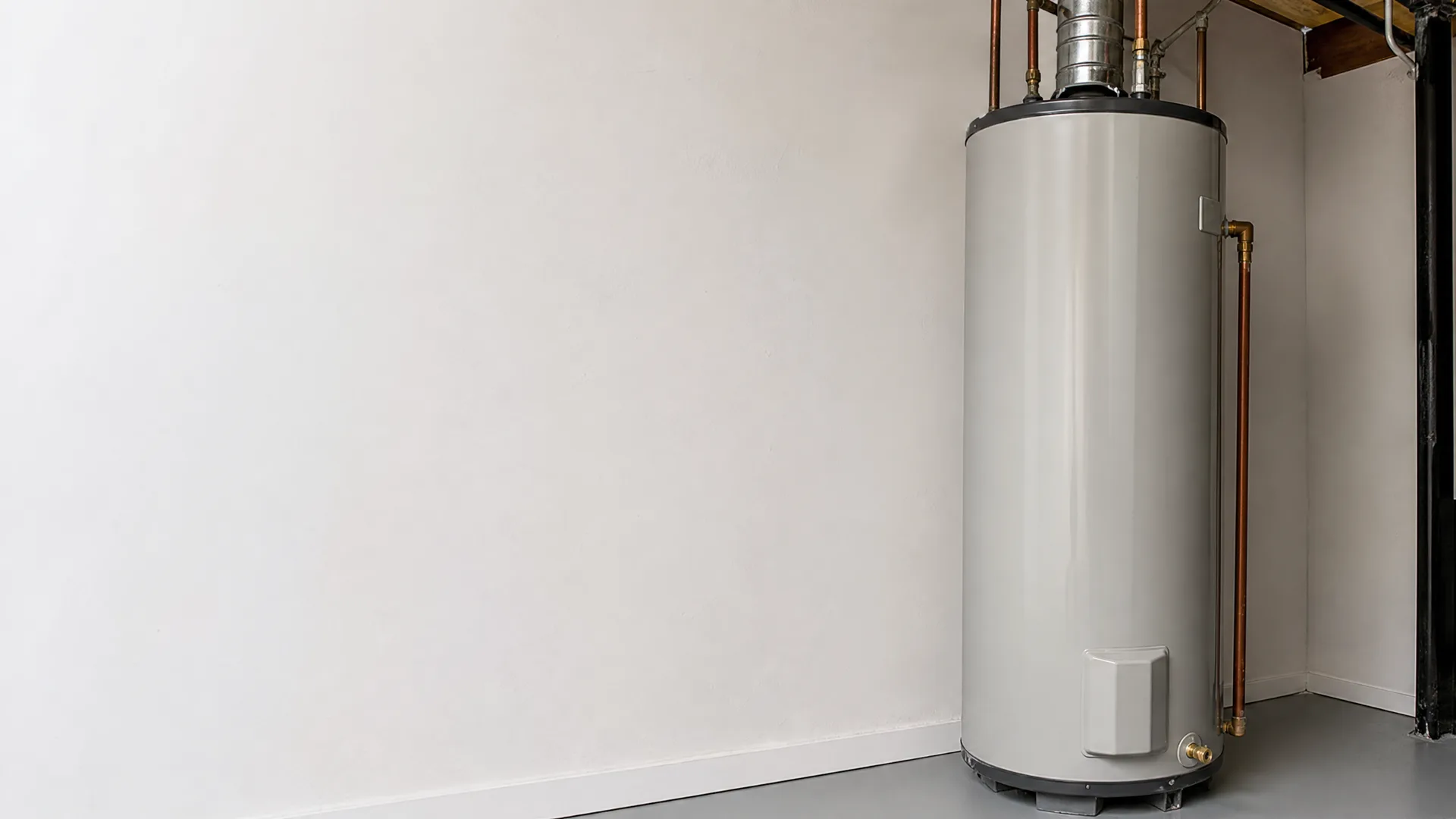
What a dip tube failing looks like
Cold water enters the tank through a dip tube that runs down near the bottom, so the burner heats it before it reaches the top and the outlet. If that tube cracks or breaks apart, incoming cold water mixes straight into the hot water near the outlet, and you get lukewarm water even though the burner is running fine. Plastic fragments showing up in a faucet aerator or a showerhead screen are a sign that tube has already started breaking down.
Power here costs 13.72 cents per kilowatt-hour
At 13.72 cents a kilowatt-hour, electric isn't what's driving your bill if you're on gas like most homes around here. But if your water heater is electric, a failing heating element can make it run longer to get the same hot water, and you'll see that cost climb before the tank finally quits.
EIA-861 2025
When It's Time to Replace
- Rust-colored water, a popping tank, or pooling at the base all mean the tank is failing, not just aging.
- Once the anode rod is used up, the tank itself starts to rust from the inside out.
- A gas water heater also needs a clear flue and vent path, so rust around the draft hood points to the same problem.
- A full house in Southaven puts more strain on a tank that's already starting to go.
- Waiting past these signs usually ends in a leak that shows up at the worst possible time.
- Replacing it before it fails means you choose the timing instead of a flooded closet choosing it for you.
Everything here points back to the same handful of signs. Rust in the hot water, a tank that pops or rumbles when it runs, water showing up at the base where it shouldn't, that's the tank telling you the anode rod is spent and corrosion has moved into the steel itself. Once that starts, it doesn't reverse. A gas water heater adds one more thing to watch: rust around the draft hood usually means the flue isn't venting the way it should, and that's tied to the same aging tank. None of this is about how old the unit is on paper. It's about what it's actually doing right now in your house. A full household in Southaven only speeds up the ending, because a tank that's already working harder to keep up with rust and sediment doesn't have much room left for a full morning of back-to-back showers. The failure mode is almost always the same. It's not a sudden breakdown you can plan around. It's a slow leak that finally lets go, often at the worst time, when nobody's home to catch it or it happens overnight. A soaked closet floor or a ruined section of drywall costs more in cleanup than the replacement would have. The alternative is simple. If you're already seeing one or two of these signs, you get to choose when the work happens instead of finding out the hard way. That's the whole difference between replacing a water heater on your schedule and replacing one on its.


Stop chasing a water heater pro
A water heater showing rust, popping, or pooling water is close to the end, and waiting usually means dealing with a flood instead of a replacement on your schedule. One request here reaches a single licensed local contractor, someone who works on tanks in Southaven homes all year and knows what age and corrosion usually mean for a system like yours. No multiple companies calling, no guessing who to trust with the job.
One installer gets your project, so there's no bidding war over it.
You only hire the pro if you want to.