
Profile view of a bearded man wearing a dark baseball cap and a dark gray T-shirt against a plain off-white background.

Why you run out of hot water fast in Mississippi

Step 1 of 3: Equipment

Running out of hot water fast usually means the tank is smaller than what your household needs, or something inside it is wearing out. Most homes in Mississippi heat water with electric tanks, and electric elements recover slower than gas burners, so once the hot water is gone, it takes longer to build back. A failing lower heating element is a common cause, since that's the one doing most of the work heating the water that comes in. Sediment settled at the bottom of the tank is another, because it sits between the burner or element and the water, so less heat actually gets through. If your showers used to last and now cut short, or the water goes lukewarm faster than it used to, that's a sign the tank can't keep up anymore, not that you're suddenly using more water. It's worth having it looked at before it fails completely and leaves you with none.

A smiling man in a dark blue T-shirt sits on a light gray sofa in a living room with a wooden shelf and window behind him, with a laptop edge visible in the foreground.
A bearded man in a plaid flannel shirt stands indoors looking out a frost-covered window, with a steaming dark blue mug on the wooden sill and snow-covered trees outside.

An electric tank splits the work between two elements, one up near the top and one down near the bottom, and only one runs at a time. The top one fires first and heats the water closest to the outlet, which is why a shower starts out hot even though most of the tank is still cold below it. When that top section reaches temperature, the bottom element takes over and reheats the rest, and that part takes a while since electric elements recover slower than a gas burner would. If the bottom element or its thermostat has failed, that second stage never happens, so you're only ever drawing from the small amount the top element heated. Sediment sitting on the bottom element causes a similar problem, since it has to work harder to push heat through the buildup, and recovery stretches out even with both elements working. A thermostat that's drifted low, whether from a reset or just a worn part, has the same effect: the tank looks full but is holding less hot water than it used to.

How the tank actually heats water

  • An electric water heater has two elements, one near the top and one near the bottom, and they heat one at a time, never together.
  • The top element heats the water closest to the outlet first, so you get hot water fast at the start even if the lower two thirds of the tank is still cold.
  • Once the top section satisfies its thermostat, the bottom element takes over and reheats the rest of the tank, which takes longer because electric elements recover slower than a gas burner.
  • If the lower element or its thermostat fails, the tank only ever heats the top few gallons, so a shower turns cold far sooner than it used to.
  • Sediment settling on the bottom element makes it work harder to heat the water above it, so recovery time stretches out even when both elements still work.
  • A thermostat set lower than it used to be, whether from a reset or a worn part, means the tank is holding less usable hot water even though it looks full.
A gray cylindrical gas water heater with copper and black pipes stands in the corner of a basement with concrete block walls and a bare concrete floor.
Before you get your water heater repair
A gray cylindrical water heater standing in a basement corner against a concrete wall, with copper and black pipes, a metal flue, and ductwork nearby, next to wood framing on the right.
After you get your water heater repair
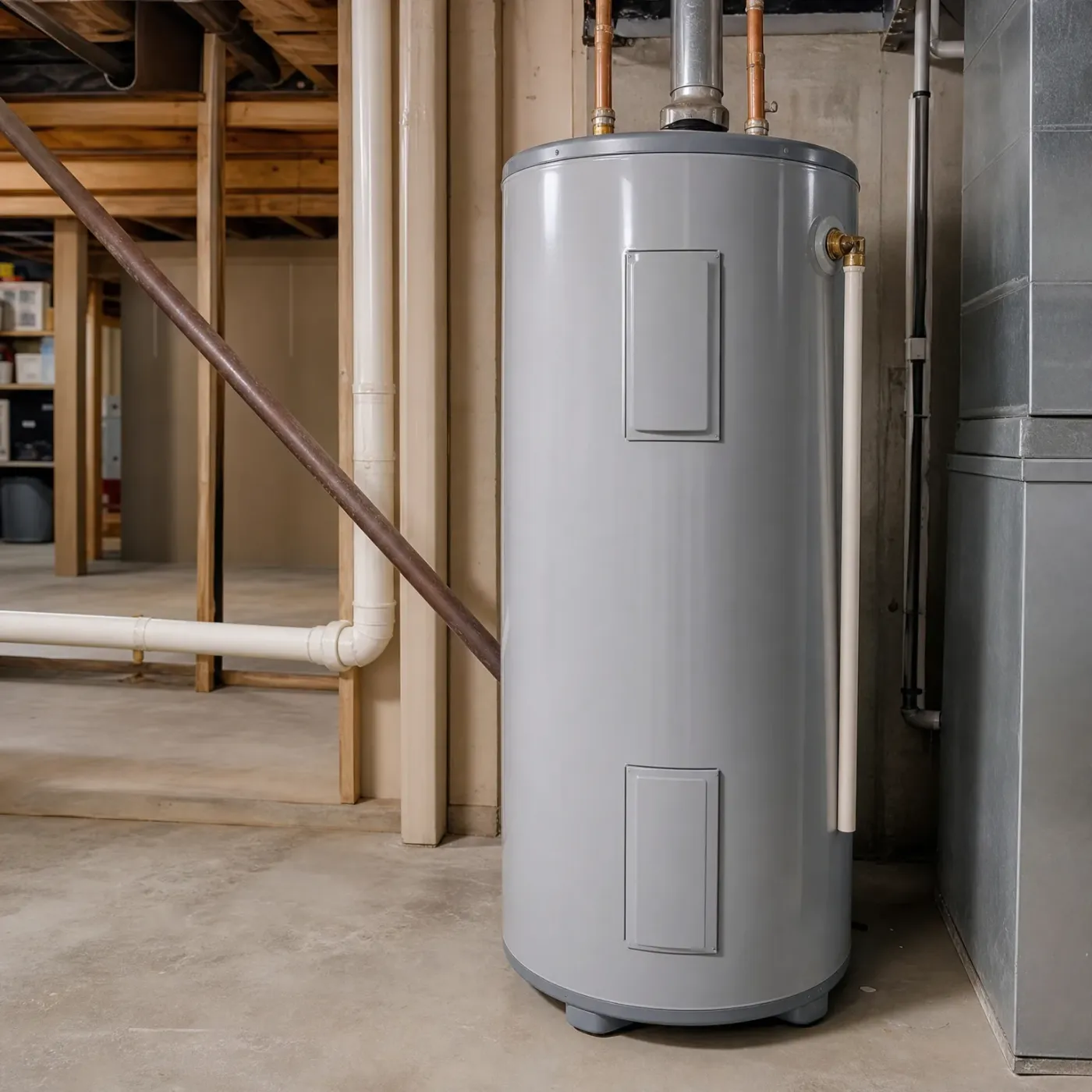
A gray cylindrical water heater with copper and white pipes stands on a concrete basement floor beside a metal duct and wooden framing.

Hand off the search today

Answer a few questions instead of calling shop after shop.

Send the request today and let a water heater pro reach out to you.

I'm done searching

Sending the form costs nothing.

Running out halfway through a shower, every time

You know the pattern by now. The water runs hot for a few minutes, then turns lukewarm, then cold, and it always happens around the same point, whether that's your shower or halfway through the dishes. If it's gotten worse over the past few months, or if the water takes longer to heat back up than it used to, that's usually the bottom element or the thermostat on it giving out. Left alone, the bottom element can fail completely, and then you're down to whatever the top element heats on its own, which isn't much for a household running showers, laundry and dishes on the same tank.

A gray cylindrical water heater standing on a concrete floor in a basement corner, with copper pipes and a metal duct running overhead along bare concrete walls.

Working the way it should

A water heater that's keeping up looks like this. The tank holds steady, the pipes run without a knock or a rattle, and the drain valve near the base stays dry. You can run a shower and then the dishwasher without checking the clock first.


A white cylindrical water heater with rust stains and two access panels stands in a basement corner between a painted concrete block wall and a bare concrete wall, with metal pipes running up and alongside it on a concrete floor.

Rust is winning

Corrosion like this on the tank shell means the lining inside has likely failed too, and the element underneath is working harder to heat water that keeps losing ground to rust. Hot water runs shorter each month, not because you're using more, but because the tank can't hold what it used to.

A smiling man in a blue denim shirt over a white tee sits at a light stone kitchen counter with a grey mug and a bowl of oranges and bananas, with pendant lights and shelving behind him.
A smiling bearded man in a grey long-sleeved shirt sits at a kitchen counter with a dark mug, with a dining table, pendant light and glass doors onto greenery behind him.
A bearded man in a dark green knit sweater smiles and looks off to the side while standing at a kitchen counter with a white mug of coffee, with open shelving, a potted tree, and a dining table near large windows behind him.
A man with dark curly hair in a dark green sweater stands smiling and looking to the side in a kitchen with white cabinets, a potted plant, a stone countertop with a ceramic mug, and a dining area with framed art in the background.
  1. The lower element heats first and keeps most of the tank warm.

  2. A thermostat shuts off each element once its water reaches temperature.

  3. Drawing hot water pulls cold water in through the dip tube.

  4. The lower element kicks back on to reheat the incoming cold water.

58.9% of homes statewide heat with electricity

With close to six in ten Mississippi homes running electric heat, your water heater is most likely electric too. Its two elements recover slower than a gas burner would, so a tank that's slightly undersized or wearing out shows itself sooner here than it might elsewhere.

ACS 2020-2024 5-year B25040

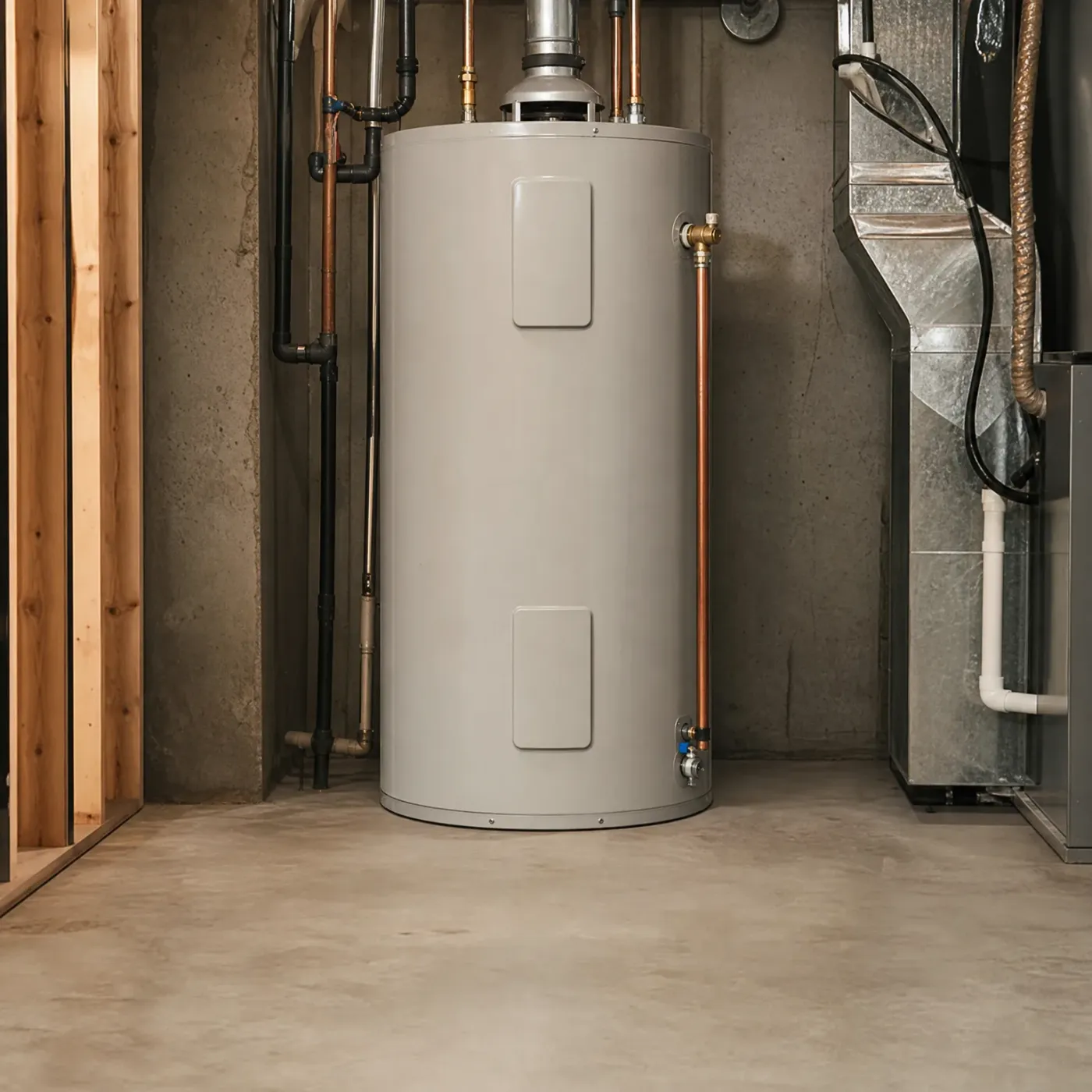
A gray cylindrical water heater with copper piping and access panels stands against a concrete basement wall beside ductwork and vertical pipes.

Tank working as it should

Fittings stay tight and dry at the top, and the relief valve isn't weeping. The tank itself shows no rust or swelling along the seams. Pipes run clean to the furnace nearby without a leak in sight.

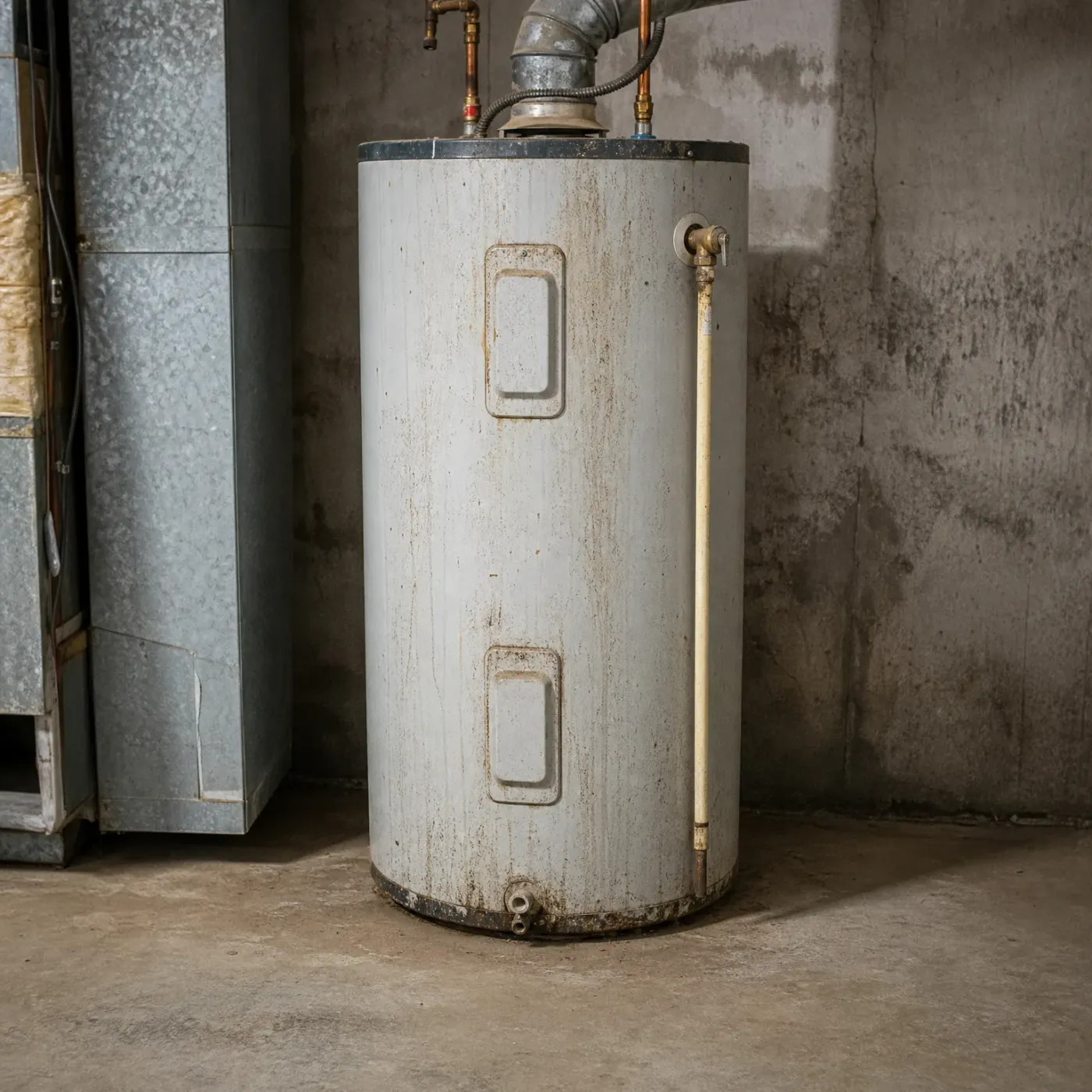
An old rust-streaked cylindrical water heater with two access panels, copper pipes and a flue at the top, and a discharge pipe along its side, standing on a concrete floor beside galvanized ductwork against a bare concrete wall.

Tank showing its age

Rust has spread across the whole shell and both access panels. The relief valve has a discharge pipe running off it, worth checking for drips. A tank in this shape is a common reason recovery slows down before a repair ever gets scheduled.

A wooden table in the foreground holds a closed laptop and a ceramic mug of coffee, with a spindle-back wooden chair behind it, a beige wall with paneled wainscoting, a window at left, and a kitchen counter with a cutting board, bowl of fruit and greenery at right.

A tank that's running out fast has a reason behind it

A lower element that's failed, a thermostat that's stuck, or a tank that was undersized for your household from the start. Whichever it is, the fix is specific to what's actually wrong inside your tank, not a guess. A licensed plumber can tell you which one you're dealing with and what it takes to fix it.

Finding that plumber is the part you can hand off. Instead of searching around, calling a few numbers, and walking through the same explanation more than once, you send one form and the search is done. Someone qualified gets in touch, and from there it's their job to sort out the rest.

Interior corner of a dining room with a round wooden table, a ceramic vase holding olive branches, a dark spindle-back chair near a curtained window, and a sideboard with a lamp against beige walls.
A dark wood cabinet with a paneled door and a ceramic pot of green foliage on top stands in a beige-walled room with white baseboard, a window at left, hardwood floor, and a patterned area rug.
A dark wood glass-front cabinet holding folded towels, woven baskets and a ceramic vase stands in a bathroom corner beside a window, with a potted fern and stacked towels on top and a freestanding tub partly visible at left.
A woven basket holding a green cushion and a cream fringed knit throw sits on a wood floor in a room corner beside a window and a dark wooden cabinet.
Corner of a room with a dark wood cabinet topped by a round vase, a linen curtain at a window, white baseboard, oak plank flooring with sunlight patches, and a woven jute rug in the foreground.
A dark wood sideboard against a pale wall holds a shallow stone bowl and a round ceramic vase with leafy branches, with sunlight from a curtained window falling across the wall, wood floor and woven rug.

Hand off the water heater problem

Describe your water heater job once, to one pro.

Hand it over

You're not committing to anything by asking.