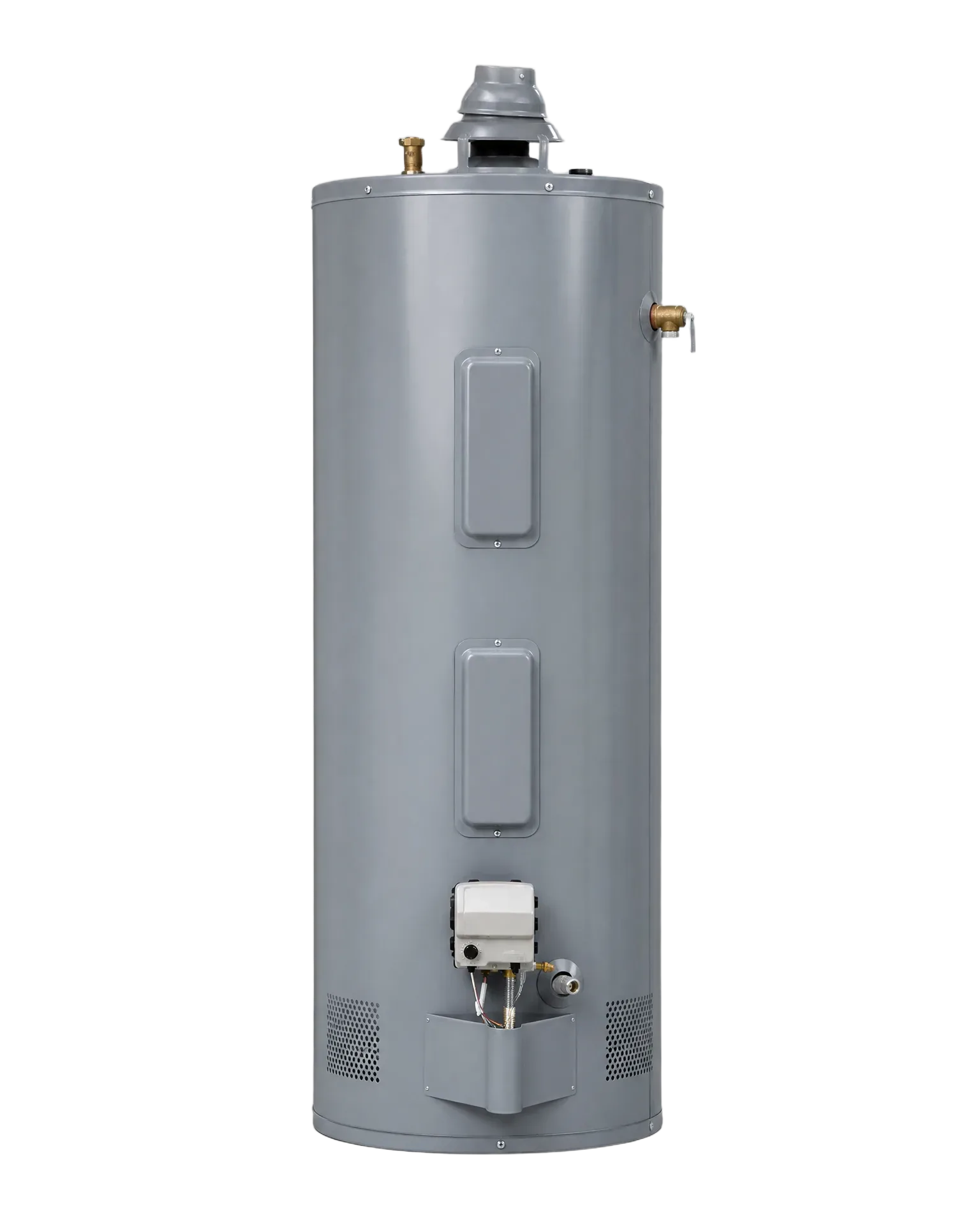
One smell, nothing wrong with the tank
This is what a water heater looks like doing its job. The pipes run clean, the flue draws, and the smell you're noticing is just the anode rod reacting with the water inside. A flush usually clears it.
That rotten egg smell comes from sulfur bacteria living in the water heater tank, reacting with the magnesium rod inside it to produce a small amount of hydrogen sulfide gas. It shows up most in homes on well water, but it happens with city water too. Most homes in Mississippi run electric water heaters, and the warm, humid conditions here give those bacteria an easy environment to grow in the tank, especially if the heater sits unused for a stretch or is set to a lower temperature. The smell does not mean your water is unsafe to use, but it does not go away on its own. A contractor can flush the tank, replace the rod with one less likely to react, or raise the tank temperature to a level that kills off the bacteria. Left alone, the smell tends to come back worse, and the buildup causing it can shorten the life of the tank.


Why does my hot water smell like rotten eggs but my cold water doesn't?
The anode rod and the bacteria that react with it are both inside the water heater tank, not in the pipes that bring cold water into your house. Cold water comes straight from the supply line, so it never touches the rod or sits long enough to pick up the smell. Hot water sits in that tank for hours between uses, giving the sulfur bacteria time to feed on the rod and release the gas. Mississippi's warm groundwater, especially on well systems, gives those bacteria more to work with than cooler water would. That's why the smell shows up only when you turn the hot tap, and often gets stronger after the house has sat unused for a day or two.
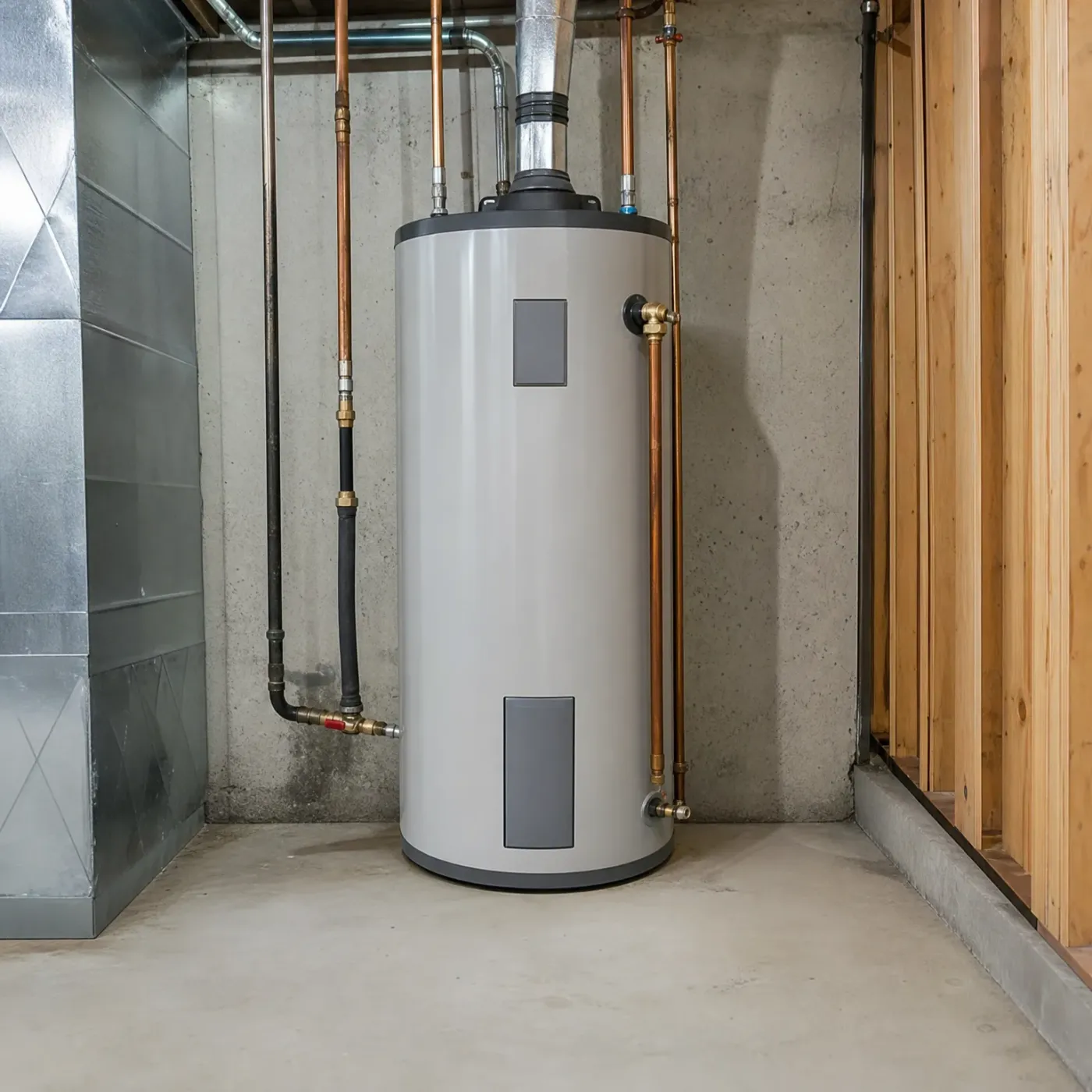
This is what a water heater looks like doing its job. The pipes run clean, the flue draws, and the smell you're noticing is just the anode rod reacting with the water inside. A flush usually clears it.
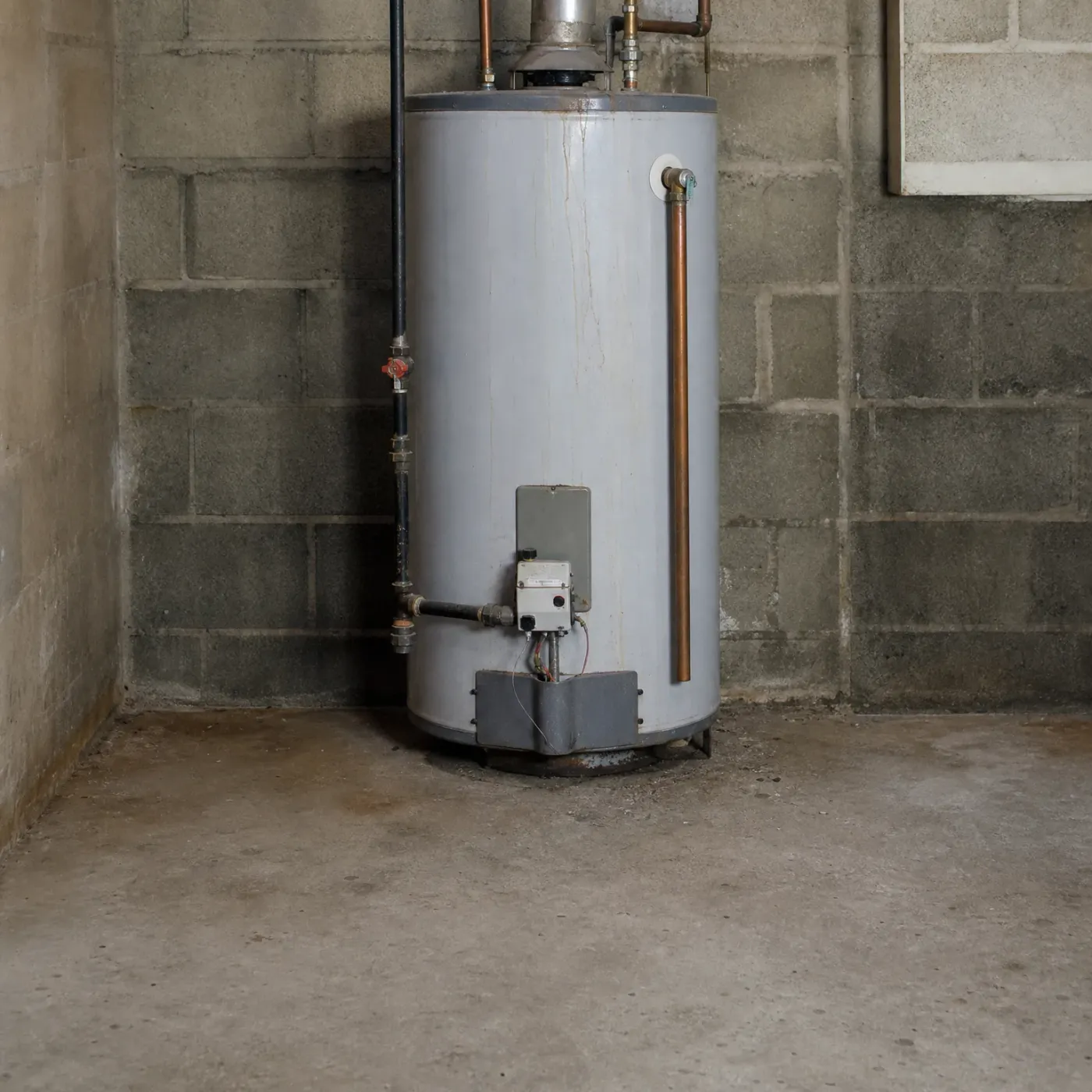
Here the gas valve and control unit sit low near pipes that have started to rust. If you see rust at the base or around the fittings along with the smell, the tank itself may be failing, not just the rod.

Run the hot tap in the kitchen and the bathroom. If the smell is only in the hot water, your tank is the source, and that's one less thing to wonder about. Let it sit unused for a day, like after a trip, and the smell can come back stronger just from the water sitting still against that rod. It isn't dangerous to bathe in or breathe. It's the water you don't want to cook with or drink until the tank's been looked at.
Finding out which one you've got, a rod doing its job or a tank starting to fail, isn't something to guess at from the smell alone. Instead of calling around Mississippi for someone who works on water heaters, explaining the smell twice and the well water once more, and weighing quotes against each other, you send one form and someone licensed for this gets in touch. No more research, no more comparing strangers.





You've already run the hot tap and figured out the smell is coming from the tank. That's the hard part done. What's left is getting someone out to flush it or swap the rod, or to look at the tank if there's rust at the base. On well water especially, this isn't a smell that fixes itself, and it tends to come back worse once the rod wears down further. You could start calling around, explaining the same thing to three or four contractors, waiting on callbacks, trying to compare who actually knows water heaters against who just does general plumbing. Or you can send this request once and let it go to someone who works on this. No cost to ask, nothing owed if you decide not to move forward. Mississippi summers are hard enough on a house without a water heater adding rotten egg smell to the list. Send the request and get back to your day.

The anode rod is a length of magnesium or aluminum wrapped around a steel core, and it sits in the tank to corrode instead of the tank lining. That's its whole job. Sulfur bacteria in the water feed on the magnesium as it breaks down, and the reaction gives off hydrogen sulfide gas, which is what carries that rotten egg smell through the hot tap. A rod doing this is a rod working as designed.

Well water in Mississippi tends to carry more sulfate and more of the bacteria that feed on it than city water does, which is why the smell shows up harder and sooner in well-water homes. City water usually carries chlorine, which keeps the bacteria down, though it doesn't rule out the smell entirely. Either way, the rod and the bacteria are reacting inside the tank, not in your pipes or your well itself.
Most houses here run an electric water heater, not gas. The anode rod inside still does the same job, magnesium reacting with bacteria in the tank, so an electric unit smells like rotten eggs for the same reason a gas one does. Swapping the rod or flushing the tank fixes it either way.
ACS 2020-2024 5-year B25040
The smell has one source in almost every Mississippi home: the anode rod inside the tank reacting with sulfur bacteria in the water. That holds whether the house is on well water or city water, and whether the water heater runs on gas or electricity. Running the hot tap and the cold tap tells you where it stands. Hot only means the tank, and that's the easy case. The fix most of the time is a flush or a new rod, and the smell is gone. Rust changes the picture. Rust at the base of the tank or around the fittings means something is wearing through, not just reacting, and that calls for a look before anything else gets touched. The smell can come and go depending on how the house uses hot water. A day away, a slow weekend, anything that lets the tank sit, and the smell often comes back stronger when the tap runs again. That's still the rod and the bacteria, not a sign the problem has gotten worse. None of this takes guesswork once the hot and cold water has been checked against each other. A tank with no rust and a smell only in the hot water is doing exactly what a tank with a worn anode rod does. A tank with rust at the base is telling you something different, and that's worth treating as its own problem rather than waiting on a flush to fix it.


Send one request and you're done looking
Describe your water heater job once, to one pro.
