

No rust, no drip
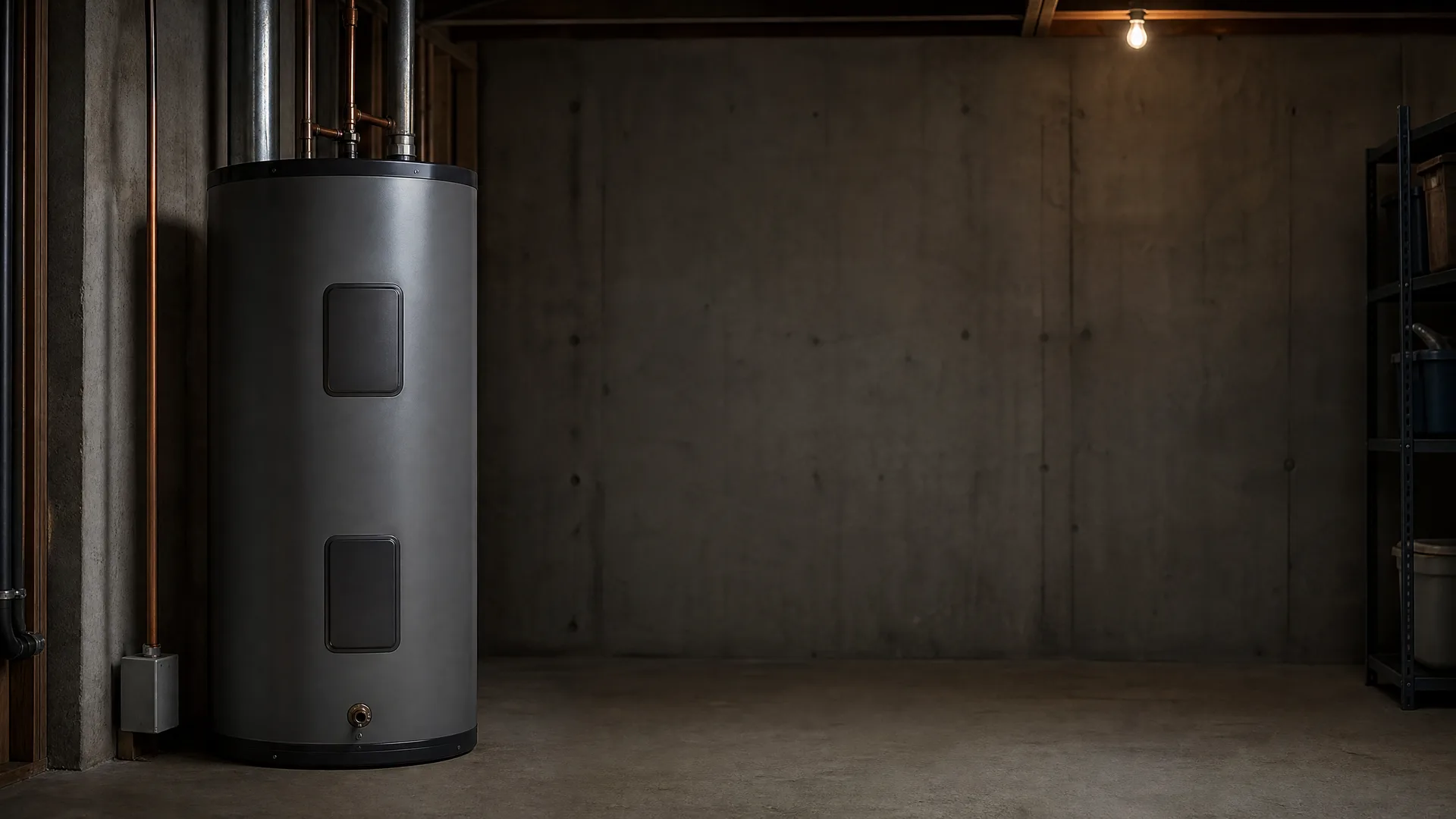
A water heater in good shape stays dry around the base and along the body. The fittings at the top stay tight and the drain valve on the front shows no stain beneath it. Water stays where the pipes and the tank put it.
Explain the job once and skip repeating it on every call.
Answer a few questionsA leaking water heater almost always means a tank failure. Inside the tank is a glass lining, and once that lining cracks, the steel underneath starts to rust and the tank weeps water, usually from a seam or from the bottom. That leak will not seal itself and will not slow down. It can also mean something smaller: a loose drain valve, a fitting that needs re-sealing, or a pressure relief valve letting go because pressure inside the tank is too high. Those are fixable without replacing anything. The tank itself is not. If water is pooling under the tank or running down the side, shut off the power at the breaker, since most water heaters in Mississippi homes run on electricity, and shut off the water supply to the tank. Leaving it running can mean a flooded closet or utility room and water damage that spreads well past the heater itself.

A water heater in good shape stays dry around the base and along the body. The fittings at the top stay tight and the drain valve on the front shows no stain beneath it. Water stays where the pipes and the tank put it.

Once rust spreads across the bottom and up the sides like this, the tank itself is corroding from the inside out. That rust is steel giving way under a cracked lining, and it only moves in one direction. A contractor local to Mississippi who works on these units every season can tell you on sight whether yours still has life in it or needs to be replaced.
Why is water dripping from the bottom of my water heater?
Water at the bottom usually means the tank itself has given out. The glass lining inside has cracked somewhere, and the steel underneath has been rusting ever since, slowly, until it opened up a pinhole or a seam split. Once that happens the water finds the lowest point and drips from the bottom edge or the underside. It is not the drain valve unless you see the stain start right at the valve. A tank in this state cannot be patched or resealed. The steel is thinning in more places than the one that is leaking now, and a repair on this part of a water heater means replacing the unit, not fixing a seal.




A leaking tank does not wait on your schedule, and finding someone to look at it is its own chore: searching, calling a few places, describing the drip and the rust each time, then waiting on quotes to compare. That work is what this hands off. One request goes to a licensed Mississippi plumber who works on water heaters all year, not a list of five companies competing for your callback. That matters here, where most homes run electric water heaters and a tech who sees them every week knows what a rusted tank looks like versus a loose fitting before they even arrive. You already know the signs, the stain at the base, the drip along the seam. The next step is getting someone qualified to look at it before the tank gives out the rest of the way and the leak gets worse.
Not every drip means the tank is done. A loose fitting where a pipe threads into the top can weep slowly, and so can a T&P valve that's stuck open or wearing out. Those parts sit outside the tank, and a contractor can replace either one without touching the tank itself. The difference shows in where the water starts. Water that begins at a connection up top and runs down the side can look like a tank leak by the time it reaches the floor, even though the tank underneath is sound.
Once the glass lining inside a tank cracks, there's no sealing it back up. The steel behind that lining is bare to the water sitting in the tank day and night, and rust works through it from the inside out, where no one can see it happening until water shows up outside. A contractor can replace a valve or a fitting. Nobody replaces the inside of a tank. That's the line a technician is checking for first, because it decides whether the job is a repair or a new water heater.


That much water running toward your floor or a closet wall adds up fast, and in a Mississippi summer it won't dry on its own before it finds somewhere worse to go.
A rusted tank doesn't patch itself. The leak gets wider, the floor underneath stays wet, and you lose hot water right when the tank finally gives out.
Most houses in Mississippi run their water heater on electricity, same as the rest of the house. That means a leak isn't tied to a gas line or a pilot burner. It's almost always the tank itself, and a stuck element or bad thermostat won't cause the kind of drip you're looking at.
ACS 2020-2024 5-year B25040

Everything above points the same direction. Rust at the base, a drip that won't stop, water pooling near a seam, that's a tank that's rusted through on the inside and it isn't going to seal back up. The fix is a new water heater, not a patch on the old one. The only real question left is how soon you get it replaced before that drip turns into a bigger mess on your floor.
You don't have to spend your evening on this. No calling around to three or four places, no explaining the rust and the drip over and over, no sitting on quotes trying to sort out who actually knows this equipment. One request goes to a licensed contractor working in Mississippi, someone who sees this exact failure every summer and knows what to check first. You get an answer about your water heater, not a stack of estimates to compare.

Your request stays with one local pro.